In a sentence: the best colors for blonde hair are clear, medium-depth shades with real color in them, teal, periwinkle, coral, raspberry, sage, warm red, soft plum, turquoise, dusty rose and golden yellow, anchored by cream, camel and soft navy. Skip to the full palette or find your exact shades.
Best Colors for Blonde Hair: Your Best Shades (with Hex Codes)
By ToneLalaUpdated July 14, 2026
Contents
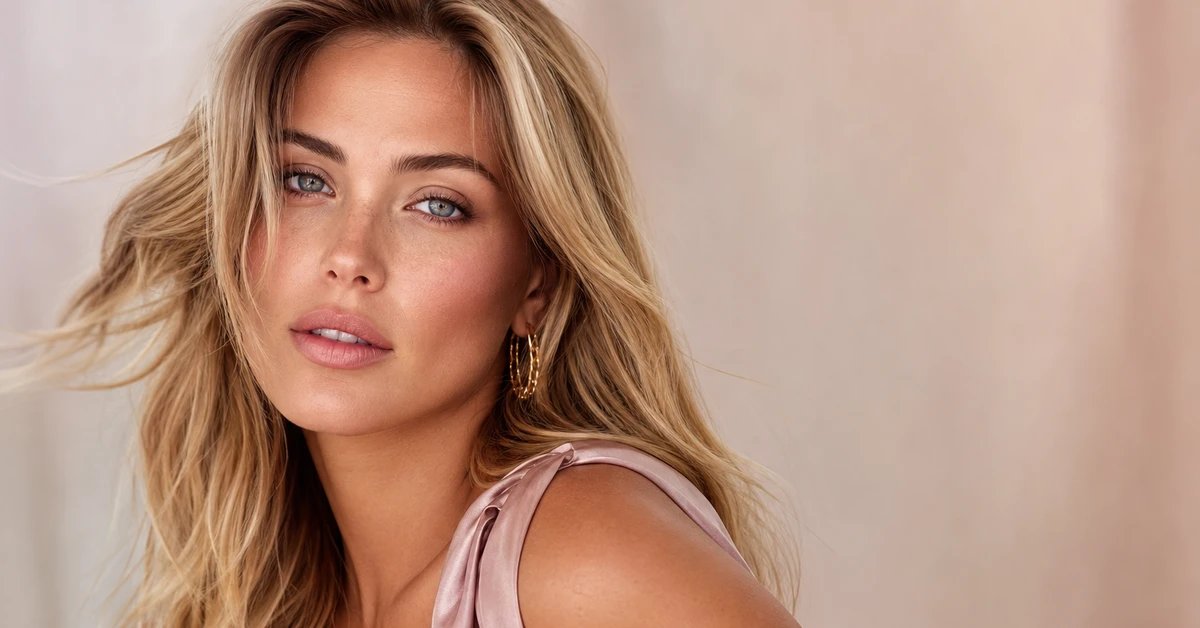
Most of my blonde clients arrive convinced they're a "neutrals person." Beige, gray, oatmeal, the odd safe navy. It photographs fine and it's quietly doing nothing for them, because those colors sit so close to blonde hair that the whole look loses its edges. Blonde isn't a coloring to disappear behind. It's the lightest thing you'll wear most days, and it wants a bit of color beside it to bounce off.
Here's the part the Pinterest boards skip: "blonde hair" isn't an answer, it's a starting point. I've draped an ash-blonde and a honey-blonde side by side and watched them suit almost opposite palettes, one glowing in cool raspberry, the other in warm coral, each looking faintly gray in the other's best shade. So treat the ten colors below as a brilliant shortlist, and read on for the thing that actually decides your single most flattering version: your undertone.
Blonde Hair and color, what actually flatters
Blonde hair means one thing for certain: you're light. There isn't much depth in your natural coloring, so the contrast between your hair, skin and a color matters more than it does for someone with dark hair. Drop a pitch-black top next to a light face and blonde hair and the black wins, your features recede and you read as tired. Clear, medium-depth colors sit in better balance with you, so your face stays the brightest, most interesting thing in the frame. That's why so many blondes feel "swallowed" by heavy darks and lit-up by a good teal or coral.
But light is only half the story, and undertone is the half that decides your best shades. Cool blondes (ashy, platinum or sandy hair with pink, rose or neutral skin) are flattered by blue-based colors, periwinkle, raspberry, soft plum, cool teal, and usually by silver. Warm blondes (honey, golden or strawberry hair with peachy, golden skin) glow in warm-based colors, coral, sage, golden yellow, warm red, and in gold. Get undertone right and a color makes you look lit-from-within; get it wrong and even a "flattering" shade can leave you sallow. As you read the palette, notice which colors pull cool and which pull warm, that split is your biggest clue to which half is yours.
The best colors for blonde hair
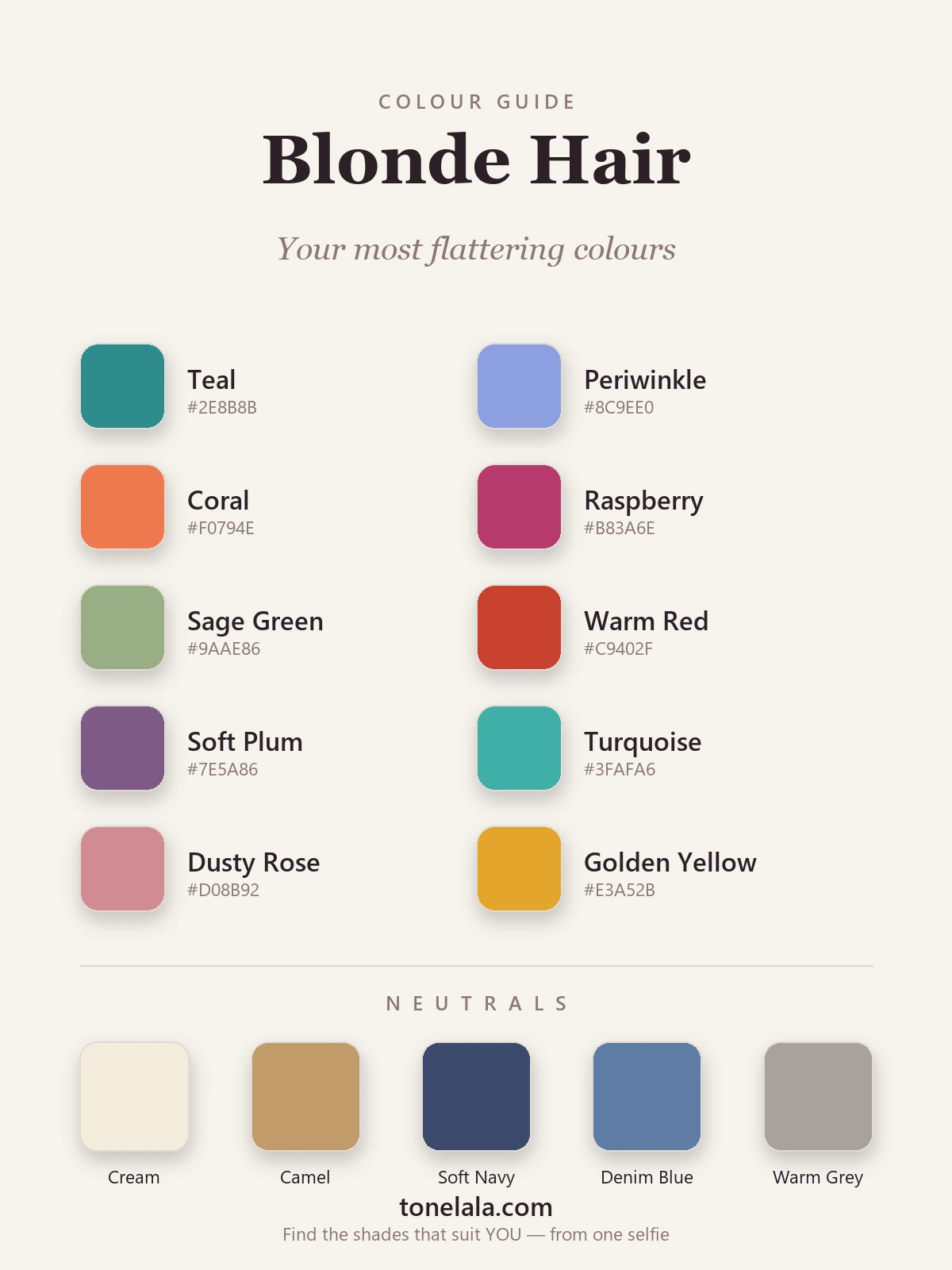
These ten flatter the broadest range of blonde coloring, a deliberate mix of cool and warm, kept at the clear, medium depth that blonde hair carries best.
| Color | Hex |
|---|---|
Teal #2E8B8B |
A blue-green that adds color and depth while staying kind to light coloring, fresh, a little unexpected, and flattering on almost every blonde. My most reliable pick. |
Periwinkle #8C9EE0 |
A soft blue-violet that brightens the eyes and gives gentle contrast without overpowering. My first choice for cool, ashy blondes. |
Coral #F0794E |
A warm pink-orange that brings a healthy flush to the face. The single best color for many honey and golden blondes. |
Raspberry #B83A6E |
A cool, blue-based pink-red that gives light coloring a real lift, the punch of color that makes you look healthier, not heavier. |
Sage Green #9AAE86 |
A soft gray-green that's beautiful on warmer blondes; calm, modern and quietly flattering against golden hair. |
Warm Red #C9402F |
A tomato-leaning red with real presence, the color that switches a warm blonde's whole face on. Save the bluer reds for cool coloring. |
Soft Plum #7E5A86 |
A muted cool purple that gives gentle, sophisticated depth for cool blondes, the grown-up alternative to black near the face. |
Turquoise #3FAFA6 |
A clear blue-green that reads vivid and holiday-bright; it suits both warmer and cooler blondes and keeps light coloring fresh. |
Dusty Rose #D08B92 |
Soft, slightly muted pink that warms the face and is far more wearable near blonde hair than a hot bright pink. Universally easy. |
Golden Yellow #E3A52B |
A warm, sunlit yellow that's gorgeous on golden blondes, close enough to your hair's warmth to look intentional, clear enough not to muddy. |
Best neutrals: Cream #F3ECDC instead of stark white; Camel #C19A6B, the warm neutral that makes blonde hair look expensive; Soft Navy #3A4A6B in place of black when you want depth near the face; Denim Blue #5E7CA3 for an easy everyday base that flatters nearly every blonde; and Warm Gray #A9A29A for a quiet, modern neutral.
Want YOUR exact most-flattering shades?
Find your color season →Colors to avoid with blonde hair
- Stark black right up to the face. It's so much deeper than blonde hair that it drains light coloring, you read washed-out and tired rather than chic. If you love black, wear it below the waist or break it at the neckline with soft navy, cream or one of your palette colors.
- Muddy yellows, beige and oatmeal worn head-to-toe. These sit too close to your own hair, so there's no contrast and the whole look goes flat and faded. Add a color, or swap to camel and cream, and it comes alive.
- The wrong-temperature brights. Orange-based shades and heavy gold can clash on a cool, ashy blonde; icy, blue-based brights can look harsh on a warm, golden one. The color isn't the problem, the temperature is. Reach for the version that matches your undertone.
Blonde Hair across the color seasons
In the seasonal system, blonde hair almost always lands you in the light family, because your coloring is gentle and low in depth. The deciding factor for which light season is, yes, your undertone. Warm, peachy skin with honey or golden hair points to Light Spring (coral, peach, golden yellow, warm sage). Cool, pink or neutral skin with ashy or platinum hair points to Light Summer (periwinkle, soft rose, lavender, soft teal). Some blondes with softer, hazier features lean Soft Summer or Soft Autumn, where the same colors appear in gentler, dustier forms. What you very rarely are is a Deep or Bright season, those palettes carry more weight and contrast than light blonde coloring can hold near the face.
Light Spring and Light Summer look almost identical on paper and behave completely differently on a person, which is exactly why guessing rarely works. If you want to understand how depth, undertone and contrast combine to place you, the color analysis guides walk through every season in detail, and a proper analysis tells you precisely which one is yours.
Makeup & styling tips for blonde hair
Keep makeup in the same clear, medium register as your clothes and let undertone lead. For cool blondes, a rose or soft-berry lip, a cool-pink blush and taupe or soft-plum eyeshadow read clean and bright; for warm blondes, reach for coral and peach on the lips and cheeks, with warm bronze and soft gold on the eyes. Either way, go gently on stark black liner and inky brows, they're heavy for light coloring and can age the face; a soft brown is far kinder, and a brow a shade or two darker than your hair gives definition without harshness. For clothes, build outfits around your palette colors and break up any dark or neutral pieces with a flattering shade at the neckline, where it does the most work. And let your hair be the highlight it already is, a color worn near your face that suits your undertone makes blonde look brighter and more expensive than any neutral ever can.
Putting it together
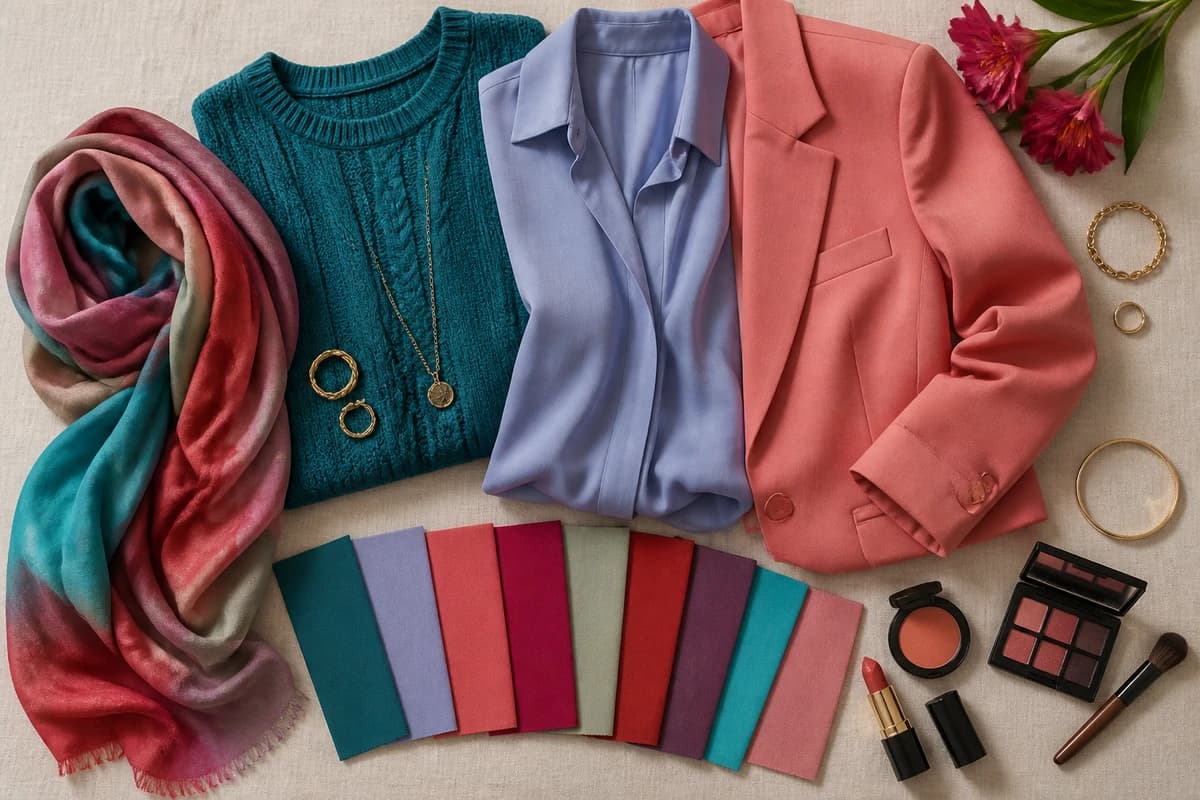
Blonde hair isn't a coloring to play safe with, it's one that rewards real, considered color. Step out of the beige, keep your shades clear and medium rather than black-dark or muddy, and choose colors that match your undertone (cool periwinkle, raspberry and plum, or warm coral, sage and golden yellow), and your face does what it's meant to: catch the light. Pick three or four colors above plus cream, camel and soft navy, and you've got a wardrobe that flatters on autopilot. The only real misstep is treating "blonde" as a reason to stick to neutrals, your coloring can carry far more than that, once you know which colors are actually yours. The fastest way to find out is a personal color analysis.
Frequently asked questions
What colors look good with blonde hair?
Blonde hair is flattered most by clear, medium-depth colors that have life in them without being heavy, teal, periwinkle, coral, raspberry, sage green, warm red, soft plum, turquoise, dusty rose and golden yellow. Blonde hair is light, so it sits in lovely balance with colors that aren't pitch-dark; the eye stays on your face rather than on a black jumper. The single most flattering version comes down to your undertone: cool, ashy blondes glow in periwinkle, raspberry and soft plum, while warm, golden blondes light up in coral, sage and golden yellow.
What colors should you avoid with blonde hair?
Three to watch. Pure, stark black worn right up to the face, it's so much deeper than blonde hair that it can drain light coloring and make you look tired. Muddy yellows and beiges that sit too close to your hair color, so the whole look goes flat and washed-out. And on cooler, ashier blondes, orange-based brights and heavy gold can clash. None are banned outright, wear black below the waist or break it at the neckline, and reach for a clearer, undertone-matched version of any color that's fighting you.
Do blondes look better in cool or warm colors?
It depends entirely on your undertone, not your hair color alone. Cool, ashy or platinum blondes with pink- or blue-toned skin look best in blue-based colors, periwinkle, raspberry, soft plum, cool teal, and often in silver. Warm, honey or golden blondes with peachy or golden skin glow in warm-based colors, coral, sage, golden yellow, warm red, and in gold. Plenty of blondes are somewhere in between (neutral), which is why a personal analysis is the only reliable way to settle it.
What are the best neutrals to wear with blonde hair?
Soften the extremes. Cream or ivory instead of optic white, and a soft navy in place of stark black when you want depth near the face. Camel is the warm neutral that makes blonde hair look genuinely expensive, denim blue is the easy everyday neutral that flatters almost every blonde, and a warm gray gives you a quiet, modern base. These five give you contrast and polish without the harshness that pure black-and-white forces onto light coloring.
How do I find the exact best colors for my blonde hair?
Blonde hair tells you that you're light, but it doesn't tell you whether you're warm or cool, and that's what decides your exact palette. Look at whether your skin reads cool (pink, rosy) or warm (peachy, golden), and whether silver or gold flatters you more. The most accurate route is a personal color analysis that reads your undertone, depth and contrast together and hands you your precise shades with hex codes. You can get yours at tonelala.com/onboarding.
Related guides
Best Colors for Pale Skin And Blonde Hair: Your Most Flattering Shades (with Hex Codes)
A color analyst's guide to the best colors for pale skin and blonde hair, 10 flattering shades and 5 neutrals with hex codes, what to avoid, and your season.
Best Colors for Blonde Hair And Blue Eyes: Your Best Shades (with Hex Codes)
A color analyst's guide to the best colors for blonde hair and blue eyes, 10 flattering shades and 5 neutrals with hex codes, what to avoid, and your season.
Best Colors for Red Hair And Green Eyes: Your Best Shades (with Hex Codes)
A color analyst's edit of the best colors for red hair and green eyes, 10 flattering shades and 5 neutrals with hex codes, what to avoid
Best Colors for Brown Hair And Brown Eyes: Your Best Shades (with Hex Codes)
The best colors for brown hair and brown eyes: teal, rust, emerald, plum and more with hex codes, colors that make brown eyes stand out, best neutrals and shades to avoid.
Best Colors for Gray Hair: Your Best Shades (with Hex Codes)
A color analyst's guide to the best colors for gray hair, 10 flattering shades and 5 neutrals with hex codes, what to avoid, and how to find your season.
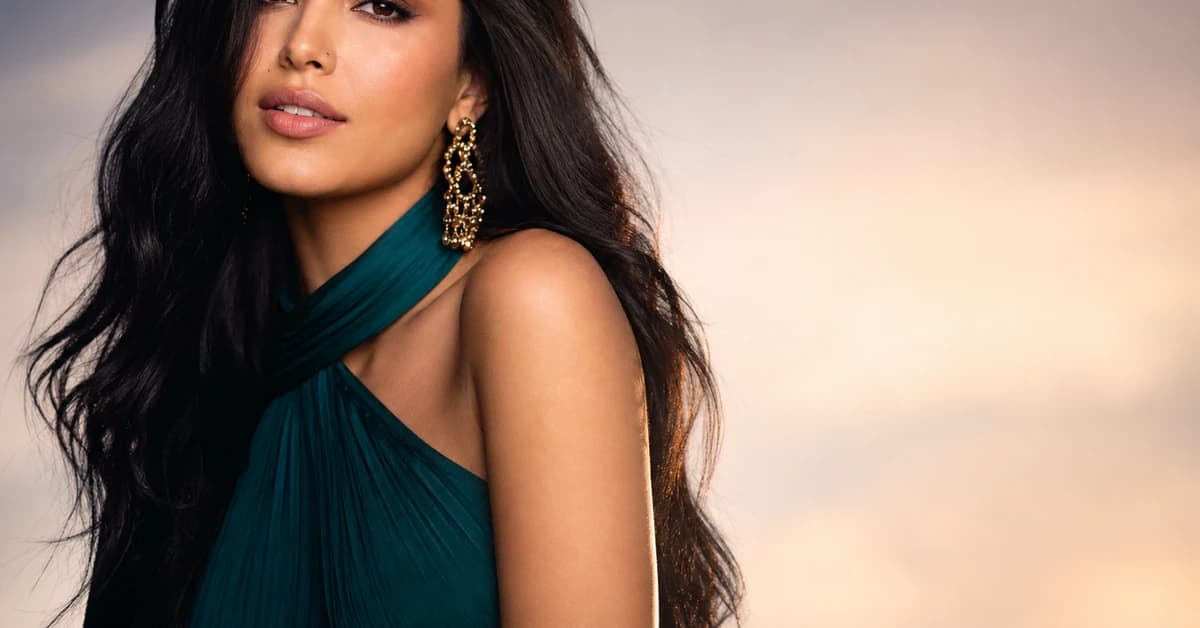
Best Colors for Black Hair: Your Best Shades (with Hex Codes)
A color analyst's guide to the best colors for black hair, 10 flattering shades and 5 neutrals with hex codes, what to avoid
Prefer in person? Find color analysis near you
Browse local color analysts by city, or get the same season, palette and best-colors breakdown online from one selfie.
See your colors on a photo of you
Upload one selfie and ToneLala reveals your season, your full palette, and your best hair, makeup, jewelry and outfits, styled on you.