In a sentence: The best colors for black hair are clear, saturated shades with enough depth to match it: true red, fuchsia, emerald, cobalt, sapphire, deep teal, royal purple, icy blue, hot coral and bright burgundy, with pure white, soft gray, charcoal, navy and warm ivory as neutrals. Skip to the full palette or find your exact shades.
Best Colors for Black Hair: Your Best Shades (with Hex Codes)
By ToneLalaUpdated October 23, 2026
Contents
- 01 Why clear, saturated colors suit black hair
- 02 Check these first
- 03 The best colors for black hair
- 04 How to wear the main colors
- 05 Best neutrals for black hair
- 06 The colors guides disagree on
- 07 Colors to avoid with black hair
- 08 Black hair across the color seasons
- 09 Black hair by skin tone
- 10 Makeup for black hair
- 11 Shoes, bags and jewelry
- 12 Outfit ideas for black hair
- 13 Where to start
Black hair is generally described as the most common hair color in the world. Its color comes from large amounts of eumelanin, the brown-black form of melanin, and very little of the red-yellow pheomelanin that gives red hair its color. Whatever the exact share of people who have it (the percentages quoted online are rarely sourced), black hair is the darkest hair color, and that depth shapes what suits it.
A soft, grayed color next to black hair tends to look weaker than the hair. A clear, saturated one holds its own. That is the starting rule, and most of this guide is about the exceptions: how skin depth, undertone and the tone of the black itself change which version of each color is yours.
Why clear, saturated colors suit black hair
Most guides for this keyword start from contrast. Black hair is very dark, so there is usually a big jump between the hair and the skin, and colors with clarity and depth match that jump. Muddy, low-clarity colors (taupe, khaki, oatmeal, faded pastels) do the opposite: they sit between your hair and skin without belonging to either, and the face can look tired.
How big the jump is depends on your skin. Black hair with fair skin is about the highest contrast a person can have. Black hair with medium or olive skin has moderate contrast, and black hair with deep skin has lower contrast between hair and skin but plenty of depth overall. All three suit clear colors, but in different strengths, which is why the guides that rank best split their advice by skin.
Check these first
How much contrast you have
Look in a mirror in daylight with your hair pulled back. If your skin is fair and your hair is black, you have high contrast: you can wear pure white with black, bright jewel tones and icy pastels next to each other. If your skin is medium or olive, mid-to-deep jewel tones and rich warm colors will usually look better than icy pastels. If your skin is deep, saturated colors and bright white make the strongest effect; very pale pastels can look chalky.
Your undertone
Undertone sets the temperature of each color. If silver jewelry and pure white look better on you than gold and cream, you lean cool: blue-based red, fuchsia, cobalt, icy blue and royal purple. If gold and cream look better, you lean warm: tomato red, hot coral, deep teal, warmer greens and warm ivory. Olive skin often sits between the two. The how to find your undertone guide has more tests.
The tone of your black
Palette Hunt is the only ranking guide that splits advice by the black itself, and it is a useful check. Blue-black hair (it looks slightly blue in sunlight) suits the coolest, clearest colors: cobalt, fuchsia, icy blue, pure white. Jet black is the most flexible. Soft or warm black, which shows brown in sunlight, often suits warmer reds, teal, coral and deep greens better than icy shades. If your hair is very dark brown rather than true black, the advice for warm black usually fits.
Your eyes
Dark brown eyes with black hair add to the depth, so stronger colors suit you. Lighter eyes with black hair (blue, green, hazel) add a second point of contrast: colors that echo the eyes, such as cobalt for blue eyes or emerald for green, work well. See the best colors for brown eyes for more.
The best colors for black hair
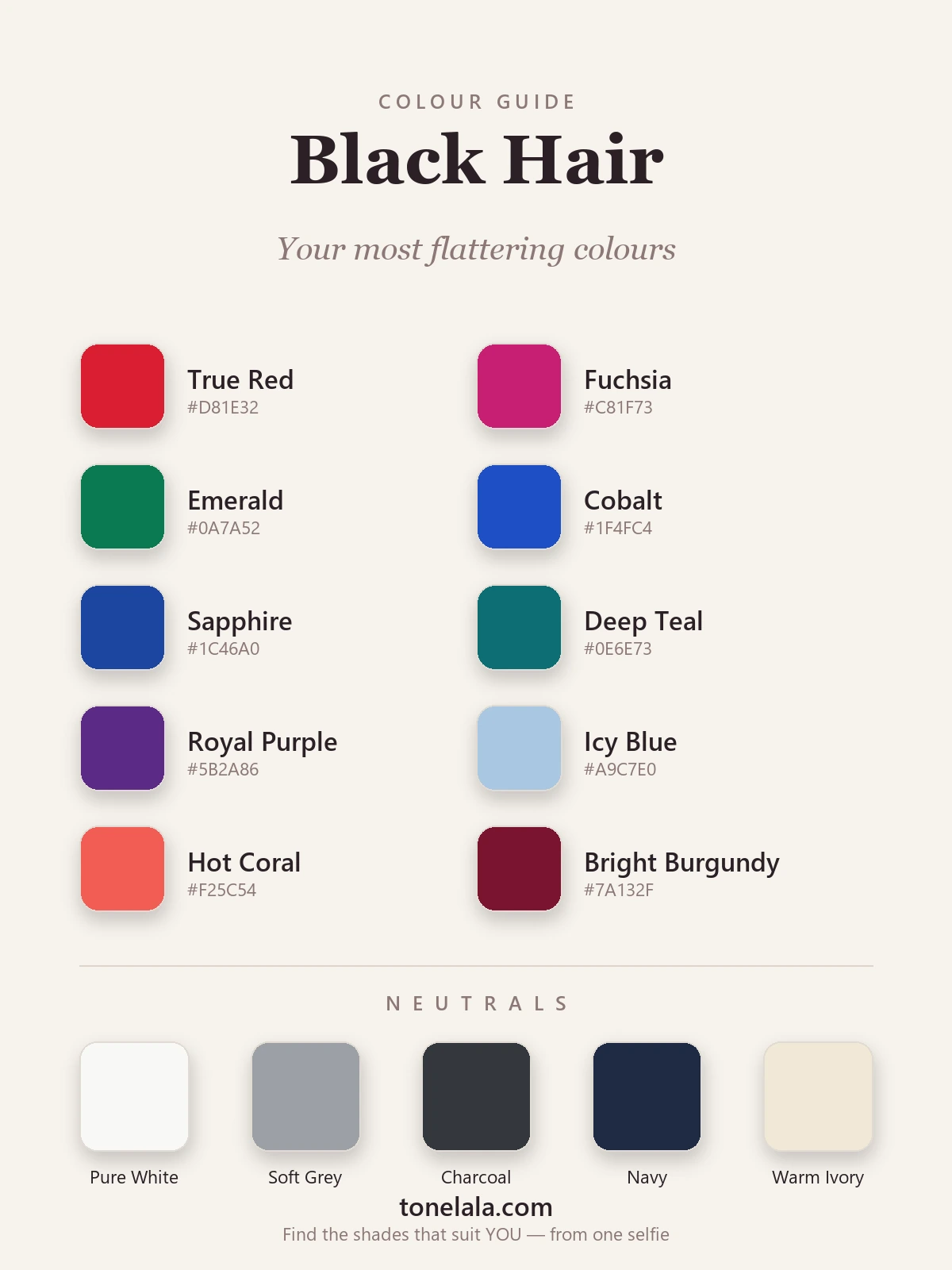
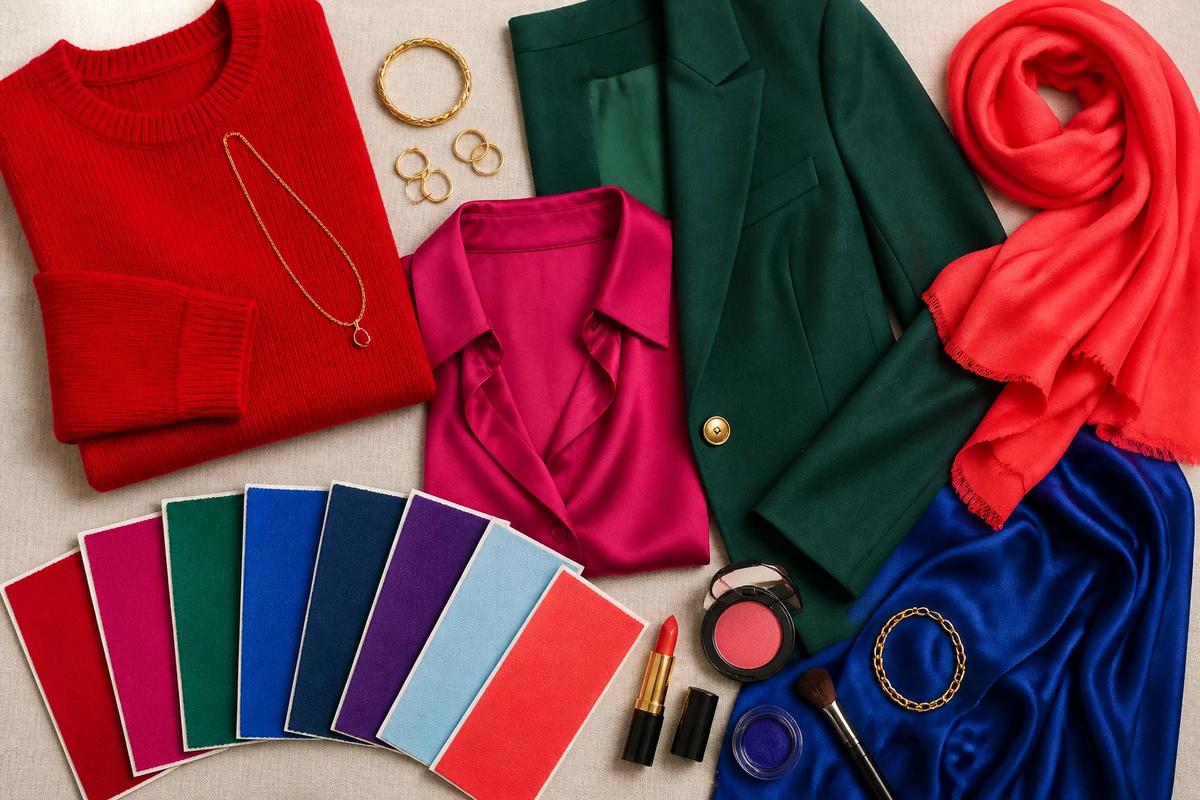
These ten are clear, rich shades with enough weight to stand next to black hair. The first five suit most people; the rest lean cooler or warmer, as noted.
| Color | Why it works |
|---|---|
True Red #D81E32 |
Five of the six ranking guides we fetched list red. A clean, saturated red matches the depth of black hair. |
Fuchsia #C81F73 |
A clear, cool pink. Best on cool or fair skin; guides list pink for black hair almost as often as red. |
Emerald #0A7A52 |
A jewel green with depth. Listed in every guide we compared, and it suits warm and cool undertones. |
Cobalt #1F4FC4 |
A vivid blue, also listed in every guide. Strongest on cool skin and blue-black hair. |
Sapphire #1C46A0 |
A deeper, slightly softer blue that is easier to wear for work than cobalt. |
Deep Teal #0E6E73 |
A blue-green that suits both cool and slightly warm versions of this coloring. |
Royal Purple #5B2A86 |
A saturated purple. Five of six guides list purple; it leans cool. |
Icy Blue #A9C7E0 |
A clear, pale blue. It stays crisp because it is clear rather than dusty. Best on fair, cool skin. |
Hot Coral #F25C54 |
The warm-undertone option: a clear coral-red for golden or olive skin. |
Bright Burgundy #7A132F |
A clear wine red for evenings and fall. Four of six guides list burgundy or wine. |

Free E-Book
How to Look Younger With the Right Colors
Color Analysis
Know Your Colors Before Your Next Shopping Trip
A personal color analysis from one selfie, ready in minutes.
How to wear the main colors
Red
A red coat, sweater or dress with black, white or charcoal is the classic outfit for black hair. Choose a blue-based red if you are cool and a slightly warmer tomato red if you are warm. A red lip works the same way.
Pinks and fuchsia
Fuchsia is a strong statement color: one fuchsia piece with navy, white or gray is usually enough. On warmer skin, a raspberry or hot coral may suit you better than a blue-pink.
Emerald and teal
Emerald is the most dependable green: an emerald blouse under a black or navy blazer, or an emerald dress with gold or silver jewelry. Deep teal is the warmer-leaning version for golden and olive skin.
Blues
Cobalt and royal blue are among the most flattering colors for cool, high-contrast coloring and make a brighter alternative to black for work. Sapphire is the deeper, quieter option. Icy blue works as a shirt or knit with navy or charcoal.
Purples and burgundy
Royal purple and burgundy give you dark, rich colors with more life than black. A purple knit with charcoal pants, or a burgundy dress for evening, both work on most skin tones.
Warm brights
On warm or olive skin, hot coral, tomato red and saturated yellow often beat the icy end of the palette. Keep the rest of the outfit clean (white, navy, denim) so the bright color leads.
Best neutrals for black hair
- Pure White
#F8F8F5: listed by five of the six guides; it repeats the contrast between hair and skin. On warm skin, off-white is the softer option. - Charcoal
#33373D: a deep gray that reads softer than black; four of the six guides accept deep charcoal. Dull mid-gray and ashy gray are the versions guides reject. - Navy
#1F2A44: a dark that is lighter in effect than black; one guide warns against dark navy right at the neckline. - Soft Gray
#9CA0A6: an easy light neutral when it is clear rather than ashy. - Warm Ivory
#F1E9D6: the off-white for warmer undertones.
The colors guides disagree on
Black on black
Some guides like all-black outfits on black hair; Palette Hunt calls it a graphic silhouette and suggests varying textures. Other guides, including another Palette Hunt page, say to keep black away from the face and wear it as pants, skirts and evening pieces. If an all-black outfit looks heavy on you, add white, a clear color or a metal at the neckline.
Camel and beige
One guide endorses beige; others avoid beige, oatmeal, camel and tan near the face. Savile Lane's chart puts tan on the avoid list for pale skin and the wear list for dark skin. Undertone and skin depth usually decide it: warm, golden, olive or deep skin often wears camel well, while fair, cool skin tends to look better in white or navy.
Brown
Lemon8's community guide calls brown the most forgiving color for black hair; Palette Hunt rejects muddy brown but recommends cognac and terracotta. Rich, clear browns (espresso, chocolate, cognac) are the safer version; mid-browns close to the hair are the ones most often rejected.
Pastels
Clear pastels (icy blue, icy pink, lavender, mint) are accepted by most guides, especially for fair skin. Chalky, washed-out pastels are rejected by most. One guide calls pastels tricky without taking a side.
Orange and yellow
Palette Hunt avoids warm orange and rust unless your undertone is warm, while its page for black hair and dark eyes recommends bright warm orange. Saturated yellow appears in three guides; pale yellow is rejected by several. Both colors tend to work on warm, golden, olive or deep skin and look harsher on cool, fair skin.
Colors to avoid with black hair
- Muddy, grayed-off shades: dusty taupe, muted khaki, oatmeal, mushroom.
- Murky mid-browns that sit close to the hair's own color.
- Chalky, dusty pastels: putty pink, faded lilac, baby beige.
- Dull mid-gray and ashy gray.
- Neon, which Palette Hunt lists as a color that competes with the hair.
The common thread is a lack of clarity. When in doubt, choose the cleaner, more saturated version of a color.
Black hair across the color seasons
Black hair is a starting point, not a season. Most guides put natural black hair in a Winter or, with golden or olive skin, in Deep Autumn:
- Deep Winter: the placement Palette Hunt calls most likely. Deep, cool-leaning coloring that suits the darkest clear colors, pure white and black.
- True Winter: cool skin with high contrast; suits fuchsia, cobalt, icy blue and true red.
- Bright Winter: none of the ranking guides names it, but very clear coloring with bright eyes can land here; it suits the most saturated colors.
- Deep Autumn: golden or olive skin with black or warm-black hair; suits tomato red, deep teal, olive, rust and warm brown rather than icy shades.
Summer and Spring are less common placements for natural black hair, because those seasons usually come with lighter hair. Dyed black hair says little about your season. The winter color palette guide and the wider color analysis guides explain each one.
Black hair by skin tone
Fair skin
The highest-contrast version: white with black, cobalt, fuchsia, emerald, true red and icy pastels. Muddy and warm-beige colors are the most likely to look wrong. There is a full guide to the best colors for fair skin and dark hair.
Medium and olive skin
Jewel tones (emerald, sapphire, deep teal, burgundy) and rich warm colors usually beat icy pastels. Olive skin tends to suit deeper greens and warm reds; the olive skin color palette covers it in detail.
Deep skin
Saturated colors, bright white, cobalt, fuchsia, emerald, coral and yellow make the strongest effect. Very pale or chalky pastels can look ashy. See the best colors for dark skin.
Makeup for black hair
Palette Hunt is the only ranking guide that covers makeup in detail. It suggests red, berry, wine, plum or fuchsia lips, black winged liner and jewel-toned shadow, and warns against peachy nudes. A clear red or berry lip is the simplest way to finish a look on this coloring. For cheeks, cool rose suits cool skin and warm coral suits warm skin; muddy, grayed nudes tend to work against the clarity of the hair.
Shoes, bags and jewelry
Black hair works with both metals, so choose by undertone: silver, white gold or platinum on cool skin, yellow gold on warm or olive skin. Black shoes and bags are easy with this coloring; burgundy, cobalt or red shoes are a way to add a clear color in a small dose. A deep ruby or cobalt scarf near the face does more than a pastel one.
Outfit ideas for black hair
- Weekday: cobalt knit, white jeans, black loafers.
- Office: charcoal suit, white shirt, sapphire or emerald blouse in place of the shirt for a change.
- Weekend: white T-shirt, dark jeans, red sneakers or a red bag.
- Evening: emerald or bright burgundy dress, silver or gold jewelry by undertone.
- Warm undertone: hot coral top, navy pants, gold jewelry.
- Menswear: navy blazer, white shirt, burgundy knit tie or an emerald sweater.
Where to start
Pick one clear color from the palette that matches your undertone (cobalt or fuchsia if you are cool, hot coral or deep teal if you are warm, emerald or true red if you are not sure) and one neutral (white, charcoal or navy). Wear the color near your face and compare it in daylight with a muddy color such as khaki. Most people with black hair see the difference at once.
To get your exact shades rather than the family, a personal color analysis reads your undertone, depth and contrast together.
Frequently asked questions
What colors look good with black hair?
Clear, saturated colors with enough depth to stand next to black hair: true red, fuchsia, emerald, cobalt, sapphire, deep teal, royal purple, icy blue, hot coral and bright burgundy. Emerald and cobalt or royal blue appear in every ranking guide we compared. Pure white is the standout neutral. The exact version of each color depends on your undertone and on how much contrast there is between your hair and your skin.
What colors should you avoid with black hair?
The colors most guides warn about are muddy, grayed-off shades such as dusty taupe, khaki and oatmeal; murky mid-browns that sit too close to the hair; chalky, washed-out pastels; and dull mid-gray. They lack the clarity black hair has, so the face can look flat. None is banned: keep them away from the face, or pair them with a clear color that suits you.
What are the best neutrals for black hair?
Pure white, which matches the contrast in the coloring, then charcoal and navy as softer darks, soft gray as a light neutral, and warm ivory for warmer undertones. Black itself is disputed near the face: some guides like head-to-toe black on black hair, others prefer it below the neckline. Camel and beige are the neutrals guides disagree on most.
Does undertone change the best colors for black hair?
Yes. Two people with black hair can suit different reds: a cool, blue-based red on cool, pink skin, and a warmer tomato red or coral on golden or olive skin. Cool undertones tend to suit fuchsia, cobalt, icy blue and silver; warm undertones suit hot coral, teal, warmer greens and gold. Skin depth matters too, because it changes how much contrast your coloring has.
How do I find my exact best shades for black hair?
Work out two things: whether your skin reads cool (pink, rosy) or warm (peachy, golden, olive), and how big the jump is between your skin and your hair. Gold-versus-silver and white-versus-cream checks in daylight help with the first. Together they point to your likely season. A personal color analysis reads undertone, depth and contrast at the same time, which is the most direct way to settle it.
Should people with black hair avoid black clothing?
No, but guides disagree about black near the face. Some describe all-black outfits on black hair as striking; others say black at the neckline can make the face look heavy. If you wear black, vary the textures (wool, leather, silk) and add a clear color or white near the face if it looks heavy.
Can people with black hair wear pastels?
Yes, if they are clear rather than chalky. Icy blue, icy pink, lavender and mint look crisp next to black hair, especially on cool, fair skin. Dusty, grayed pastels such as putty pink or faded lilac are the versions most guides reject, because they look washed out against the depth of the hair.
What season is black hair?
Natural black hair most often points to a Winter (Deep, True or Bright) or, on golden or olive skin, to Deep Autumn. Hair alone does not decide a season, though: undertone, skin depth and eye color all count, and dyed black hair says little about your coloring.
Can you wear brown or camel with black hair?
Guides disagree. Rich browns such as cognac, chocolate and espresso are accepted by several guides, especially on warm skin; murky mid-browns and khaki are the ones most often rejected. Camel and beige split them further: one guide endorses beige, while others avoid camel, tan and oatmeal near the face. On warm, golden or olive skin camel usually works; on cool, fair skin a cleaner neutral such as white or navy tends to look better.
Is gold or silver better for black hair?
Black hair works with both, so choose by undertone. Cool skin tends to look best in silver, white gold or platinum; warm or olive skin in yellow gold. If both look fine, you probably have a neutral undertone and can mix them.
Related guides

Best Colors for Red Hair And Green Eyes: Your Best Shades (with Hex Codes)
The best colors for red hair and green eyes, 10 shades and 5 neutrals with hex codes, split by copper, auburn and strawberry blonde, plus what to avoid.
Best Colors for Brown Hair And Brown Eyes: Your Best Shades (with Hex Codes)
The best colors for brown hair and brown eyes: teal, rust, emerald, plum and more with hex codes, colors that make brown eyes stand out, best neutrals and shades to avoid.
Best Colors for Gray Hair: Your Best Shades (with Hex Codes)
The best colors for gray hair, 10 shades and 5 neutrals with hex codes, by type of gray (silver, white, salt-and-pepper) and undertone, plus what to avoid.
Best Colors for Red Hair: Your Best Shades (with Hex Codes)
The best colors for red hair: 10 shades and 5 neutrals with hex codes, split by copper, auburn and strawberry blonde, plus the colors guides disagree on.
Best Colors for Fair Skin And Dark Hair: Your Most Flattering Shades (with Hex Codes)
A color analyst's guide to the best colors for fair skin and dark hair, 10 flattering shades and 5 neutrals with hex codes, what to avoid

Best Colors for Pale Skin And Blonde Hair: Your Most Flattering Shades (with Hex Codes)
A color analyst's guide to the best colors for pale skin and blonde hair, 10 flattering shades and 5 neutrals with hex codes, what to avoid, and your season.
Prefer in person? Find color analysis near you
Browse local color analysts by city.