In a sentence: the best colors for light skin are soft teal, raspberry, periwinkle, dusty rose, sage green, plum, coral, cornflower blue, warm camel and emerald, grounded by soft white, warm taupe, soft navy, charcoal and dove gray. Skip to the full palette or find your exact shades.
Best Colors for Light Skin: Your Most Flattering Shades (with Hex Codes)
By ToneLalaUpdated July 12, 2026

Contents
The fastest way to see what light skin can do is to hold a stark white shirt up to a fair face, then swap it for a soft cream. The white sharpens every shadow and pulls the color out of the cheeks; the cream warms the whole face and the eyes seem to switch on. Light skin isn't fragile, but it is responsive, it reflects whatever you put beside it, for better or worse, faster than deeper complexions do.
That's the part most people miss. They assume fair skin needs to be "brightened" and reach for the loudest colors in the shop, or they hide in beige and black because those feel safe. Both instincts tend to backfire. Light skin usually looks its best in colors that have a bit of clarity and life but stop short of screaming, and, crucially, in the version of each color that matches its own undertone. Get that right and a light complexion looks lit from within rather than washed out.
Understanding light skin and color
"Light skin" describes depth, how much light your complexion reflects, not its temperature. And depth is only half the story. The other half, the half that actually decides your colors, is undertone: the quiet wash of warmth or coolness underneath the surface.
Two people can have equally fair skin and suit opposite palettes. One has a cool, pink-to-blue undertone and glows beside raspberry, periwinkle and soft navy. The other has a warm, golden-to-peach undertone and comes alive in coral, camel and a warmer teal. Put the cool person in coral and she looks a little flushed and tired; put the warm person in icy fuchsia and she looks slightly gray. Same skin depth, completely different results.
The reason light skin is so unforgiving about this is that there's less natural pigment to absorb a wrong note, the color you wear shows up on your face almost like a reflector. So while the palette below flatters fair complexions across the board, treat it as a starting shortlist. Your undertone decides which version of each color is your best one, and that's the difference between "nice" and "people keep asking if you've been away".
The best colors for light skin
These are the ten I reach for first when I'm dressing a fair complexion, clear enough to give the face some life, soft enough that they never overwhelm it.
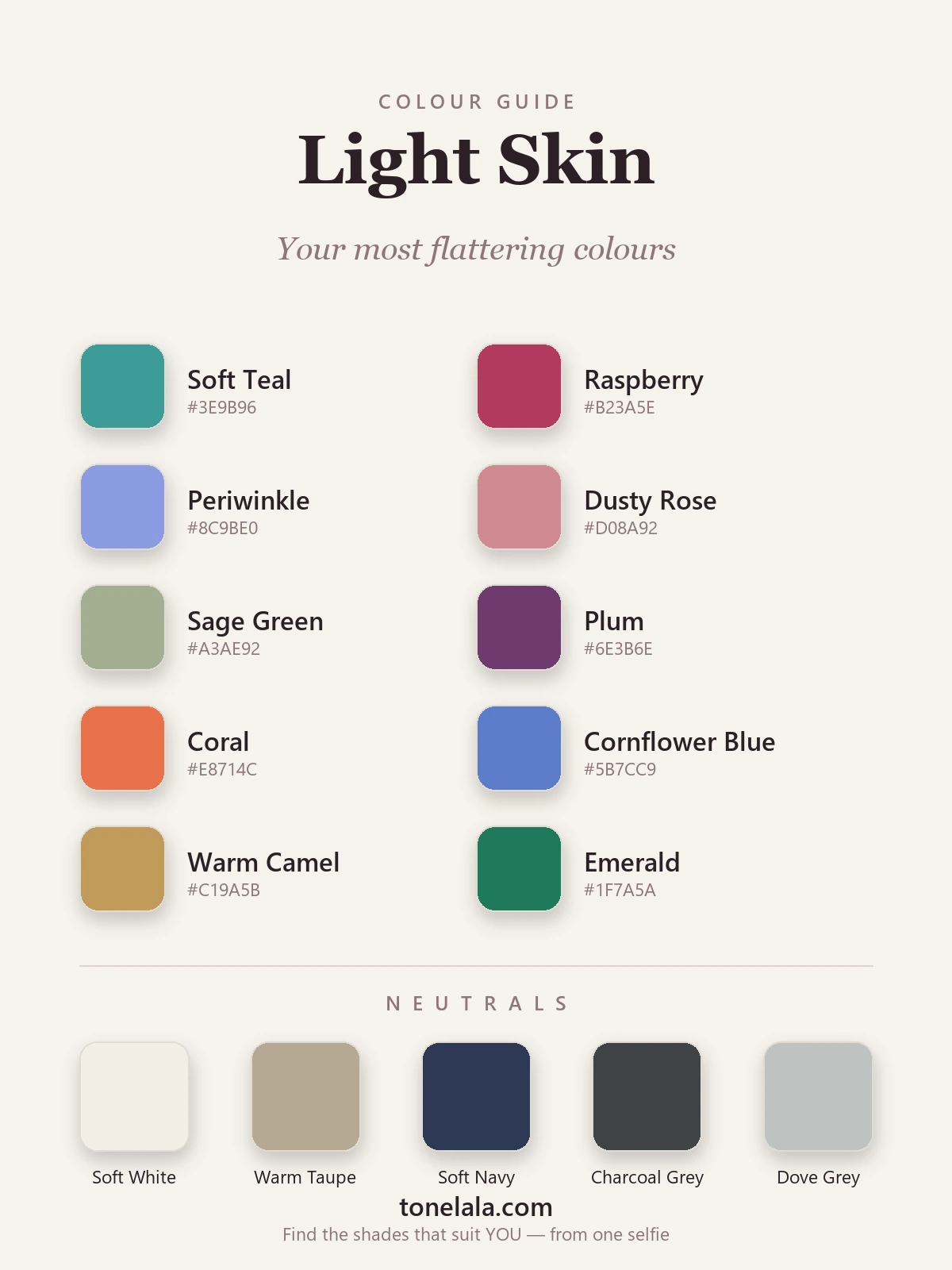
| Color | Hex | Why it works |
|---|---|---|
| Soft Teal | #3E9B96 |
A blue-green with a little softness sits beautifully against fair skin, fresh and flattering without the hardness of true bright teal. |
| Raspberry | #B23A5E |
A cool, berry-toned pink-red that brings instant color to the cheeks. My desert-island shade for cool, light skin. |
| Periwinkle | #8C9BE0 |
A soft blue-violet that's endlessly kind to light skin, gentle, a touch cool, and it makes eyes pop. |
| Dusty Rose | #D08A92 |
A muted, slightly mauve pink that flatters the way blush flatters skin, soft, romantic and never sugary. |
| Sage Green | #A3AE92 |
A calm, grayed green that lets warm and neutral light skin glow. Grown-up and very current. |
| Plum | #6E3B6E |
A deep red-purple that gives fair skin a rich "dark" to wear near the face without the drain of black. |
| Coral | #E8714C |
The warm hero. Peachy-orange and lively, it makes warm, light skin look sun-kissed and healthy. |
| Cornflower Blue | #5B7CC9 |
A clear, medium blue that's easy to wear and reliably brightening, works across most light complexions. |
| Warm Camel | #C19A5B |
Golden and soft, camel warms fair skin the way the right neutral should, and reads quietly expensive. |
| Emerald | #1F7A5A |
A jewel green with enough depth to give light skin contrast and life, striking on cool and neutral tones especially. |
Best neutrals: Soft White #F3EEE4 (far kinder than stark optic white), Warm Taupe #B6A893 (a flattering greige that warms the face), Soft Navy #2E3A55 (the smart, gentle stand-in for black), Charcoal Gray #3F4347 (a 'dark' that won't drain you), and Dove Gray #BFC3C2 (a soft mid-gray that sits happily near the face).
Want YOUR exact most-flattering shades?
Find your color season →Colors to avoid with light skin
- Washed-out pastels: baby yellow, pale beige, the palest mint. They sit at almost the same lightness as fair skin, so the two blur together and you vanish. If you love pastels, choose ones with a touch more pigment, like dusty rose or periwinkle.
- Stark optic white and hard black at the face: pure white can over-sharpen and black can drain a light complexion, especially worn right up to the jaw. Swap to soft white and soft navy or charcoal, and you keep the contrast without the harshness.
- Acid neons: electric lime, hot fuchsia, neon orange. Light skin is responsive, so screaming brights take over and the face becomes the supporting act. Reach for raspberry or coral when you want energy that still flatters.
None of these are forbidden. They're simply the ones that most often fall flat on fair skin, handle them with care, or pick the softer alternative beside each.
Light skin and the color seasons
This is where the honest answer lives: there's no single "best color for light skin", because light skin shows up in several different color seasons, and the season is set by undertone, not depth.
If you're light and cool: a Light or True Summer, your skin glows in soft, cool shades: raspberry, periwinkle, dusty rose, soft navy and dove gray, kept gentle rather than icy. If you're light and warm: a Light or True Spring, you come alive in warmer, clearer notes: coral, warm camel, a golden-leaning teal and soft warm white. Neutral, light complexions can borrow happily from both. And even deeper or higher-contrast people with fair skin (some Winters) can carry the more saturated picks here, emerald, plum, true raspberry, far better than the muted ones.
That single distinction, warm versus cool, will change the exact shade of every color above. Our color analysis guides walk through each season in detail, and a personal analysis reads your photo to tell you precisely which teal, which pink, which navy lights your face up rather than dulling it.
Makeup & styling for light skin
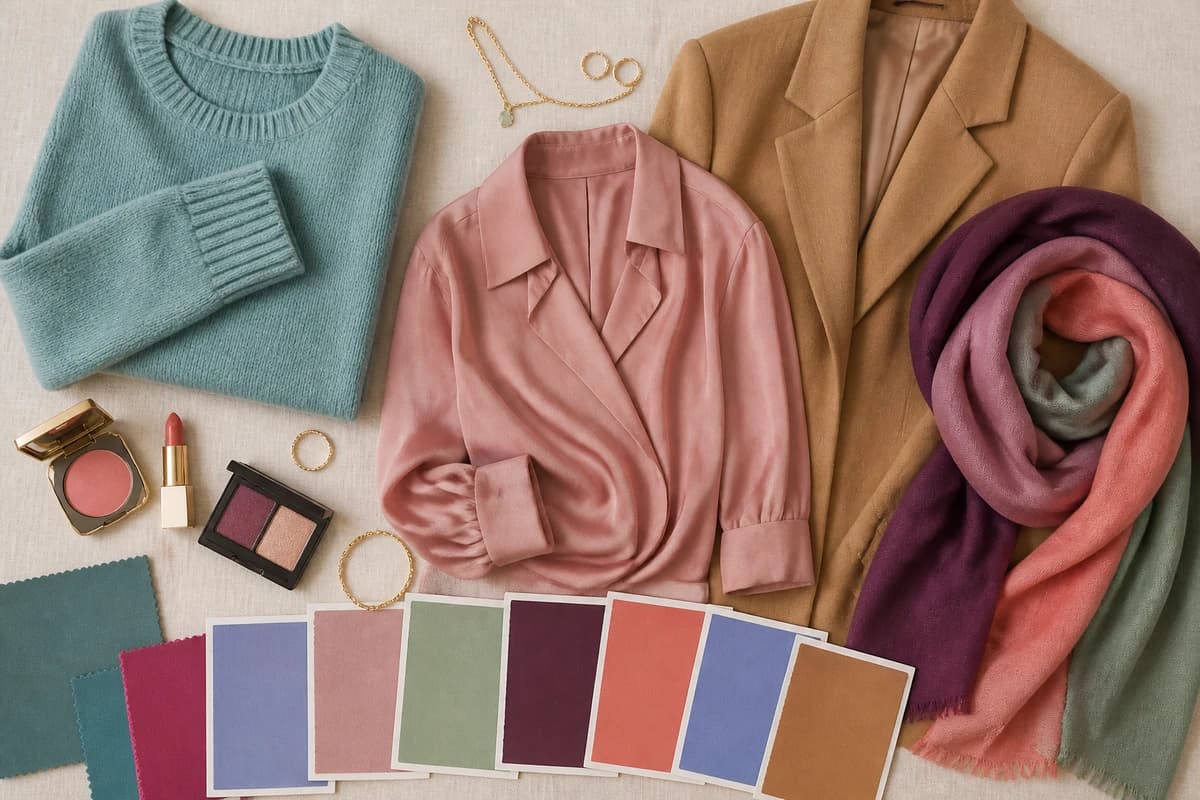
The same undertone logic runs straight through your beauty choices. Cool, light skin tends to look freshest in rosy and berry blushes, blue-red or soft-pink lips and silver or platinum jewelry; warm, light skin glows in peach and coral blush, warm nude or coral lips and gold. For clothing, build contrast deliberately, fair skin can look its best with a clear or deep color near the face rather than tone-on-tone pale, so let one of the palette shades sit at your neckline and keep softer neutrals below. Both gold and silver can work, but most light complexions lean clearly to one; that, too, follows your undertone.
Putting it together
Start with two or three colors from the palette that you're instinctively drawn to, say soft teal, raspberry and camel, add a soft white and a soft navy, and you've got a small wardrobe that flatters a fair complexion from every angle. Keep the brightest, clearest shade for near your face and let the neutrals do the quiet work. The real unlock isn't memorising which colors suit "light skin" in general, it's knowing your own undertone, so you reach for the warm version or the cool one without thinking. Once you know that, getting dressed stops being a guess.
Frequently asked questions
What colors suit light skin?
Light skin is flattered by colors with a little softness rather than harsh extremes, soft teal, raspberry, periwinkle, dusty rose, sage green, plum, coral, cornflower blue, warm camel and emerald all tend to look beautiful. The single most flattering version depends on your undertone: cool, light skin glows in periwinkle, raspberry and soft navy, while warm, light skin comes alive in coral, camel and sage. Soft white, warm taupe and soft navy are the kindest neutrals.
What colors should you avoid with light skin?
Be careful with very pale, washed-out pastels (baby yellow, pale beige) that match light skin too closely and disappear into it; with stark black worn right up to the face, which can drain a fair complexion; and with neon brights that overpower delicate coloring. None are truly banned, soft navy, charcoal and warm taupe are kinder 'dark' and 'neutral' choices, and a deeper, richer version of any color usually flatters more than a pale one.
What are the best neutrals for light skin?
Soft white (#F3EEE4) is far kinder than stark optic white; warm taupe (#B6A893) and soft navy (#2E3A55) both flatter without the harshness of black; charcoal gray (#3F4347) gives you a 'dark' that won't drain you; and dove gray (#BFC3C2) is a gentle mid-gray that works near the face. These five do most of the quiet work in a light-skin wardrobe.
Does undertone change which colors suit light skin?
Yes, undertone matters more than how light your skin is. Two people with equally fair skin can suit completely different palettes: one cool and one warm. Cool, light skin (pink or blue undertone) glows in raspberry, periwinkle and soft navy; warm, light skin (golden or peach undertone) comes alive in coral, camel and warm teal. Working out your undertone is the single most useful step in finding your colors.
How do I find my exact most-flattering shades for light skin?
The reliable way is a personal color analysis that reads your undertone, depth and contrast from a photo and places you in a color season. That tells you not just 'teal suits light skin' but the exact teal, cool and bright, or soft and warm, that lights your face up. You can start one at tonelala.com/onboarding.
Related guides
Best Colors for Dark Skin And Brown Eyes: Your Most Flattering Shades (with Hex Codes)
A color analyst's guide to the best colors for dark skin and brown eyes, jewel tones, bright clears and the neutrals that glow, with hex codes.
Best Colors for Tan Skin And Green Eyes: Your Most Flattering Shades (with Hex Codes)
A stylist's edit of the best colors for tan skin and green eyes, olive, teal, rust, gold and more, with hex codes, neutrals and shades to avoid.
Best Colors for Olive Skin And Brown Eyes: Your Most Flattering Shades (with Hex Codes)
A color analyst's guide to the best colors for olive skin and brown eyes, teal, terracotta, olive, gold and more, with hex codes and shades to avoid.
Best Colors for Medium Skin: Your Most Flattering Shades (with Hex Codes)
A color analyst's guide to the best colors for medium skin, teal, coral, marigold, emerald and more, with hex codes, the right neutrals and what to avoid.

Best Colors for Pale Skin: Your Most Flattering Shades (with Hex Codes)
A color analyst's guide to the best colors for pale skin, 10 flattering shades with hex codes, the best neutrals, what to avoid

Best Colors for Fair Skin: Your Most Flattering Shades (with Hex Codes)
A color analyst's guide to the best colors for fair skin, 10 flattering shades plus 5 neutrals, with hex codes, what to avoid, and how undertone changes it.
Prefer in person? Find color analysis near you
Browse local color analysts by city, or get the same season, palette and best-colors breakdown online from one selfie.
See your colors on a photo of you
Upload one selfie and ToneLala reveals your season, your full palette, and your best hair, makeup, jewelry and outfits, styled on you.