In a sentence: Bright Winter is the cool, medium-deep, very high-contrast season, the brightest of all twelve. Your palette is built from electric, crystal-clear colors, hot pink, electric blue, true red, bright emerald, plus the crisp neutrals most seasons can't pull off: black and true white. Skip to the full palette with hex codes or find your own season.
Bright Winter Color Palette: The Complete Guide (with Hex Codes)
By ToneLalaUpdated July 4, 2026

Contents
I can usually spot a Bright Winter before they sit down. There's a clarity to the coloring, bright eyes against a clean skin tone, often dark hair, the whole face reading like someone bumped the contrast slider up. And almost every one of them has spent years being told to "tone it down." They've collected soft taupes and dusty roses that quietly swallow them whole. Then I drape an electric blue or a true red, and the face snaps into focus, eyes brighter, skin clearer. Bright Winter isn't loud for the sake of it. Your coloring is electric, and it wants color that keeps up.
This guide is the version I wish more sites wrote: actual hex codes, the colors that genuinely drain you, and an honest section on how to tell whether you're really a Bright Winter or one of the seasons it gets confused with.
What "Bright Winter" actually means
Bright Winter (sometimes called Clear Winter) is one of the twelve seasons in personal color analysis. Every season sits on three dials, and a Bright Winter color analysis lands the same way each time:
- Undertone: cool or warm. Bright Winter is cool, but cool-leaning-neutral, there's a faint neutral edge, which is exactly what lets it go so vivid rather than purely icy.
- Value: light or dark. Bright Winter is medium-deep.
- Chroma: bright or muted. This is the dial that defines you: Bright Winter is the brightest, clearest season of all. Highest chroma on the wheel.
Add it up and you get very high contrast: clear, electric, dramatic coloring that's flattered by clear, electric, dramatic color. Where Deep Winter is a jewel box turned dark and rich, Bright Winter is the same coolness lit from within: a charged, electric brightness. That high-chroma quality is the heart of the bright winter color palette, and it's the single trait that should guide every choice you make.
The palette
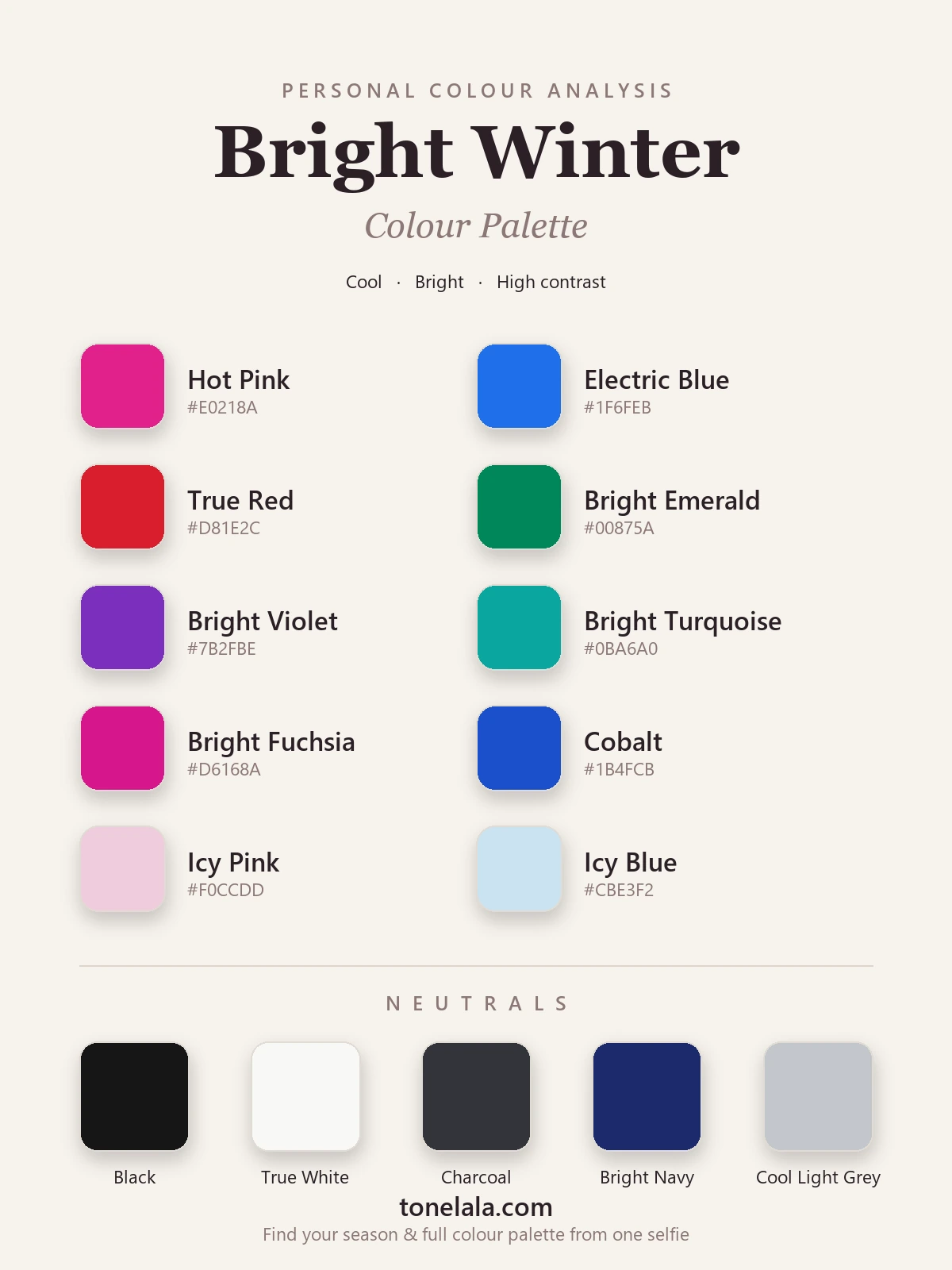
Clear, electric, cool. Every color has a charged, almost-glowing intensity, no grayed-down softness anywhere.
Your best colors
| Color | Hex |
|---|---|
| Hot Pink | #E0218A |
| Electric Blue | #1F6FEB |
| True Red | #D81E2C |
| Bright Emerald | #00875A |
| Bright Violet | #7B2FBE |
| Bright Turquoise | #0BA6A0 |
| Bright Fuchsia | #D6168A |
| Cobalt | #1B4FCB |
| Icy Pink | #F0CCDD |
| Icy Blue | #CBE3F2 |
Your neutrals: and here's the Bright Winter superpower: black #161616 and true white #F8F8F5 genuinely flatter you, and the two together make a high-contrast pairing that looks effortless on you and overwhelming on softer seasons. Round it out with Charcoal #33343A, Bright Navy #1B2A6B and Cool Light Gray #C3C7CC.
Your metals: silver, white gold and platinum, cool and bright, to match your clarity. Yellow gold pulls warm and slightly muddy against you.
Not sure Bright Winter is actually your season?
Find your color season →Colors to avoid (and why)
These don't just underwhelm, they actively fight your coloring:
- Muted & dusty tones: sage, dusty rose, mushroom, anything grayed-down reads as "tired" on the brightest coloring there is.
- Warm earthy tones: camel, mustard, olive, terracotta and warm gold belong to Autumn; on you they turn flat and muddy.
- Soft, warm pastels: butter yellow, peachy nude, hazy lilac. Your icy pastels work because they're cool and crisp; warm, weak ones collapse next to your contrast.
The mirror test: if a color makes your features look softer or hazier than the garment, it's too muted or too warm for you.
How to know you're actually a Bright Winter
Bright Winter borders three seasons that fool people constantly:
- Bright Winter vs Deep Winter: both cool and high-contrast. Bright Winter is lighter and more electric, living on the most saturated brights; Deep Winter is darker and richer, owning the deepest jewel tones.
- Bright Winter vs True Winter: both cool and very clear. Bright Winter is a touch warmer-neutral and, surprisingly, even brighter; True Winter is the purest, iciest cool. If pure icy coolness suits you better than electric vividness, lean True.
- Bright Winter vs Bright Spring: both extremely bright and clear, so chroma won't separate them. Undertone is the whole game: Bright Winter is cool, Bright Spring is warm. Cool electrics flatter you → Bright Winter; warm corals and golden brights → Bright Spring.
One more: if the very brightest colors start to wear you, if you reach for an electric blue and feel slightly overpowered, you may belong to the deeper, richer Deep Winter instead, which trades a little electricity for depth. The reliable way to settle any of these is a draping session or a photo-based analysis that reads your undertone, value and contrast for you.
Bright Winter makeup
Bright Winter makeup can go bolder than almost any other season, and it should. For lips, reach for true red, hot pink, fuchsia and bright berry: clear and saturated, never muddied down. Blush wants a cool, bright pink that mirrors the lip rather than a soft nude. On the eyes, charcoal, cool plum, emerald and navy are stunning, and Bright Winter is one of the few seasons that can wear a true black liner and a crisp winged line without it overpowering the face. What to avoid: muddy bronzes, peachy nudes and dusty mauves, they smudge out the clarity that's your whole signature.
Bright Winter hair colors
Bright Winter hair is cool and clear, with built-in contrast: blue-black, cool dark brown, or a deep cool espresso all let your features lead. A genuinely cool, bright dark-with-icy contrast can be striking too. What fights this season is warmth and softness, golden, caramel and copper highlights pull your coloring off-balance, and ashy, hazy "lived-in" blonde mutes the crisp contrast you're built around. The most common mistake I see is a Bright Winter who's added "warm dimension" to soften things, and it does the opposite of soften, it just dulls the face. If you want movement in your color, ask your colorist for cool, clear tone rather than warm balayage.
Bright Winter celebrities, and why the lists never agree
Search "Bright Winter celebrities" and you'll find the same famous faces sorted three different ways across different sites. That's not because anyone's wrong, it's because celebrity typing is done from photos under wildly varying light, makeup and dyed hair, all of which change how someone reads on camera. A naturally Bright Winter person shot in warm studio light with caramel highlights can easily read Bright Spring or Deep Autumn in a single frame.
So celebrity examples are fun for inspiration, but a shaky way to type yourself. Bright Winter is defined by your own cool undertone, medium-deep value and very high chroma, not by whether you resemble a particular star. The only reliable read is a proper color analysis on a clear photo of your own face.
Putting it to work
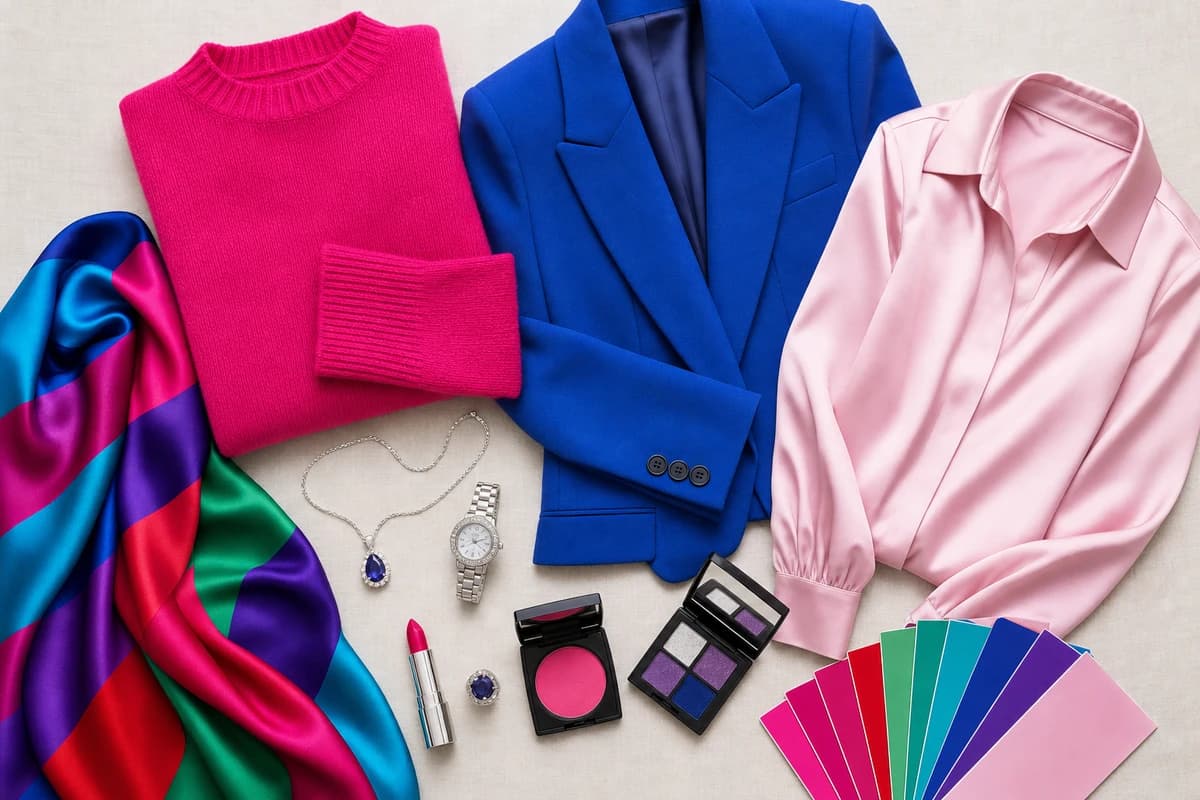
Build a small capsule from two neutrals + three colors you actually love, say black and true white, with hot pink, electric blue and bright emerald. Everything mixes, because everything shares the same cool, electric DNA. Let one clear color carry the outfit against a crisp neutral and you're done: black with hot pink, true white with cobalt, charcoal with emerald. Lean into the brightness instead of fighting it, on you, that clarity reads as effortless, not loud.
Frequently asked questions
What is the Bright Winter color palette?
Bright Winter is a cool, medium-deep, very high-chroma palette, the brightest of all twelve seasons. Think hot pink, electric blue, true red, bright emerald and bright violet, plus icy pastels and the crisp neutrals black and true white. Everything is clear and saturated; nothing muted, dusty or earthy.
Is Bright Winter warm or cool?
Cool, but cool-leaning-neutral rather than icy. The undertone reads cool, yet there's a faint warm-neutral edge that lets Bright Winter carry the most electric, vivid versions of cool colors without tipping fully icy.
What's the difference between Bright Winter and Deep Winter?
Both are cool and high-contrast. Bright Winter is lighter and more electric, built on the most saturated, vivid colors. Deep Winter is darker and richer, owning the deepest jewel tones. If the very brightest colors start to wear you, you're likely Deep Winter.
How do I know if I'm a Bright Winter and not a Bright Spring?
Both are extremely bright and clear, chroma alone won't separate them. Undertone decides it: Bright Winter is cool (electric blue, hot pink, true red and black-and-white look striking on you), while Bright Spring is warm (coral, warm turquoise, golden tones suit you better). Cool and electric → Bright Winter.
What colors should a Bright Winter avoid?
Muted, dusty and earthy tones, sage, dusty rose, camel, mustard, olive and warm browns, go flat on you. Soft, grayed pastels and warm-gold tones also drain a Bright Winter. Your coloring wants clarity and high contrast, not softness.
What makeup is best for a Bright Winter?
Clear, cool and vivid: true-red, hot-pink, fuchsia or bright-berry lips; a cool, bright pink blush; and crisp eye shades like charcoal, cool plum, emerald or navy. A true black liner works beautifully. Skip muddy bronzes, peachy nudes and dusty mauves, they mute your natural brightness.
Related guides

Bright Spring Color Palette: The Complete Guide (with Hex Codes)
A color analyst's complete Bright Spring guide, your exact palette with hex codes, best neutrals and metals, colors to avoid

Bright Winter Makeup: Best Shades for Lips, Eyes & Cheeks
A color analyst's Bright Winter makeup guide, the best cool, vivid lips, blush and eyeshadow with hex codes, plus base tones and what to skip.

Deep Winter vs Bright Winter: How to Tell the Difference
A color analyst on Deep Winter vs Bright Winter, how they differ on undertone, value and chroma, the colors that separate them

Clear Winter Color Palette (a.k.a. Bright Winter)
A color analyst explains the Clear Winter palette, why it's the same season as Bright Winter, your exact colors with hex codes, best neutrals and metals.

Bright Winter Celebrities
A color analyst's hedged take on likely Bright Winter celebrities, the cool, clear, high-contrast traits that signal this season, plus how to find your own.

Deep Winter Makeup: Best Shades for Lips, Eyes & Cheeks
A makeup artist's Deep Winter guide, your foundation undertone, the 10 best lip, eye and blush shades with hex codes, and the warm tones to skip.
Prefer in person? Find color analysis near you
Browse local color analysts by city, or get the same season, palette and best-colors breakdown online from one selfie.
See your colors on a photo of you
Upload one selfie and ToneLala reveals your season, your full palette, and your best hair, makeup, jewelry and outfits, styled on you.