In a sentence: Chestnut brown hair suits warm and warm-neutral skin best, and looks richest beside earthy warm tones and blue-greens, teal, forest green, terracotta, mustard, rust, olive, deep coral, warm cobalt, plum and aubergine, with cream, camel and chocolate brown as neutrals. Skip to the best outfit colors or find your most flattering colors.
Chestnut Brown Hair Color: Who It Suits & the Best Colors to Wear With It
By ToneLalaUpdated July 5, 2026
Contents
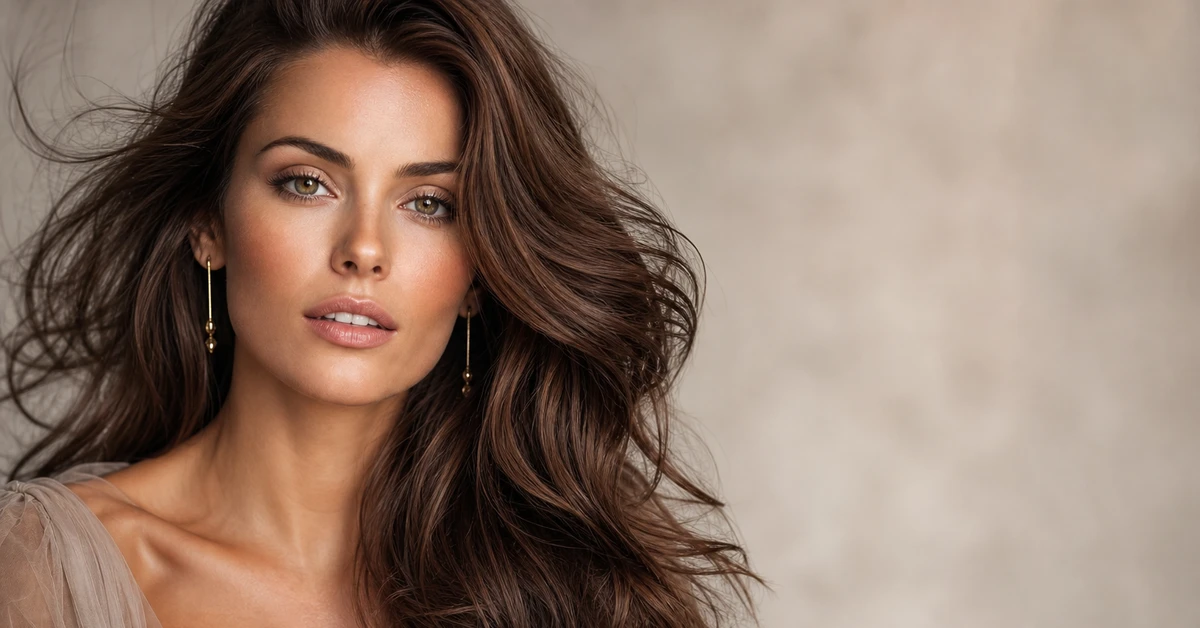
Chestnut is the brown people mean when they say they want "brown hair, but interesting." Catch it in afternoon light and you'll see why, a medium-brown base shot through with red and gold, so it shifts from cool in shade to almost copper in the sun. That movement is the whole appeal. It reads rich and expensive without tipping into a full red, and it sits right in the middle of the brown family, which is exactly why it flatters so many people.
It's also one of the easiest hair colors to dress, once you know which way it leans. The warmth running through chestnut wants warm company, and it has a built-in depth that lets it carry proper color rather than washing out under it. The catch, and it's the one I keep coming back to with clients, is that "chestnut" describes your hair, not your skin. Your undertone decides which teal, which terracotta, which version is genuinely yours.
Who chestnut brown hair suits
Chestnut brown is, at heart, a warm color. There's red and gold threaded through that medium-brown base, and that warmth is your biggest clue to who it flatters and what to wear with it. It looks most at home on warm and warm-neutral skin: golden, peachy, honey or warm-olive complexions, because the copper in the hair echoes the warmth in the skin and the whole face looks lit from within. On medium to tan skin especially, chestnut glows; it's a natural match for brown, hazel and green eyes, where the warm tones in the hair pick up the warm flecks in the iris.
That doesn't mean cooler skin is shut out. Chestnut is broad enough to flex, a cooler, ashier chestnut with less obvious copper sits beautifully on neutral and slightly cool skin, where a bright golden-chestnut might read too brassy. The trick is matching the temperature of the chestnut to your skin: warmer, more coppery versions for warm, golden complexions; softer, more muted red-browns for cooler or fairer ones.
As a shade range, chestnut runs from a light, golden chestnut, through the classic red-brown most people picture, to a deep chestnut that edges toward mahogany. Lighter, warmer versions suit fair-to-medium warm skin and keep things fresh around the face; the deeper, richer end flatters medium and tan skin and gives gorgeous weight to the color. Wherever you sit on that range, the base stays a true medium brown, what changes is how much red, gold or coolness runs through it.
The best colors to wear with chestnut brown hair
These ten flatter the broadest range of chestnut coloring, a deliberate mix of warm earth tones that match the hair and blue-greens that complete it, so there's something here for every undertone.
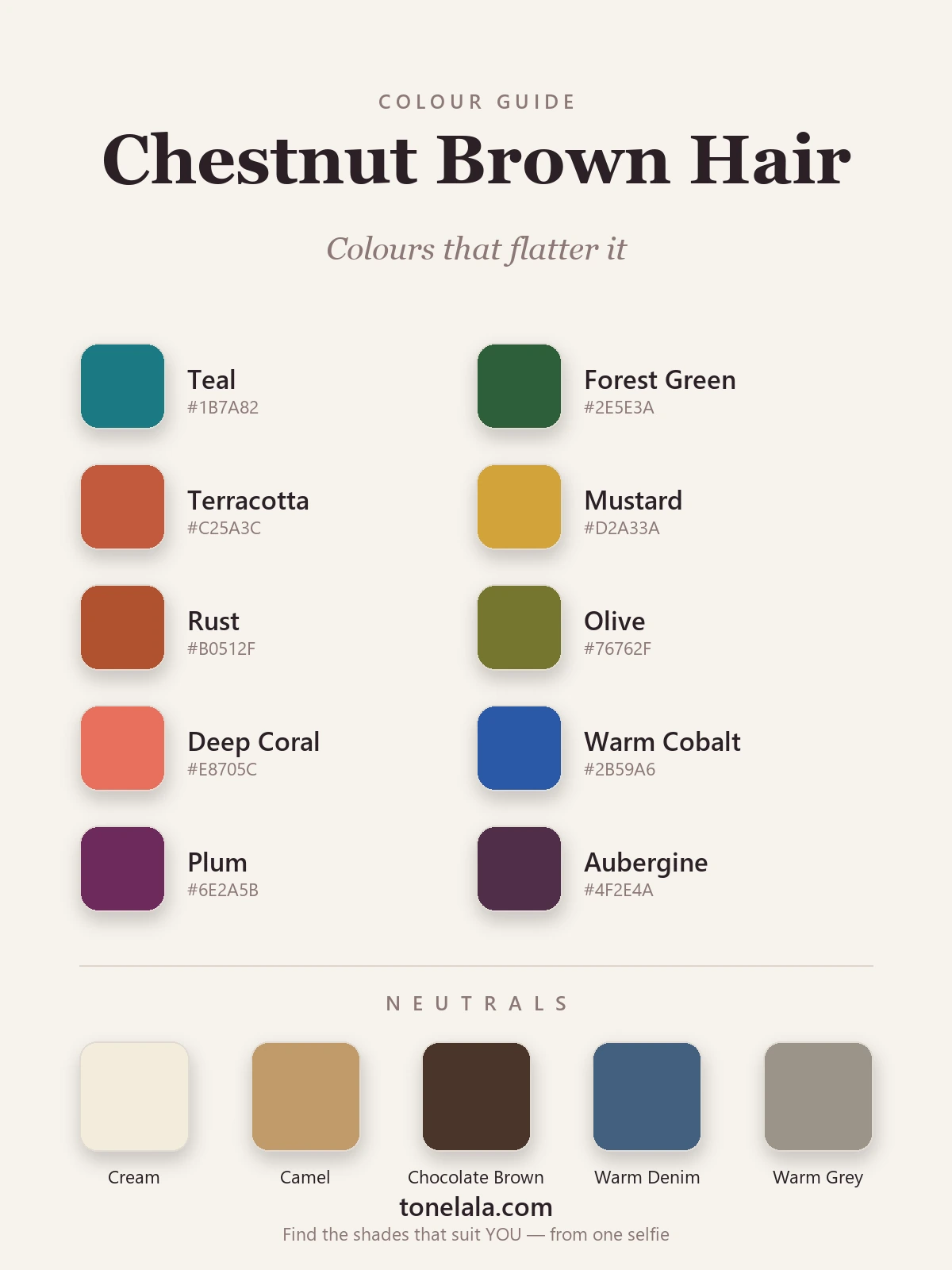
| Color | Hex |
|---|---|
Teal #1B7A82 |
The most reliably flattering color for chestnut hair, blue-green and rich, it brings out the warmth in the hair while staying fresh, and it suits almost every chestnut undertone. |
Forest Green #2E5E3A |
A deep, grounded green that pairs with chestnut like it was designed to; it makes the hair read richer and the skin clearer at the same time. |
Terracotta #C25A3C |
Warm, earthy orange-red that's practically made for chestnut, it harmonizes with the red-gold in the hair and looks quietly expensive. |
Mustard #D2A33A |
A deep golden yellow that echoes the gold running through chestnut. Wear it near the face and the hair lights up. |
Rust #B0512F |
A warm, brick-toned red that's deep enough not to compete with the hair, it complements rather than clashes, and reads autumnal in the best way. |
Olive #76762F |
A golden, earthy green that belongs to warm brown hair; understated, grounded and very wearable against chestnut. |
Deep Coral #E8705C |
A soft, peachy red for warmer chestnuts; brighter than terracotta but still rich enough to hold its own beside the hair, and lovely on the complexion. |
Warm Cobalt #2B59A6 |
A rich, slightly warm blue with real presence, the easy "color" choice when you want impact, and a clean contrast to warm brown hair. |
Plum #6E2A5B |
A deep purple-red with weight; it gives chestnut drama and suits cooler-leaning versions especially, reading sophisticated rather than loud. |
Aubergine #4F2E4A |
A dark, warm purple that delivers depth without the harshness of black, elegant near the face and a smart alternative to a dark neutral. |
Best neutrals: Cream #F3ECDC instead of stark white; Camel #C19A6B for an easy warm base that makes chestnut look luxe; Chocolate Brown #4A352A when you want depth near the face, it picks up the hair and ties a look together; Warm Denim #42607F for a cooler dark that still plays nicely with warm coloring; and Warm Gray #9C948A for a modern, low-key neutral that won't fight the hair.
Want YOUR most flattering wardrobe colors?
Find your color season →Colors to avoid with chestnut brown hair
- Cool, blue-based brights: icy fuchsia, electric magenta, cold lilac. These fight the warmth in chestnut and tend to throw a slightly off cast onto the skin. If you love pink, go warm and soft (coral, dusty rose) and keep the electric versions away from your face.
- Flat mid-browns and muddy taupes: anything sitting too close to your own hair tone blurs skin and hair into one heavy block. Add contrast with a cleaner color or a crisp neutral and the whole look lifts.
- Stark optic white and large blocks of harsh black at the neckline: both are colder and heavier than warm chestnut coloring, so they can drain the face. Swap white for cream and black for chocolate brown near the face, and they behave.
Chestnut Brown hair and your color season
In the seasonal system, chestnut brown points most often to the warm families, because the red and gold in the hair are inherently warm. Deep, rich chestnut on warm, golden or olive skin tends toward True Autumn or Deep Autumn: terracotta, mustard, olive and forest green are made for you, with cream and camel as perfect neutrals. Softer, hazier chestnut with more muted, lower-contrast coloring leans Soft Autumn, where those same earthy shades work in gentler, dustier versions. Lighter, brighter chestnut with clear, warm, peachy skin can land in True Spring or Light Spring, where the warmth turns up in fresher, livelier colors.
Cooler, ashier chestnut on neutral-to-cool skin can occasionally edge toward a Summer season, where cooler, softer shades flatter, which is exactly why a season reads your coloring as a whole, not just your hair. Your hair sets the richness that suits you; your undertone, depth and contrast decide which warm (or occasionally cool) season is yours. If you want to see how those pieces combine, the color analysis guides walk through each season in detail.
Shades & upkeep
Chestnut spans a real range, golden chestnut, classic red-brown, caramel-chestnut for lightness around the face, auburn-chestnut for depth, and a cooler mahogany-leaning version for neutral skin, so the first job is choosing the temperature that matches your undertone rather than the one in the photo you saved. On maintenance, chestnut is forgiving compared with platinum or vivid color, but the red and gold tones do fade and can turn brassy with sun and hot tools. A color-protecting shampoo, a warm-toned gloss every few weeks and a heat protectant keep it rich; if your natural base is much darker or lighter, expect a root touch-up roughly every four to six weeks. Grown out, it softens gracefully rather than leaving a hard line.
Putting it together
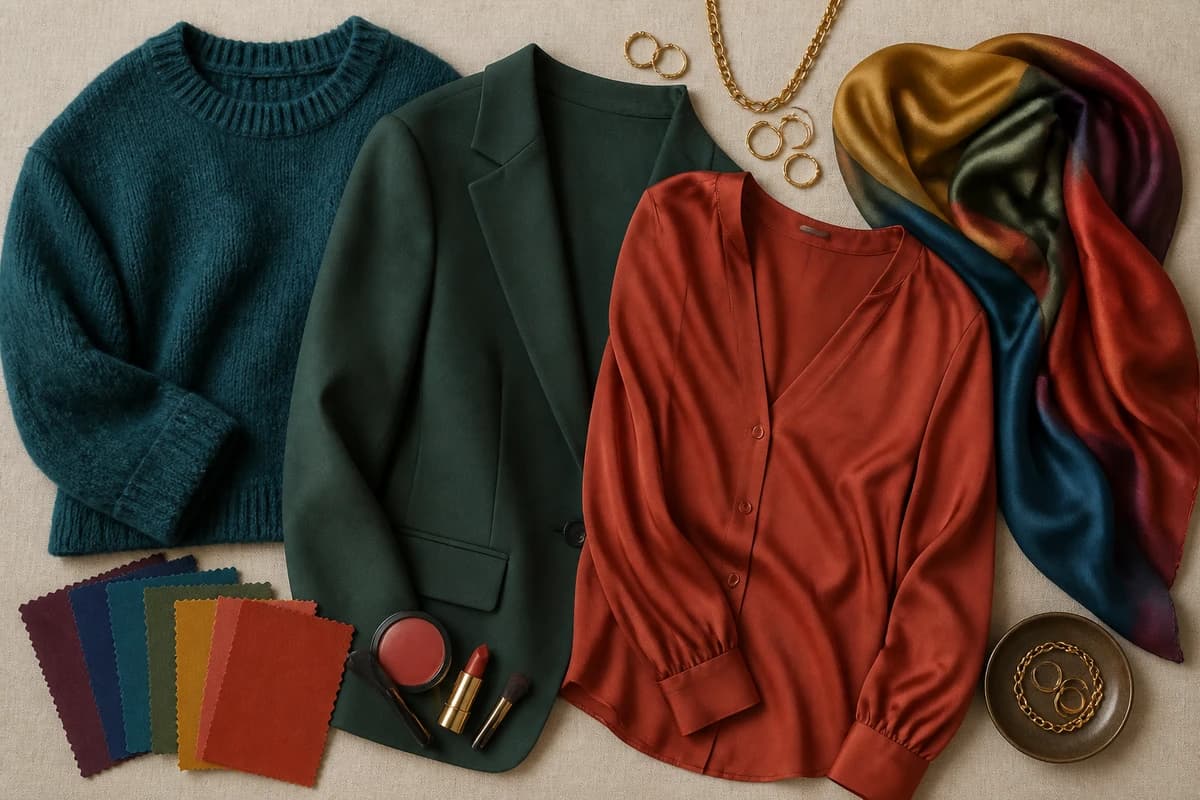
Chestnut brown is one of the most rewarding hair colors to dress, because the warmth gives every earthy shade something to harmonize with and the depth lets you wear proper color with conviction. Lean into warm earth tones that match the hair, terracotta, rust, mustard, olive, and the teals and greens that complete it, choose warm neutrals like cream, camel and chocolate brown over stark black-and-white, and the hair does exactly what it's meant to: glow. Pick three or four of the colors above plus a couple of those neutrals and you've got a wardrobe that flatters on autopilot. The last piece, your exact undertone, and the precise teal or terracotta that's genuinely yours, is what a personal color analysis is for.
Frequently asked questions
Who suits chestnut brown hair?
Chestnut brown hair suits warm and warm-neutral skin tones best, golden, peachy or olive complexions with a hint of warmth in the skin. Because chestnut carries red and gold through a medium-brown base, it flatters anyone whose skin reads even slightly warm, and it's especially good on medium to tan skin and brown, hazel or green eyes. Cooler, very rosy skin can wear it too, but usually in a softer, less coppery version so the warmth doesn't fight the skin. It's one of the most universally wearable browns precisely because it sits in the middle, not too ashy, not too golden.
What colors should you wear with chestnut brown hair?
The most flattering outfit colors for chestnut brown hair are warm earth tones and rich blue-greens, teal, forest green, terracotta, mustard, rust, olive, deep coral, warm cobalt, plum and aubergine. The earthy shades harmonize with the red-gold in the hair, while teal and forest green sit opposite warm tones on the color wheel and make chestnut look richer. For neutrals, reach for cream, camel and chocolate brown over stark black and white. Your exact best versions depend on your skin's undertone, but those flatter the broadest range of chestnut coloring.
What skin tone is chestnut brown hair best for?
Chestnut brown is best for warm to warm-neutral skin tones, think golden, peachy, honey or warm-olive complexions. The red and gold woven through chestnut echo the warmth in the skin, so the face looks lit rather than washed out. Medium and tan skin tends to glow with it most, but lighter warm skin and deeper warm skin both work. If your skin is genuinely cool and pink, a cooler, ashier chestnut with less copper usually flatters more than a bright golden-chestnut.
What are the shade variations of chestnut brown hair?
Chestnut brown runs from a light, golden chestnut through a classic red-brown to a deep, cool-leaning chestnut that's almost mahogany. Warmer versions carry more copper and gold and suit warm, golden skin; cooler versions lean toward a muted red-brown or soft mahogany and flatter neutral to slightly cool skin. There are also caramel-chestnut blends for added lightness around the face and richer auburn-chestnut tones for more depth. The base stays a medium brown, what shifts is how much red, gold or coolness runs through it.
Is chestnut brown hair high maintenance?
Chestnut brown is lower maintenance than most fashion colors but does need some upkeep to keep its warmth. The red and gold tones can fade or turn brassy over time, especially with sun and hot tools, so a color-protecting shampoo, a warm-toned gloss every few weeks and a heat protectant keep it rich. If your natural base is much darker or lighter, regrowth will show, so a root touch-up every four to six weeks helps. Compared with platinum or vivid colors, though, it's forgiving and grows out softly.
Related guides
Mushroom Brown Hair Color: Who It Suits & the Best Colors to Wear With It
A color analyst on mushroom brown hair, who it suits, the flattering shade range, and the 10 best wardrobe colors to wear with it (with hex codes).
Golden Brown Hair Color: Who It Suits & the Best Colors to Wear With It
A color analyst on golden brown hair, who it suits, the most flattering shade range, and the 10 best wardrobe colors (plus 5 neutrals) to wear with it
Chocolate Brown Hair Color: Who It Suits & the Best Colors to Wear With It
A color analyst on chocolate brown hair, who it suits, the flattering shade range, and the 10 best wardrobe colors (with hex) to wear with it
Ash Brown Hair Color: Who It Suits & the Best Colors to Wear With It
A color analyst on ash brown hair, who it suits, the flattering shade range, and the 10 best outfit colors to wear with it (with hex codes) plus 5 neutrals.
Auburn Hair Color: Who It Suits & the Best Colors to Wear With It
A color analyst's guide to auburn hair, who it suits, the flattering shade range, and the 10 best outfit colors plus 5 neutrals to wear with it
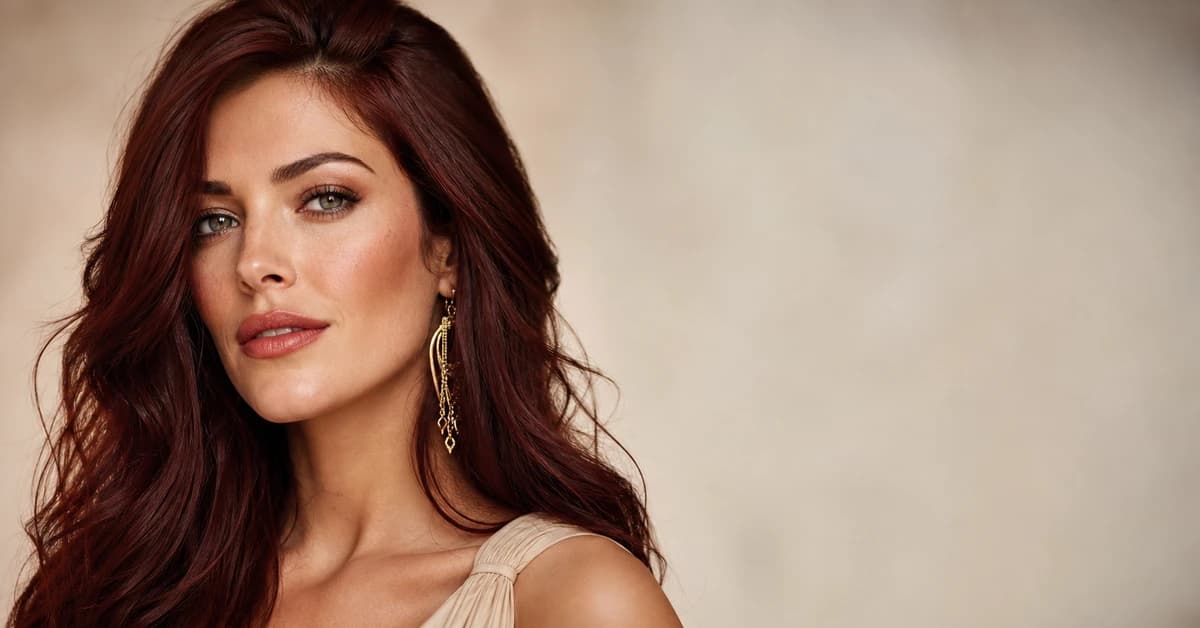
Dark Auburn Hair Color: Who It Suits & the Best Colors to Wear With It
A color analyst on dark auburn hair, who it suits, the most flattering shade range, and the 10 best wardrobe colors to wear with it (with hex codes).
Prefer in person? Find color analysis near you
Browse local color analysts by city, or get the same season, palette and best-colors breakdown online from one selfie.
See your colors on a photo of you
Upload one selfie and ToneLala reveals your season, your full palette, and your best hair, makeup, jewelry and outfits, styled on you.