In a sentence: auburn is a red-brown hair color that suits warm and neutral skin most easily, and deeper, browner versions of it suit cooler skin; the colors that flatter it are greens and teals plus warm earth tones, here as teal, forest green, olive, mustard, rust, terracotta, denim blue, aubergine, warm coral and petrol blue, with cream, camel and chocolate brown as neutrals. Skip to the best outfit colors or find your most flattering colors.
Auburn Hair Color: Who It Suits & the Best Colors to Wear With It
By ToneLalaUpdated October 30, 2026
Contents
- 01 What color is auburn hair?
- 02 Auburn hair shades
- 03 Who suits auburn hair?
- 04 How to get auburn hair
- 05 Keeping auburn from fading
- 06 Natural auburn
- 07 The best colors to wear with auburn hair
- 08 Colors to avoid with auburn hair
- 09 Auburn hair and your color season
- 10 Makeup and jewelry for auburn hair
- 11 Outfits for auburn hair
- 12 Where to start
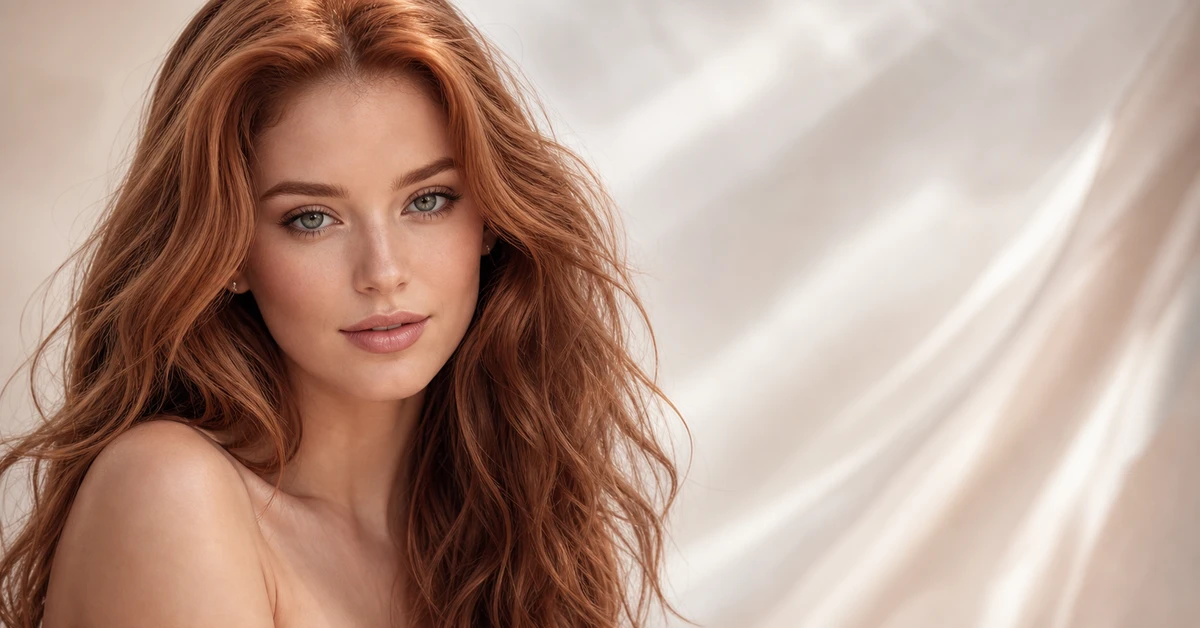
Auburn is a red-brown: brown hair with red and copper showing through. It sits between chestnut, which is browner, and copper, which is brighter and more orange. The word itself has moved a long way. It comes from the Medieval Latin alburnus, "whitish," and in Old French auborne meant blond or flaxen; the sense drifted toward brown in English, possibly through confusion with the Middle English brun, "brown."
This guide covers the shades of auburn, who each one suits, how to get it and keep it, and then the part most hair-dye pages skip: which clothing colors to wear with it.
What color is auburn hair?
Hair-color brands describe auburn as a balance of red and brown. Wella's comparison is a useful way to tell it apart from its neighbors:
| Shade | Red | Brown | Usually suits |
|---|---|---|---|
| Auburn | Medium | Medium | Most skin tones |
| Copper | High | Low | Warm undertones |
| Mahogany | Medium | High | Most skin tones |
| Burgundy | High | Medium, with purple | Cool undertones |
Chestnut is browner than auburn with golden rather than red highlights. Ginger and copper are brighter, with very little brown. If your hair reads brown indoors and flashes red in sunlight, it is probably auburn.
Auburn hair shades
Brands name these differently, but most guides use some version of the following.
Light or strawberry auburn
A soft copper-blonde, between golden brown and copper in L'Oreal's description. It suits fair skin and light eyes. Some guides say fair, cooler skin carries it well; others put it with warm coloring, so try it before committing.
Medium or classic auburn
The red-brown most people picture. It is the easiest version for most skin tones, and the one Wella says suits "most."
Copper auburn
More red, less brown. It suits warm skin best and is the most likely version to bring out redness in cool, pink skin.
Dark auburn
A deep brown base with red coming through, described by Wella as like mahogany without the violet. It suits medium and deep skin, and it is the version most often recommended for cooler undertones.
Auburn highlights and balayage
Red-brown pieces through a brown base. This is the lowest-commitment way to try auburn, because the grown-out root blends into the natural brown.
Who suits auburn hair?
Warm and neutral skin. Golden, peachy or warm-ivory skin is the most common match in every guide we compared. The copper in the hair echoes the gold in the skin.
Cool skin. Most brand guides say cool or pink skin should choose a deeper, browner or more burgundy-leaning auburn and avoid bright copper. Not every stylist agrees: one UK salon argues that red balances pink in cool skin, and a stylist quoted by Parade suggests cooler skin can suit warmer coppers. If you have cool skin, a semi-permanent or a strand test is the safest way to find out.
By depth. Fair skin often suits light to medium auburn; medium and deep skin carry medium to dark auburn with more depth.
Eye color. Green and hazel eyes are the pairing guides mention most, because auburn sits opposite green on the color wheel. Brown eyes look warmer next to it. Blue eyes give a strong contrast. Evidence here is weaker than for skin tone; it is mostly stylist opinion.
If you are not sure of your undertone, our guide on how to find your undertone walks through the tests.
How to get auburn hair
Your starting color decides how easy it is.
- From light to medium brown: usually one step and no bleach. Wella and L'Oreal both describe it as one of the easier changes, because it adds red rather than lifting color.
- From dark brown or black: a dark auburn can often be done in one step. A lighter or brighter auburn usually needs lightening first.
- From blonde: the hair needs red pigment added back. Without it, the result can turn out pink or patchy. This is the case where a colorist is most worth it.
Box dye or salon? Box dye is cheaper and works for the brown-to-auburn change, especially for one shade deeper or a semi-permanent. L'Oreal's at-home steps start with a strand test 48 hours before. A salon is the better choice for going lighter, starting from blonde or previously colored hair, or wanting highlights or balayage. If you go to a salon, bring photos of the auburn you want and of shades you do not, since "auburn" means different things to different people.
Keeping auburn from fading
Red tones fade faster than most hair colors; that much every hair-care guide agrees on. The numbers differ by source:
- Gloss or refresh: every 4 to 6 weeks (Colored Hair Care) or 6 to 8 weeks (PaletteHunt).
- Semi-permanent color: lasts about 4 to 6 weeks; demi-permanent about 6 to 8.
- Shampoo: sulfate-free and color-safe, recommended by L'Oreal, Colored Hair Care and Parade's stylists.
- Water: lukewarm rather than hot (L'Oreal).
- Sun and heat: UV and hot tools both dull red tones, so use heat protection and cover up in strong sun.
Natural auburn needs none of this. One UK salon guide notes that natural auburn tends to fade toward a lighter, softer shade before it turns white.
Natural auburn
Red hair is linked to variants of the MC1R gene, according to MedlinePlus Genetics, the same gene associated with freckles and fair skin. No medical source we found separates auburn from other red shades. Figures of 1 to 2 percent of people with natural red hair are widely repeated, but we could not trace them to a study.
The best colors to wear with auburn hair
Every outfit-color guide we compared puts greens first, because green sits opposite red on the color wheel and makes the red in auburn look stronger. Warm earth colors match the hair's warmth instead. These ten combine both.

| Color | Hex |
|---|---|
Teal #1F7A7E |
A blue-green near the opposite of auburn on the color wheel. It makes the copper look richer and suits cooler, pinker skin especially well. |
Forest Green #2E5E3A |
The color guides recommend most for auburn. It deepens the red in the hair and evens out the skin. |
Olive #76762F |
A golden, earthy green that suits warm coloring and matches the hair rather than contrasting with it. |
Mustard #D29A2A |
A deep golden yellow that picks up the gold in auburn. It suits warm skin best. |
Rust #B0512F |
A warm brick red, deep enough not to compete with the hair's own red. |
Terracotta #C56B4B |
A muted clay orange that sits close to copper and red-brown. Easy for warm coloring. |
Denim Blue #5E84A8 |
A soft mid-blue that cools an outfit down without going icy. |
Aubergine #54304E |
A deep purple that gives contrast near the face with less hardness than black. Plum and aubergine are the purples guides recommend; lavender is the one they warn against. |
Warm Coral #EC7A5C |
A pink-orange with enough warmth to sit well next to the hair. |
Petrol Blue #2B4A57 |
A dark blue-green-gray, deeper than teal, for a cooler contrast. |
Best neutrals: Cream #F3EAD7 in place of optic white; Camel #C19A6B as a warm base (one guide warns that very light camel can blend into light auburn, so choose a deeper camel if your hair is light); Chocolate Brown #4A3526 as a dark near the face; Denim Navy #37475F as a cooler dark; and Warm Gray #9C948A in place of cool gray.

Free E-Book
How to Look Younger With the Right Colors
Color Analysis
Know Your Colors Before Your Next Shopping Trip
A personal color analysis from one selfie, ready in minutes.
Pairings guides disagree on
Pink. Cool pastel pink and bright fuchsia are the colors most guides warn against, because they can bring out pink in the skin. PaletteHunt allows warm rose, berry and raspberry.
Navy. Called tricky by one guide and a workable neutral by another. A navy with some warmth in it, or denim, is the easier version.
Black. None of the guides we compared addresses it directly. Our view: black next to the face can look hard against warm auburn coloring, so it works best as pants, shoes or a coat, with one of your colors near the face.
Red. Deep, warm reds such as burgundy and ruby are generally recommended. Bright fire-engine red and flat orange are cautioned against because they compete with the hair's own color.
Colors to avoid with auburn hair
- Cool, blue-based brights and icy pastels: fuchsia, magenta, icy pink, lavender and icy blue. They pull against the warmth in auburn and can make the skin look flushed. If you like pink, choose coral, peach or dusty rose.
- Bright orange and fire-engine red. They sit so close to auburn that the two compete. Rust and terracotta keep the warmth without copying the hair.
- Cool gray and charcoal near the face. They can drain warm coloring; warm gray or chocolate is easier.
- Stark optic white. Cream or ivory is softer next to auburn.
- Pale gold and champagne close to the hair color can blend in rather than stand out.
Auburn hair and your color season
Most auburn coloring points to the warm seasons, because copper and red are warm. Classic auburn on golden, freckled skin often sits in True Autumn. Softer, hazier coloring with light auburn leans Soft Autumn. Bright copper-auburn with light, warm skin can be True Spring. Deep auburn with dark eyes may be Deep Autumn, and dark mahogany auburn on cooler skin sometimes points to a cooler season, which is why hair alone does not settle it. Our color analysis guides cover every season.
Makeup and jewelry for auburn hair
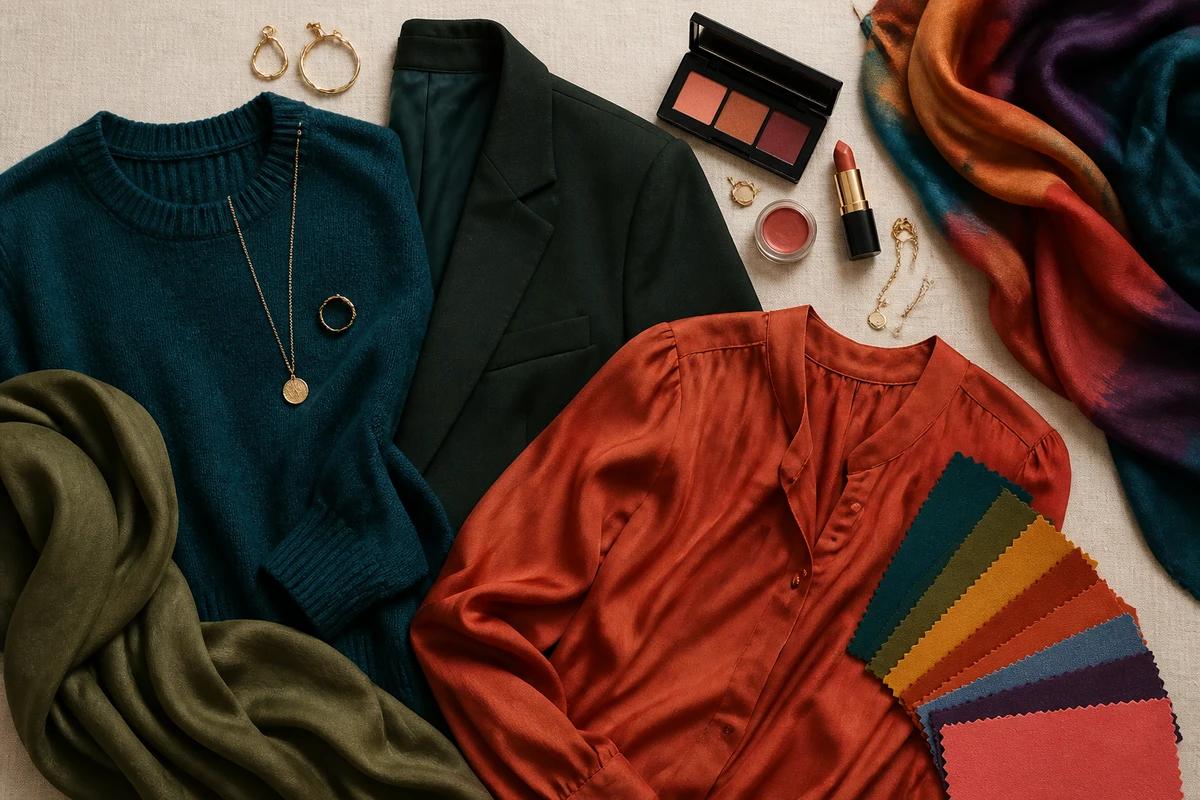
Eyes: bronze, copper, warm brown and olive suit most auburn coloring; plum and aubergine make green and hazel eyes look greener. Lips and cheeks: terracotta, brick, coral and warm rose; cooler auburn coloring can wear berry. Metals: gold, bronze and rose gold are the common recommendation; silver works best on cooler auburn coloring. Our guide to gold vs silver has a side-by-side test.
Outfits for auburn hair
- Everyday: forest green sweater, light denim, cognac boots.
- Office: camel coat, cream blouse, chocolate pants, gold jewelry.
- Evening: emerald or aubergine dress, bronze heels.
- Summer: warm coral top, white denim kept away from the face, tan sandals.
- Cooler auburn coloring: teal knit, denim navy pants, silver earrings.
Where to start
If you already have auburn hair, start with one forest green or teal piece near your face: it is the pairing every guide agrees on. Then pick your neutrals by undertone: camel and chocolate if you are warm, denim navy and warm gray if you are cooler. If you are thinking of going auburn, choose the shade by your skin first (copper for warm, medium auburn for neutral, dark auburn for cool) and try a semi-permanent before a permanent color. Related guides: best colors for red hair, copper hair color and chocolate brown hair color. A personal color analysis reads your skin, hair and eyes from one photo and gives you the exact teal, rust and neutral that suit you.
Frequently asked questions
Who suits auburn hair?
Auburn suits warm and neutral skin most easily: golden, peachy or warm-ivory complexions, often with freckles. Most hair-color brands agree that cool skin can wear it too, in a deeper, browner or more burgundy-leaning version rather than a bright copper, though a few stylists argue the opposite and say cooler skin suits warmer coppers. Green, hazel and warm brown eyes tend to look stronger next to it. If you are unsure, a strand test or a semi-permanent color is a low-risk way to try it.
What colors should you wear with auburn hair?
Greens come first in every guide we compared: forest, olive, emerald and deep teal. Warm earth colors (rust, terracotta, mustard, camel) match the warmth of the hair, and plum, aubergine and petrol blue give a deeper contrast. For neutrals, cream, camel and chocolate brown are the easiest. Our palette lists ten colors with hex codes: teal, forest green, olive, mustard, rust, terracotta, denim blue, aubergine, warm coral and petrol blue. The exact versions that suit you depend on your skin's undertone.
What skin tone does auburn hair look best on?
Auburn is easiest on warm or neutral skin, because the copper in the hair echoes the gold in the skin. Fair skin often suits light or strawberry auburn, and medium to deep skin suits medium to dark auburn. Cooler, pinker skin usually does better with a deeper auburn that leans brown or burgundy than with a bright copper, which can bring out redness in the face.
What are the different shades of auburn hair?
Hair-color brands name them differently, but the range runs from light (strawberry or golden auburn, a soft copper-blonde) through medium or classic auburn (a red-brown) and copper auburn (more red, less brown) to dark auburn (a brown base with red showing through). Related shades are often grouped with it: chestnut is browner, mahogany is a red-brown with a plum tint, and burgundy is closer to wine red. Warmer versions suit warm coloring; deeper and cooler versions extend auburn to neutral and cooler skin.
Is auburn hair high maintenance?
Dyed auburn asks for some upkeep, because red tones are known to fade faster than other hair colors. Salon guides suggest a gloss or color refresh roughly every 4 to 8 weeks (sources differ), a sulfate-free color-safe shampoo, lukewarm rather than hot water, and heat and UV protection. Semi-permanent color usually lasts about 4 to 6 weeks and demi-permanent about 6 to 8. Natural auburn needs none of that, just regular conditioning to keep its shine.
Is auburn red or brown?
Both. Auburn is a red-brown: brown hair with red and copper showing through. Wella's comparison puts auburn at medium red and medium brown, copper at high red and low brown, mahogany at medium red and high brown, and burgundy at high red with a purple lean. Whether a particular auburn reads more red or more brown depends on the shade and the light.
What is the difference between auburn and copper hair?
Copper is brighter and more orange, with little brown in it; auburn keeps a brown base under the red. Copper tends to suit warm skin, while auburn's brown base makes it easier for neutral and some cooler skin. Our guide to copper hair color covers that shade on its own.
Is auburn hair rare?
Natural red shades are uncommon. Figures of 1 to 2 percent of people are widely repeated, but we could not trace them to a study, so treat them as an estimate. Red hair is linked to variants of the MC1R gene, according to MedlinePlus Genetics, though no medical source we found separates auburn from other red shades.
Can you go auburn without bleach?
Usually, if your hair is light to medium brown. Wella and L'Oreal both describe moving from brown to auburn as one of the easier changes, because it adds red rather than lifting much color. From very dark brown or black, a dark auburn may be possible in one step, but a lighter or brighter auburn often needs lightening first. From blonde, the hair usually needs a red base added so the result does not turn out pink or patchy, which is a reason to see a colorist.
Related guides
Dark Auburn Hair Color: Who It Suits & the Best Colors to Wear With It
A color analyst on dark auburn hair, who it suits, the most flattering shade range, and the 10 best wardrobe colors to wear with it (with hex codes).
Mushroom Brown Hair Color: Who It Suits & the Best Colors to Wear With It
A color analyst on mushroom brown hair, who it suits, the flattering shade range, and the 10 best wardrobe colors to wear with it (with hex codes).
Platinum Blonde Hair Color: Who It Suits & the Best Colors to Wear With It
A color analyst on platinum blonde hair, who it suits, the flattering shade range, and the 10 best wardrobe colors (with hex codes) to wear with it.
Chestnut Brown Hair Color: Who It Suits & the Best Colors to Wear With It
A color analyst on chestnut brown hair, who it suits, the flattering shade range, and 10 best outfit colors plus 5 neutrals to wear with it, with hex codes.
Caramel Hair Color: Who It Suits & the Best Colors to Wear With It
A stylist's guide to caramel hair: who it suits, the flattering shade range, and the 10 best wardrobe colors to wear with it (plus 5 neutrals, hex codes).
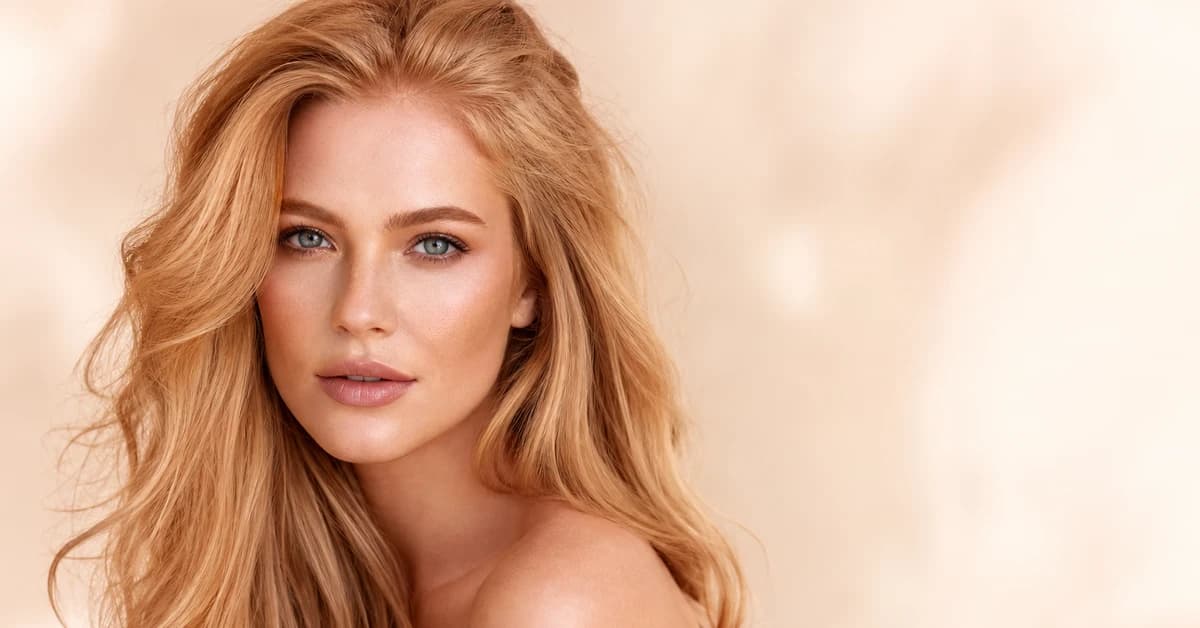
Strawberry Blonde Hair Color: Who It Suits & the Best Colors to Wear With It
Strawberry blonde hair color: the shades from light to rose gold, who each suits by skin tone and eyes, salon or box dye, upkeep, and 10 outfit colors with hex codes.
Prefer in person? Find color analysis near you
Browse local color analysts by city.