In a sentence: Chocolate brown hair suits warm-to-neutral skin with depth in the coloring, and looks best with rich, warm-leaning shades, teal, terracotta, true red, mustard, emerald and the like, plus warm neutrals like cream and camel. Skip to the best outfit colors or find your most flattering colors.
Chocolate Brown Hair Color: Who It Suits & the Best Colors to Wear With It
By ToneLalaUpdated September 29, 2026
Contents
- 01 What chocolate brown hair color is
- 02 Chocolate brown hair shades
- 03 Who suits chocolate brown hair
- 04 Getting chocolate brown hair: salon or box dye
- 05 The best colors to wear with chocolate brown hair
- 06 Colors to avoid with chocolate brown hair
- 07 Chocolate brown hair and your color season
- 08 Makeup with chocolate brown hair
- 09 Keeping chocolate brown hair rich
- 10 Which chocolate brown is yours
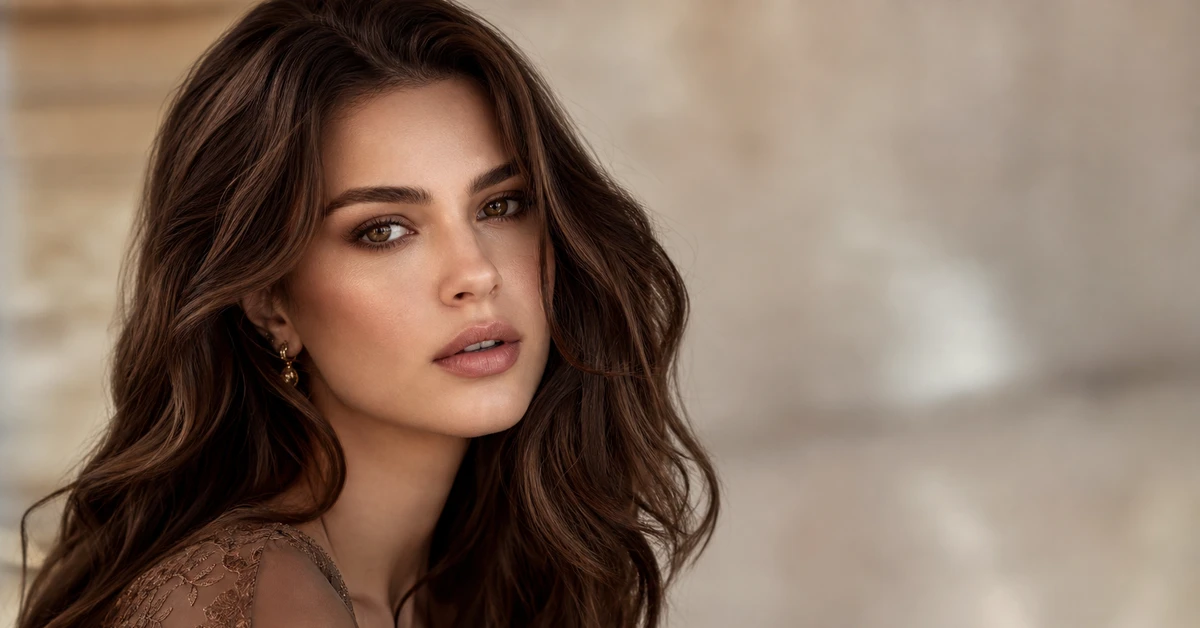
Chocolate brown is a medium-to-dark brown with warmth in it. Most hair brands describe it as brown with red or gold undertones, which show as caramel or copper where light hits the hair and disappear in shade. That warmth is why it looks glossier than a flat dark brown, and it is also what decides who it suits.
This guide covers both sides of the question people ask about it: whether chocolate brown suits your skin and eyes, and, once you have it, which clothing colors look best next to it.
What chocolate brown hair color is
Chocolate sits between chestnut and espresso on the brown scale. Chestnut is lighter and redder; espresso is close to black. Chocolate is deep, but not so deep that the warmth disappears. Salon formulas vary, and colorists do not all agree on the exact level, so it is better to ask for a shade by photo than by number.
It is usually warm, but not always. Colorists make neutral and ashy chocolates by toning out the red and gold, and those versions behave very differently on the face. When you read "chocolate brown suits everyone," it means that some version of it suits most people.
Chocolate brown hair shades
These are the names that come up most often in salon guides and color charts. The names are not standardized, so bring a photo to the salon.
Light or milk chocolate
A softer, lighter chocolate. It is the easiest version for fair skin, because there is less of a jump between the hair and the face.
Dark chocolate
Deep and close to espresso, with just a hint of warmth in light. It suits deep skin and high-contrast coloring and covers gray well.
Warm or caramel chocolate
A chocolate base with gold, caramel or red visible in the lengths. This is the classic version and the most flattering one for warm and olive skin.
Ashy or cool chocolate
A smoky chocolate with the red and gold toned out. It suits cool, pink-toned skin that a warm chocolate would make look ruddy. It is also the version most likely to fade toward brass, so it needs toning.
Chocolate cherry
Chocolate with a red-violet tint. It suits cool and neutral skin that wants some color, and it fades faster than plain browns because red pigment washes out first.
Mocha
A softer, muted brown, sometimes described as milky. It suits lower-contrast coloring where a rich, glossy chocolate would look too strong.
Caramel or honey highlights and balayage over a chocolate base are the most common way to add dimension. They also make regrowth less obvious.
Who suits chocolate brown hair
By undertone. Warm and olive skin looks best with warm, caramel-lit chocolate. Cool skin looks best with neutral or ashy chocolate. Neutral skin can wear most versions. Guides disagree on the cool case: some suggest a softer caramel or honey shade instead, others an ashy or neutral chocolate. What they agree on is that a strongly red-gold chocolate is the one to avoid if your skin is pink.
By depth. Fair skin suits light or milk chocolate better than dark chocolate, which can look heavy. Medium and olive skin can wear almost the whole range. Deep skin carries dark chocolate and espresso well; a light chocolate can look faded against it.
By eye color. Warm chocolate makes brown, hazel and green eyes look richer, because the hair repeats the gold or amber in the iris. Blue eyes stand out against chocolate by contrast.
The quickest test before you commit: hold a chocolate-colored scarf or sweater next to your face in daylight. If your skin looks even and your eyes look clear, the depth is right. If you look sallow or shadowed, go lighter or cooler.
Celebrity roundups of chocolate brown hair often feature Amal Clooney, Katie Holmes and Megan Fox. Their hair color changes from year to year, so use their photos to show a colorist a shade, not to decide whether it will suit you.
Getting chocolate brown hair: salon or box dye
Going darker is the easiest color change, and box dye can give a decent single-process chocolate on hair that is close to it already. A salon is worth it if you are going from blonde to brown (the hair usually needs pre-pigmenting or it turns muddy or green-tinted), if you want highlights or balayage over a chocolate base, or if you want a specific ashy or cool result. Salons quote longer sessions, and sometimes more than one visit, when covering previous dye or very light hair.
The best colors to wear with chocolate brown hair
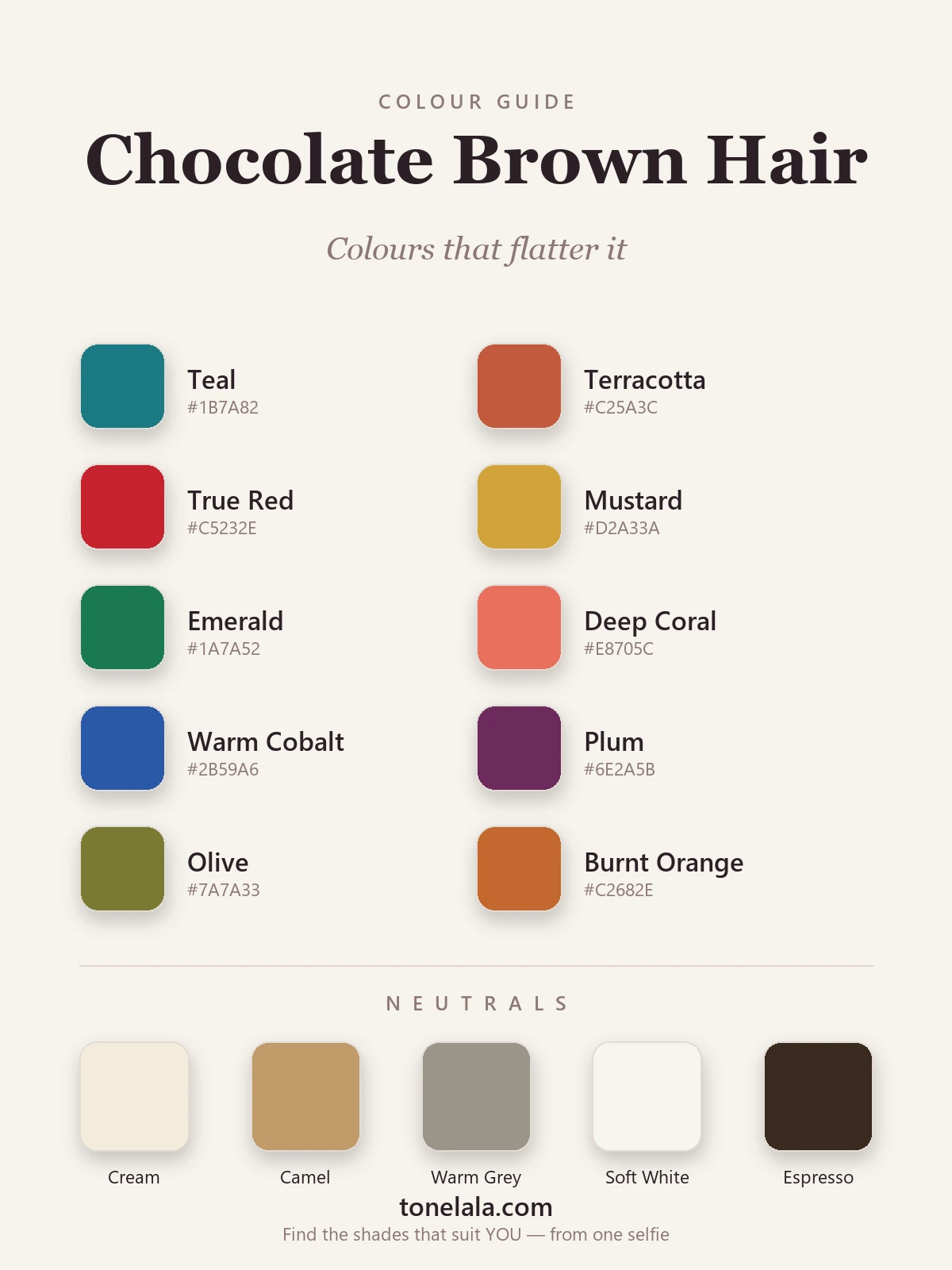
These ten suit a wide range of chocolate brown coloring. They are rich enough to match the depth of the hair, with a mix of warm earth tones and blue-greens.
| Color | Hex |
|---|---|
Teal #1B7A82 |
A rich blue-green that sits opposite the red-orange in warm brown hair, so the hair looks glossier. The most reliable color for this hair. |
Terracotta #C25A3C |
A warm, earthy orange-red that repeats the warmth in chocolate hair. |
True Red #C5232E |
A balanced, slightly warm red that picks up the richness in the hair and holds its own near the face. |
Mustard #D2A33A |
A golden, muted yellow that echoes the caramel tones in chocolate brown and warms the skin. |
Emerald #1A7A52 |
A deep jewel green that looks good against dark brown hair and makes skin look clear. |
Deep Coral #E8705C |
A peachy red for warmer skin; brighter than terracotta but deep enough to stand beside the hair. |
Warm Cobalt #2B59A6 |
A deep, slightly warm blue for when you want a strong color rather than another earth tone. |
Plum #6E2A5B |
A deep purple-red that suits cooler-skinned chocolate brunettes and ashy or cherry chocolate. |
Olive #7A7A33 |
A golden, earthy green that sits comfortably next to warm brown hair. |
Burnt Orange #C2682E |
A deep, smoky orange that repeats the warmth in the hair; deep enough not to look loud. |
Best neutrals: Cream #F3ECDC instead of stark white; Camel #C19A6B for a warm base that makes chocolate brown look richer; Warm Gray #9C948A for a low-key neutral that will not fight the hair; Soft White #F6F4EE when you want crispness without optic white; and Espresso #3A2A20, a near-black warm brown that gives depth at the neckline with less harshness than true black.
Want YOUR most flattering wardrobe colors?
Find your color season →If your chocolate is warm
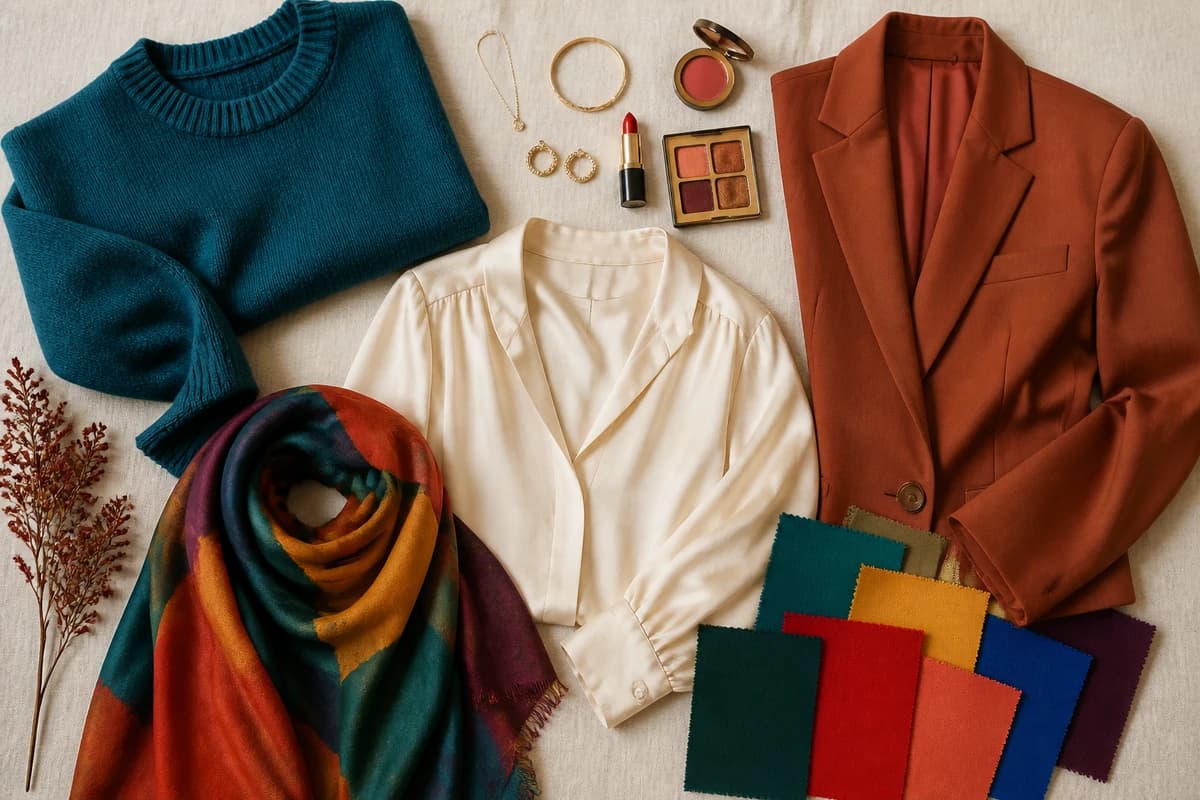
Lean on terracotta, mustard, olive, burnt orange and deep coral, with teal or emerald for contrast. Gold jewelry and camel or cream neutrals finish it.
If your chocolate is ashy or cool
Lean on plum, warm cobalt, true red, emerald and teal. Warm gray and soft white are the better neutrals, and silver often looks better than gold. Mustard and burnt orange can make an ashy chocolate look brassy by comparison.
Colors to avoid with chocolate brown hair
- Washed-out pastels: baby pink, powder blue, pale lemon. They have nothing to match the depth of the hair and can make you look tired. Choose a pastel with more color in it, or keep it away from the face.
- Muddy mid-browns and taupe near the face: anything close to your own hair color blurs the line between hair and outfit, and the look goes heavy. Add a clean color or a crisp neutral.
- Optic black and white together: high-contrast monochrome can look severe against warm brown coloring. Swap black for espresso or warm gray, and white for cream.
Chocolate brown hair and your color season
Natural chocolate brown hair shows up most often in the warm and deep seasons. Golden or caramel-lit chocolate with warm, olive or honey skin usually points to True Autumn or Deep Autumn, where terracotta, mustard, olive, teal and burnt orange belong. Deep chocolate with clearer, higher-contrast coloring can point to Deep Winter, where the same depth shows up in cleaner shades such as true red, emerald and cobalt.
A cool, ashy chocolate on low-contrast, rosy skin can belong to a Summer season. Hair alone does not decide it; undertone, depth and contrast together do, and dyed hair tells you what you chose rather than what you were born with. The color analysis guides walk through each season.
Makeup with chocolate brown hair
Brows usually look most natural one to two shades lighter than dark chocolate hair, or matched to light chocolate. Warm bronze, copper and brown eyeshadows repeat the warmth in the hair; plum and taupe suit ashy or cherry chocolate. Brick, terracotta and warm red lipsticks suit warm chocolate, and berry and blue-red suit cool chocolate.
Keeping chocolate brown hair rich
Chocolate brown is one of the easier colors to keep, but the warm tones fade first. Salon guides give these rough timings:
- Roots: about every four to eight weeks; sooner if you are covering gray.
- Gloss or glaze: every six to eight weeks to restore shine and tone.
- At home: color-safe, sulfate-free shampoo, a color-depositing mask or conditioner every few washes, and heat protection.
- Toning: blue-based shampoo if the color turns orange, purple-based if it turns yellow. Ashy chocolate needs this most.
Which chocolate brown is yours
Start with your undertone. If gold jewelry and cream look better on you than silver and white, ask for a warm or caramel chocolate; if silver and white win, ask for a neutral or ashy one. Then match the depth to your skin: lighter for fair skin, deeper for deep skin.
For clothes, pick two colors from the half of the palette that matches your chocolate (warm or ashy) and one neutral, and wear the stronger color near your face. A personal color analysis reads your undertone, depth and contrast from a photo and gives you exact shades for clothes, makeup and hair.
For related shades, see chestnut brown, golden brown and ash brown.
Frequently asked questions
Who suits chocolate brown hair?
Most people can wear some version of it; the version is what changes. Warm and olive skin (golden, peachy or olive undertones) usually looks best with a warm chocolate that has caramel, gold or red in it. Cool, pink-toned skin usually looks better with a neutral or ashy chocolate with the red taken out. Deep skin carries dark chocolate well. Brown, hazel and green eyes look richer next to warm chocolate, and blue eyes stand out against it by contrast. If you are very fair and cool, a lighter, cooler chocolate is kinder than a dark, warm one.
What colors should you wear with chocolate brown hair?
Rich, medium-to-deep colors that match the depth of the hair: teal, terracotta, true red, mustard, emerald, deep coral, warm cobalt, plum, olive and burnt orange. Teal and emerald sit opposite the red-orange in warm brown hair, so they make it look richer. Terracotta, mustard and burnt orange repeat its warmth. For neutrals, cream, camel, warm gray and espresso usually look better than optic white and black. Your undertone decides which of these is best on you.
What skin tone does chocolate brown hair look best on?
Warm, olive and neutral skin with some depth, such as golden, honey or warm-beige skin, is the easiest match, because the warmth in the hair repeats the warmth in the skin. Deep skin tones also wear it well, often in a dark chocolate or espresso-leaning shade. Very fair, cool skin can wear it too, but usually looks better in a lighter or ashier chocolate, since a dark warm brown can look heavy next to pale pink skin.
What are the shades of chocolate brown hair?
The common names are light or milk chocolate (softer and lighter), dark chocolate (deep, close to espresso), warm or caramel chocolate (with gold or red in it), ashy or cool chocolate (smoky, no red), chocolate cherry (a red-violet tint) and mocha (a softer, muted brown). Salons also add caramel or honey highlights and balayage to a chocolate base. The warmer shades suit warm undertones and the ashier ones suit cool undertones.
Is chocolate brown hair high maintenance?
It is one of the easier colors to keep. Regrowth shows less than with blonde or bright shades, especially if the chocolate is close to your natural color. Salon guides suggest root touch-ups about every four to eight weeks, sooner if you are covering gray, and a gloss every six to eight weeks to keep the shine. Use a color-safe, sulfate-free shampoo and heat protection. The red and gold in warm chocolate fade first, and ashy chocolate can turn brassy, so a toning shampoo helps: blue-based for orange tones, purple-based for yellow.
Is chocolate brown hair warm or cool?
Classic chocolate brown is warm: most salon and brand guides describe it as a medium-to-dark brown with red or gold undertones. It also comes in neutral and cool, ashy versions, which have the red and gold toned out. Ask your colorist for the version that matches your skin's undertone.
Does chocolate brown hair cover gray well?
Yes. Darker, richer browns cover gray more fully than light or ashy shades, which is why chocolate brown comes up often as a gray-coverage choice. Regrowth will show sooner the more gray you have, so expect root touch-ups closer to every four weeks. A slightly softer chocolate, or caramel highlights through it, makes the regrowth line less obvious.
What is the difference between chocolate brown and chestnut brown hair?
Chestnut is usually lighter and redder, a medium brown with obvious copper or red. Chocolate is deeper and richer, with the red or gold undertone showing mainly in light. Chestnut suits warm coloring most; chocolate has neutral and ashy versions, so it works on a wider range of undertones.
Related guides
Mushroom Brown Hair Color: Who It Suits & the Best Colors to Wear With It
A color analyst on mushroom brown hair, who it suits, the flattering shade range, and the 10 best wardrobe colors to wear with it (with hex codes).
Chestnut Brown Hair Color: Who It Suits & the Best Colors to Wear With It
A color analyst on chestnut brown hair, who it suits, the flattering shade range, and 10 best outfit colors plus 5 neutrals to wear with it, with hex codes.
Golden Brown Hair Color: Who It Suits & the Best Colors to Wear With It
A color analyst on golden brown hair, who it suits, the most flattering shade range, and the 10 best wardrobe colors (plus 5 neutrals) to wear with it
Ash Brown Hair Color: Who It Suits & the Best Colors to Wear With It
A color analyst on ash brown hair, who it suits, the flattering shade range, and the 10 best outfit colors to wear with it (with hex codes) plus 5 neutrals.
Auburn Hair Color: Who It Suits & the Best Colors to Wear With It
A color analyst's guide to auburn hair, who it suits, the flattering shade range, and the 10 best outfit colors plus 5 neutrals to wear with it
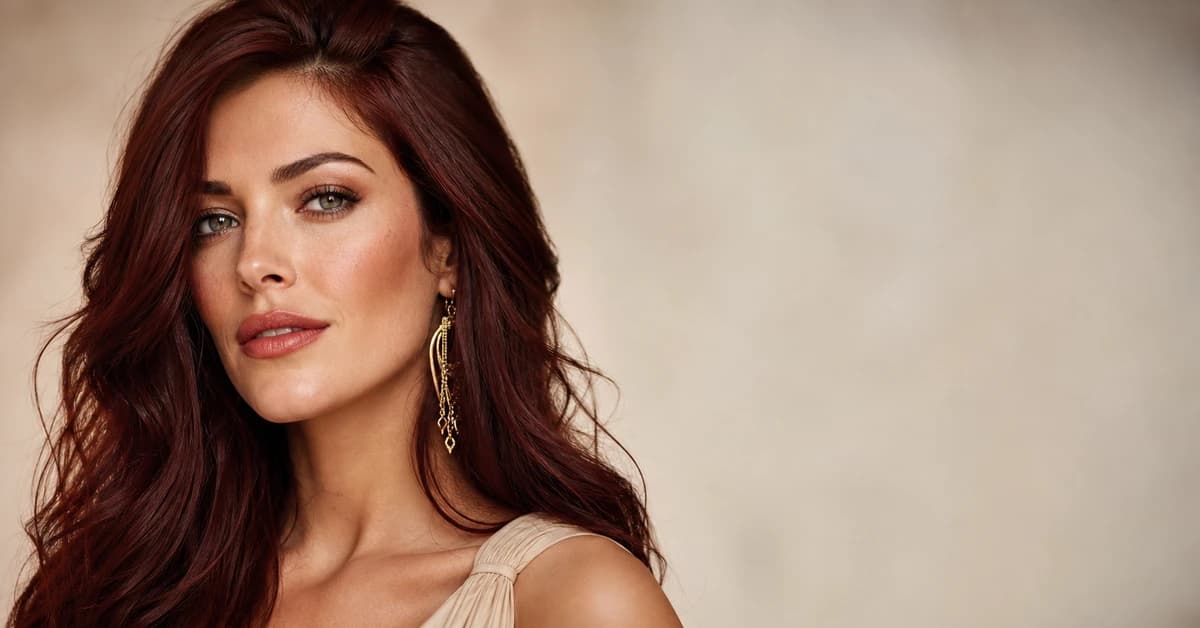
Dark Auburn Hair Color: Who It Suits & the Best Colors to Wear With It
A color analyst on dark auburn hair, who it suits, the most flattering shade range, and the 10 best wardrobe colors to wear with it (with hex codes).
Prefer in person? Find color analysis near you
Browse local color analysts by city, or get the same season, palette and best-colors breakdown online from one selfie.
See your colors on a photo of you
Upload one selfie and ToneLala reveals your season, your full palette, and your best hair, makeup, jewelry and outfits, styled on you.