Quick answer: Deep Autumn is the warm, deep, rich season, earth tones turned up to jewel intensity. Your palette runs on deep rust, tomato red, aubergine, deep teal, forest green and dark gold, with espresso brown, bronze and warm cream doing the neutral work. No icy brights, no pastels. Skip to the full palette with hex codes, the Deep Autumn vs Deep Winter test, or find your season from a selfie.
Deep Autumn Color Palette: The Complete Guide (with Hex Codes)
By ToneLalaUpdated September 21, 2026
Contents
- 01 Deep Autumn at a glance
- 02 What "Deep Autumn" actually means
- 03 The Deep Autumn palette
- 04 Colors to avoid (and why)
- 05 How to know you're actually a Deep Autumn
- 06 Deep Autumn outfit formulas
- 07 A Deep Autumn capsule wardrobe
- 08 Prints, fabrics and denim
- 09 Deep Autumn makeup
- 10 Deep Autumn hair colors
- 11 Jewelry and glasses
- 12 Deep Autumn celebrities, and why the lists never agree
- 13 Where to start with a Deep Autumn result
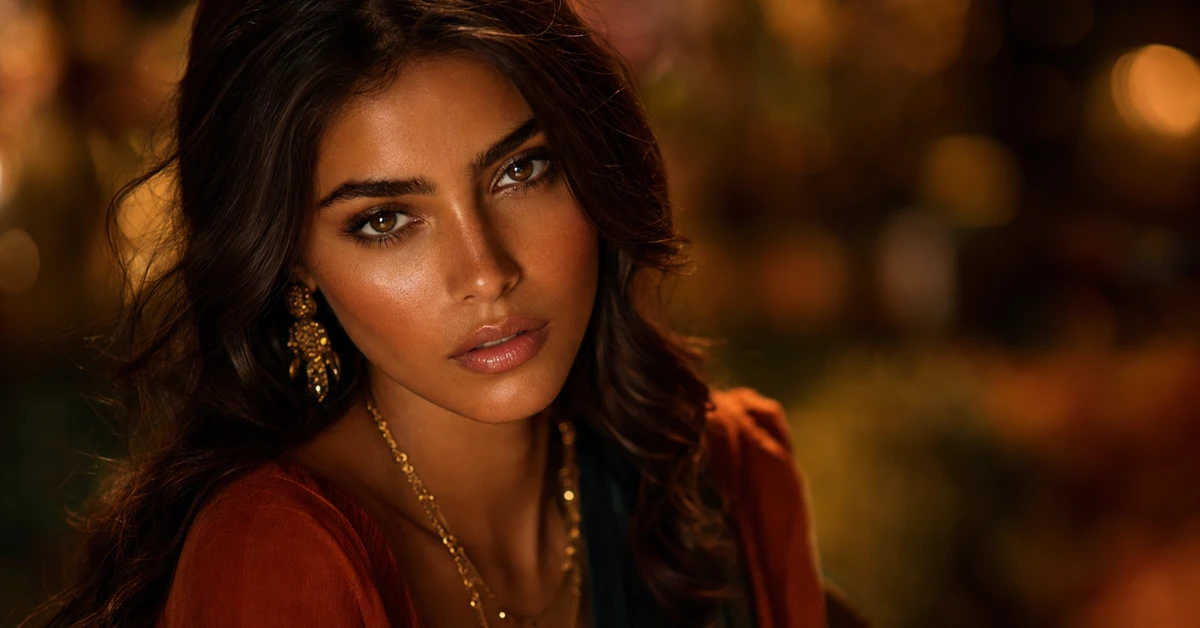
Most Deep Autumns spend years believing they are Winters. Dark hair, dark eyes and real depth in the coloring look like Winter on paper, so black and jewel tones get handed over and the result almost works. The test that settles it takes ten seconds in daylight: hold a true black to the jaw, then a deep mahogany. Black throws a hard shadow under the chin; mahogany warms the whole face. The depth was never in doubt. The warmth hiding inside it was the missing piece.
This guide gives an at-a-glance profile to check against, the full palette in categories with hex codes, the deep warm neutrals that hold a wardrobe together, a side-by-side with the cool season Deep Autumn is most often confused with, and sections on makeup, hair, jewelry, prints, a capsule wardrobe and the celebrity examples people search for.
Deep Autumn at a glance
| Deep Autumn | |
|---|---|
| Undertone | Warm-neutral, golden first, with depth |
| Depth (value) | Deep, one of the darkest palettes |
| Chroma | Rich and saturated, never dusty |
| Contrast | Medium to high; dark hair and eyes against warm skin |
| Typical hair | Dark brown, black-brown, deep chestnut, dark auburn, mahogany |
| Typical eyes | Dark brown, deep hazel, olive-brown, dark green |
| Typical skin | Golden, olive, bronze, tan or deep, with warmth underneath |
| Best "dark" | Espresso brown, then aubergine and forest, not black |
| Best "white" | Warm cream, oyster, not optic white |
| Metals | Antique gold, copper, bronze |
| Neighbouring seasons | True Autumn (lighter, warmer), Deep Winter (cool twin), Soft Autumn (softer) |
| Signature colors | Deep rust, tomato red, aubergine, deep teal, forest green, dark gold |
If the undertone row is wrong, cool colors and black flatter you more, read Deep Winter instead.
What "Deep Autumn" actually means
Deep Autumn is one of the twelve seasons in personal color analysis, and it sits on three dials:
- Undertone: warm-leaning-neutral. Golden at its core, with enough neutral depth to carry the darkest colors without tipping cool. This is the warmth that makes a Deep Autumn color analysis land on autumn rather than winter.
- Value: deep. This is one of the darkest palettes there is; the colors sit low and rich, closer to dusk than to daylight.
- Chroma: rich and saturated. Full-bodied, never dusty, think pigment with depth, like stained wood and dark amber.
Add it up and you get medium-high contrast: deep, warm, vivid coloring that's flattered by deep, warm, vivid color. If True Autumn is late-October light, the deep autumn color palette is the hour just after sunset, the same warmth, taken several shades darker and more concentrated. The trap people fall into is assuming "deep and dramatic" must mean "cool and wintry." It doesn't. Deep Autumn is dramatic the way a glass of port is, dark, warm, and unmistakably rich.
The Deep Autumn palette
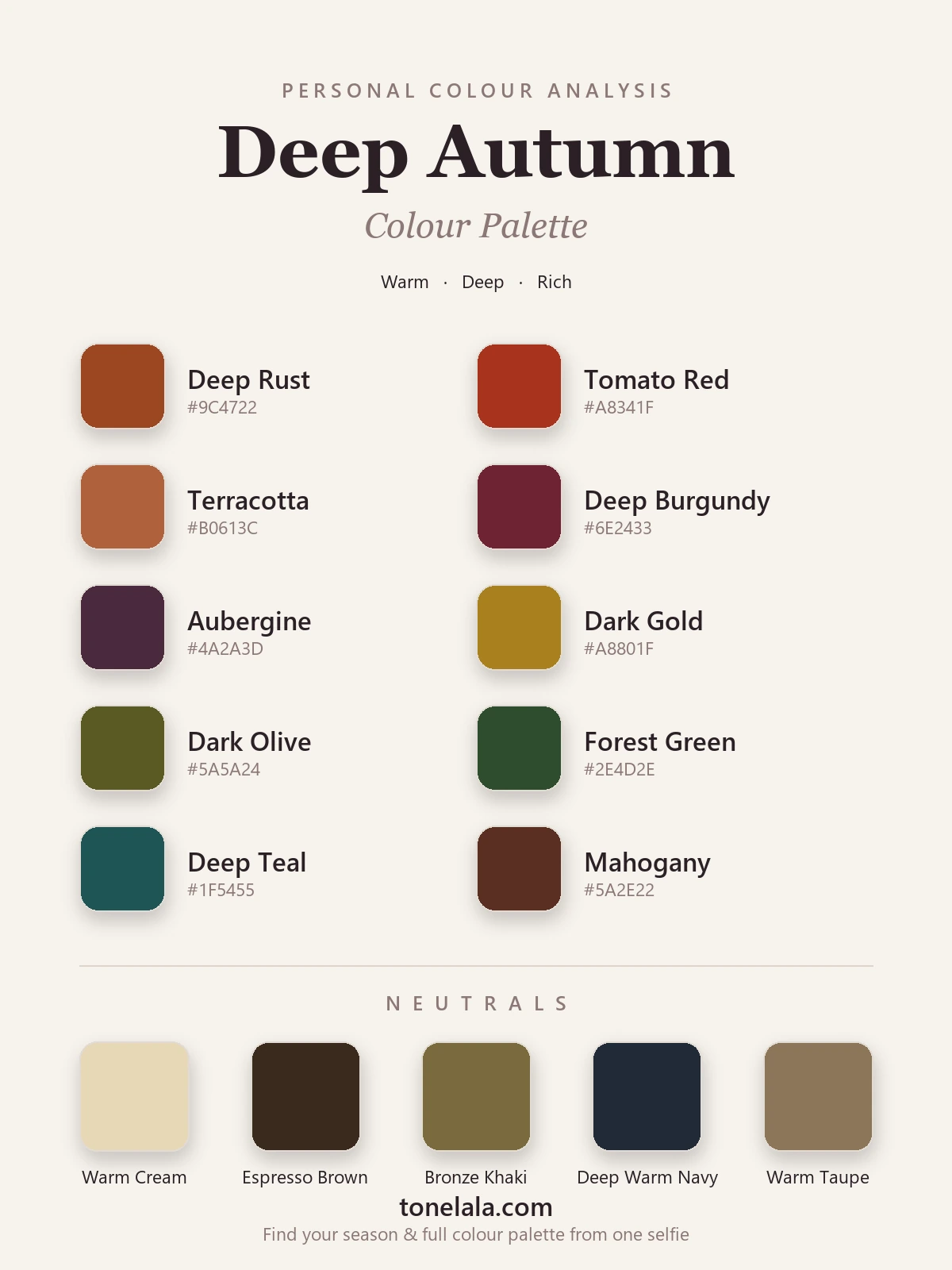
Deep, warm, saturated. Every color reads like a jewel that's been left to age, earth tones with the lights turned low. The chart shows the ten signature colors and five neutrals; the tables expand the palette to more than thirty shades.
Signature colors
| Color | Hex | Wear it as |
|---|---|---|
| Deep Rust | #9C4722 |
Knits, coats, your signature |
| Tomato Red | #A8341F |
The red; tops, dresses, lipstick family |
| Terracotta | #B0613C |
Blouses, summer dresses |
| Deep Burgundy | #6E2433 |
Evening, boots, bags |
| Aubergine | #4A2A3D |
Your "black" for evening |
| Dark Gold | #A8801F |
Scarves, silk tops, the accent |
| Dark Olive | #5A5A24 |
Trousers, jackets, a working neutral |
| Forest Green | #2E4D2E |
Coats, knits, dresses |
| Deep Teal | #1F5455 |
The blue-green that replaces navy for color |
| Mahogany | #5A2E22 |
Leather, knits, the warmest dark |
Warm brights: Deep Autumn's version of "bright" is spiced, not neon: Burnt Orange #C0561E, Paprika #B23A2A, Saffron #C98F1E, Warm Coral #CF6B4A, Turquoise Deep #1E7C7A, Warm Fuchsia (rare, deep) #9E2F5A.
Mediums: the everyday heart of the wardrobe: Pumpkin #B3612C, Chestnut #7B4A2B, Moss #6B7A3E, Peacock #1F6B7A, Brick #8E3B2E, Copper #A5552D.
Darks: as deep as the palette goes, and it goes deep: Espresso #3A2A1E, Deep Warm Navy #222A38, Black-Brown #2B1E17, Pine #20402A, Damson #4E2C48, Dark Chocolate #3E2A20.
Neutrals: warm and deep, never stark: Warm Cream #E7D7B6, Espresso Brown #3A2A1E (your best "dark," and far kinder than black), Bronze Khaki #7A6A3C, Deep Warm Navy #222A38, Warm Taupe #8C7558, plus Camel #B68A52 and Warm Stone #B5A98E.
Metals: antique gold, copper and bronze, warm and slightly aged, echoing the depth in your coloring. Bright silver and platinum read cold and thin against you. Tortoiseshell, amber and wood are Deep Autumn's "metals" too.
Not sure Deep Autumn is actually your season?
Find your color season →Colors to avoid (and why)
- Icy & cool tones: icy blue, fuchsia, cool gray, blue-based pink. They fight your golden undertone and leave your skin looking sallow.
- Black & pure white: too cool and too hard-edged for your warmth; they cast shadows and flatten your richness. Reach for espresso brown and warm cream instead.
- Dusty pastels: baby pink, mint, lavender, washed-out anything. Too light and too soft; on your deep, saturated coloring they simply disappear.
- Muted, grayed mid-tones: dusty rose, sage-gray, taupe-mauve. These are Soft Autumn's; on you they look tired.
- Cool neutrals: charcoal, dove gray, cool beige. Swap for bronze khaki, warm taupe, deep warm navy.
The mirror test: if a color leaves your face looking gray or pulled-down rather than glowing, it's too cool or too washed-out for you.
How to know you're actually a Deep Autumn
| Deep Autumn | Deep Winter | True Autumn | Soft Autumn | |
|---|---|---|---|---|
| Undertone | Warm-neutral | Cool-neutral | Warm | Warm-neutral |
| Depth | Deep | Deep | Medium-deep | Medium |
| Chroma | Rich | Clear | Rich | Muted |
| Black at the face | Barely | Yes | No | No |
| Best "dark" | Espresso | Black | Chocolate | Cocoa |
| Wins in the drape | Mahogany, deep teal | True red, sapphire | Pumpkin, golden olive | Camel, soft coral |
| Metals | Antique gold, bronze | Silver, platinum | Warm gold | Brushed gold |
- Deep Autumn vs Deep Winter: both deep and dramatic, and this is the #1 mix-up. Undertone decides it: Deep Autumn is warm (rust, mahogany, deep teal, dark gold light you up), Deep Winter is cool (true red, sapphire, fuchsia and black-and-white look striking instead). Drape mahogany against black, deep teal against sapphire. Full comparison: Deep Autumn vs Deep Winter.
- Deep Autumn vs True Autumn: both warm and rich, but Deep Autumn is darker and deeper. If the lightest warm colors start to wash out on you and you only really come alive in the deepest tones, you sit on the deep side. Full comparison: True Autumn vs Deep Autumn.
- Deep Autumn vs Soft Autumn: both warm, but chroma separates them. Deep Autumn is richer and more saturated; Soft Autumn is softer and grayed-down. If full, saturated earth-jewel tones light you up rather than overwhelm you, you're Deep. Full comparison: Soft Autumn vs Deep Autumn.
Undertone at this depth is genuinely hard to judge in your own mirror, so a photo-based analysis that reads your warmth, value and contrast for you is what settles it.
Deep Autumn outfit formulas
- Espresso trousers + deep rust knit + antique-gold hoops. The everyday formula; buy this first.
- Forest green coat over warm cream + mahogany boots. Winter, done properly.
- Aubergine dress + bronze sandals. The evening formula, one color, no black.
- Dark olive trousers + tomato red top + copper jewelry. Confident and warm.
- Deep teal blouse + bronze khaki trousers + chocolate loafers. Work.
- Warm-washed denim + dark gold silk + camel coat. Weekend, dressed up a little.
Two deep warm neutrals plus two or three rich colors, and let espresso or aubergine play the "dark" role black would play for anyone else.
A Deep Autumn capsule wardrobe
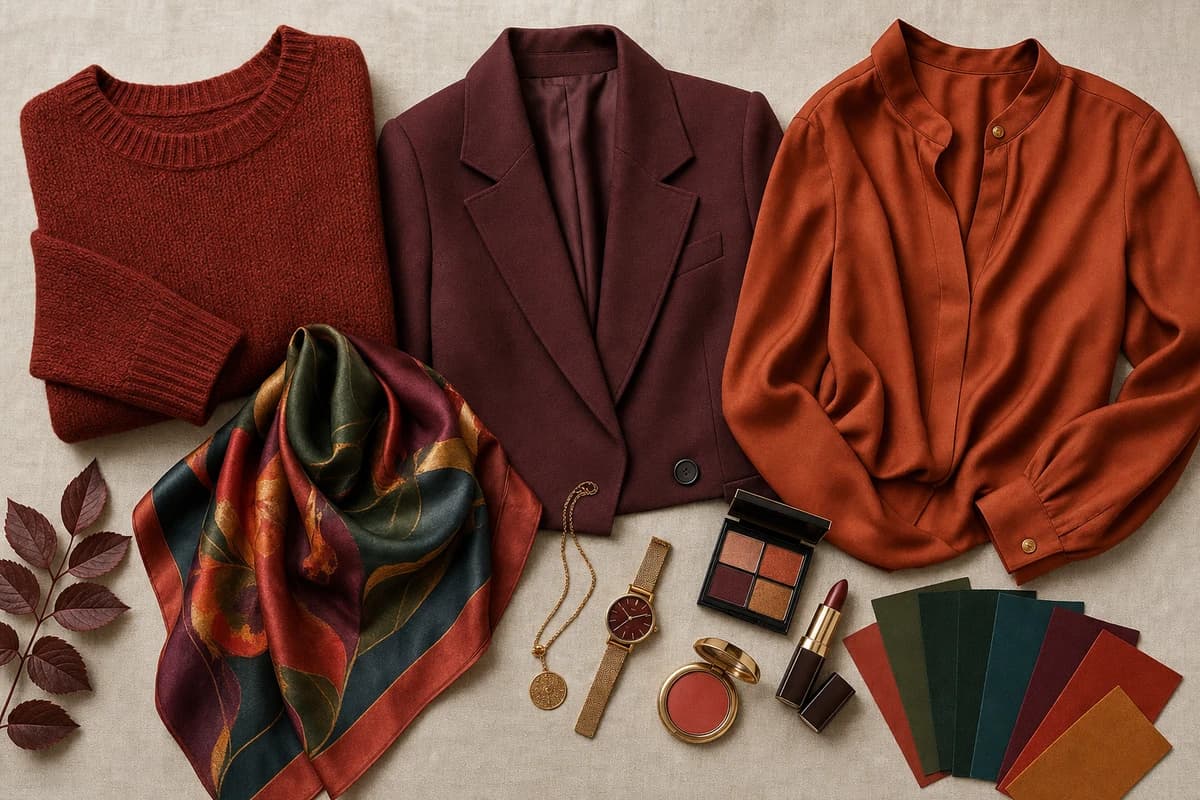
Twelve pieces that all mix: an espresso blazer, dark olive trousers, warm-washed indigo jeans, a warm cream shirt, a deep rust knit, a tomato red top, a deep teal blouse, an aubergine dress, a forest green coat, a dark gold silk scarf, mahogany boots and a chocolate or bronze-khaki bag. Every piece shares the same deep, warm, saturated DNA, so getting dressed stops being a daily negotiation. More combinations in Deep Autumn outfits.
Prints, fabrics and denim
Deep Autumn wears prints with depth and warmth: paisley in rust and teal, tortoiseshell, leopard (the real, warm-brown kind), dark florals on espresso or forest grounds, plaid in rust, olive and mahogany. Fabrics with richness suit the coloring, suede, velvet, corduroy, tweed, leather, cashmere in deep colors, where thin, shiny, cool-looking fabrics read cheap against it. Denim works in a warm, slightly faded indigo; a crisp blue-black wash reads cool and flat.
Deep Autumn makeup
Deep Autumn makeup is warm, deep and rich, it can go bold, but never cool. For lips, reach for brick, deep terracotta, warm brown-red and a deep warm berry with brown folded into it; a true cool red or blue-pink will fight you. Blush wants a warm bronze or brick, kept low and sun-warmed rather than rosy. On the eyes, copper, bronze, deep moss, warm espresso and a touch of aubergine make dark eyes glow, and a warm brown or bronze liner beats black for everyday, black liner can look hard against your warmth where a deep bronze stays rich. Nail polish follows the same rule: oxblood, brick, chocolate, bronze and deep teal look intentional, while pale pink, icy lilac and stark white read cold against warm hands. What to avoid on the face: cool pinks, blue-reds, frosted finishes and a cool-toned foundation, which is the fastest way to turn a Deep Autumn gray. Full shades in Deep Autumn makeup, and the lipstick by season guide has the red.
Deep Autumn hair colors
Deep Autumn hair is dark and warm: rich espresso, deep chestnut, warm dark brown, mahogany and deep auburn all sit beautifully because they share the warmth and depth of your coloring. A few warm copper or chocolate lowlights add dimension without breaking the season. What fights Deep Autumn is coolness and ash, jet-black, blue-black and ashy or platinum tones pull the warmth out of your face and can read flat, while very light cool blonde erases your natural depth entirely. If you want movement, ask your colorist for warm, deep, copper-toned work rather than cool. The auburn and dark auburn guides cover the red end, and hair colors for dark skin the deepest complexions.
Jewelry and glasses
Antique and brushed gold, copper, bronze, brass; stones in amber, garnet, tiger's eye, carnelian, deep jade and smoky topaz; tortoiseshell, wood and leather. Avoid bright silver and anything icy. Glasses in tortoiseshell, warm amber, dark olive, bronze or espresso, not black, not cool gray.
Deep Autumn celebrities, and why the lists never agree
The names that come up most often across color-analysis sites are Halle Berry, Salma Hayek, Penélope Cruz, Natalie Portman, Sofia Vergara and Mila Kunis, and yet a search for "Deep Autumn celebrities" turns up the same faces filed under different seasons from one site to the next. That's because celebrity typing is done from photographs shot under wildly different lighting, with makeup and dyed hair, all of which shift how warm or deep someone reads in a single frame, a Deep Autumn lit coolly with ashy color can easily pass for a Deep Winter on camera. The Deep Autumn celebrities guide collects the most-cited examples with that caveat.
So treat celebrity examples as inspiration, not a diagnosis. Deep Autumn is defined by your own warm undertone, deep value and rich chroma, not by whether you resemble a particular star. The only reliable read is a proper color analysis on a clear photo of your own face.
Where to start with a Deep Autumn result
Do not replace a wardrobe. Start with the piece worn closest to the face most days, usually a coat or a knit, and buy it in espresso, forest green or deep rust instead of black. Next, swap the everyday "white" for warm cream, which changes how every existing outfit reads. Then retire the coolest things near the face, the icy blue shirt and the cool gray blazer, to the bottom half of outfits or out of the wardrobe. Black shoes, bags and trousers can stay; the season is about what sits under the chin. When adding color, use the rule that runs through this whole guide: deep, warm and saturated, never dusty and never icy. Everything bought that way mixes with everything else, which is the practical point of knowing the season.
Frequently asked questions
What is the Deep Autumn color palette?
Deep Autumn (also called Dark Autumn) is a warm, deep, rich palette of earth-jewel tones. Think deep rust, tomato red, aubergine, deep teal, forest green and dark gold, plus warm deep neutrals like espresso brown, bronze and warm cream. Nothing icy, dusty or pastel, the colors are dark, warm and full-bodied.
What are the Deep Autumn characteristics?
Warm-neutral undertone, deep value and rich chroma with medium-to-high contrast: hair is usually dark brown, black-brown, deep chestnut or dark auburn; eyes are dark brown, deep hazel, olive-brown or dark green; skin is golden, olive, bronze or deep with warmth underneath. The look is dark and rich rather than dark and icy.
Is Deep Autumn warm or cool?
Warm, more precisely, warm-leaning-neutral. The undertone is golden first, with just enough depth and neutrality to carry very dark, rich color. That warmth is why earthy jewel tones flatter you and anything icy or blue-based looks off against the skin.
How do I know if I'm a Deep Autumn and not a Deep Winter?
Both are deep and dramatic, so undertone settles it. Deep Autumn is warm, rust, mahogany, dark gold and deep teal light you up. Deep Winter is cool, true red, fuchsia, sapphire and black-and-white look striking on it. Warm and earthy → Deep Autumn; cool and icy → Deep Winter.
Can a Deep Autumn wear black?
Better than any other Autumn, but not as well as espresso brown. Black is cool and flat against warm depth; a very deep espresso, forest green or aubergine gives the same drama and keeps the warmth. If you wear black, keep it below the face or add a warm color at the collar.
What colors should a Deep Autumn avoid?
Icy, cool and pastel tones: icy blue, fuchsia, cool gray, baby pink and mint. Stark black and pure white are too cool and harsh against your warm depth. Dusty, washed-out colors also fall flat, your coloring wants richness, not softness.
What are the best Deep Autumn neutrals?
Espresso brown is the best dark, then deep warm navy, bronze khaki and warm taupe, with warm cream as the white. Dark olive and mahogany behave like neutrals too. Camel and chocolate work; black and cool gray do not.
What makeup suits a Deep Autumn?
Warm, deep and rich. For lips, brick, deep terracotta, warm brown-red and a deep warm berry with brown in it. Blush in warm bronze or brick, eyes in copper, bronze, deep moss and warm espresso, with a warm brown or bronze liner rather than black. Skip cool pinks, blue-reds and frosted finishes.
Related guides
Deep Winter vs True Autumn: How to Tell the Difference
A color analyst on Deep Winter vs True Autumn, how they differ on undertone, value and chroma, the colors that separate them, and how to tell which you are.
Deep Autumn vs Deep Winter: How to Tell the Difference
Deep Autumn vs Deep Winter, settled by a color analyst: how they split on undertone, value and chroma, the colors that separate them
Deep Autumn Makeup: Best Shades for Lips, Eyes & Cheeks
A makeup artist's Deep Autumn guide, 10 best lip, blush & eye shades plus 5 base tones with hex codes, the right foundation undertone, and what to skip.

Deep Winter Makeup: Best Shades for Lips, Eyes & Cheeks
A makeup artist's Deep Winter guide, your foundation undertone, the 10 best lip, eye and blush shades with hex codes, and the warm tones to skip.

Deep Winter Color Palette: The Complete Guide (with Hex Codes)
A color analyst's complete Deep Winter (Dark Winter) guide, your exact palette with hex codes, best neutrals and metals, colors to avoid
Deep Winter Celebrities
A color analyst on Deep Winter celebrities, who likely fits the cool, deep, high-contrast season, why the lists disagree
Prefer in person? Find color analysis near you
Browse local color analysts by city, or get the same season, palette and best-colors breakdown online from one selfie.
See your colors on a photo of you
Upload one selfie and ToneLala reveals your season, your full palette, and your best hair, makeup, jewelry and outfits, styled on you.