Quick answer: wear olive green like a warm neutral. Anchor it with cream, tan or chocolate brown, add one earthy accent such as rust, mustard or burgundy, and finish with gold jewelry and tan leather. The pairing palette with hex codes and eight outfits by occasion are below, and if you want to know which shade of olive suits your own coloring, that is here.
How to Wear Olive Green: Outfit Ideas & Color Pairings
By ToneLalaUpdated September 21, 2026
Contents
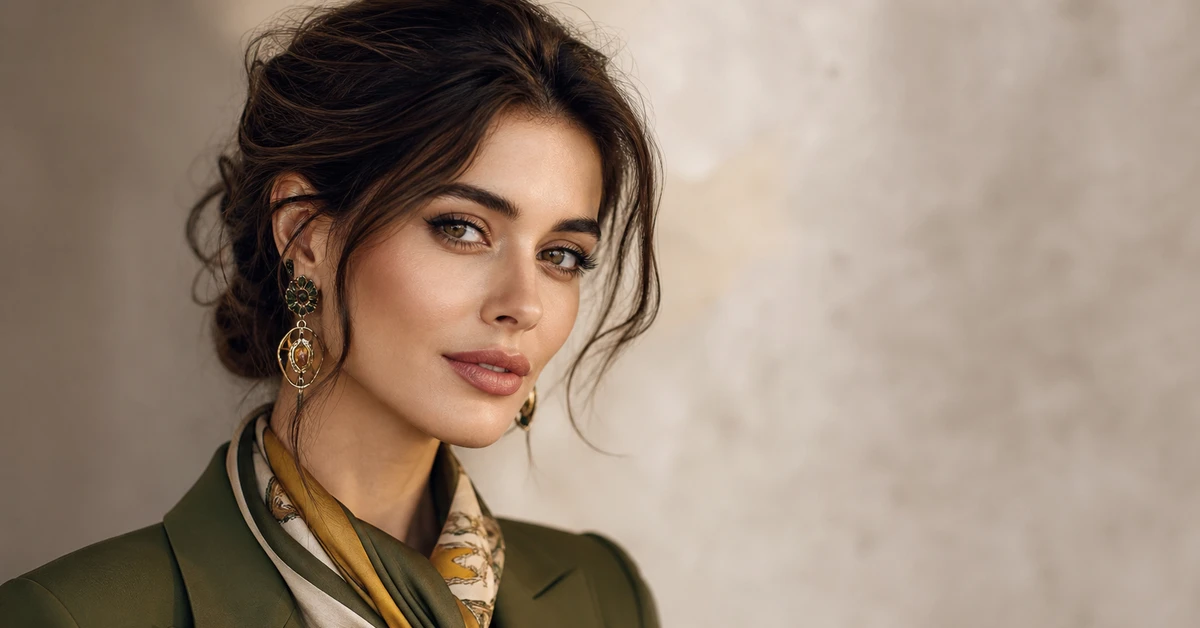
Olive green is one of the most useful colors a wardrobe can hold, and it is usually styled as if it were a bold green: paired with black, given a bright accent, and then judged as a bit flat. Olive is not a loud green. It is a warm, dusty, half-brown color that happens to sit in the green family, and it behaves like camel or brown rather than like emerald. Once it is treated that way, it starts doing the work.
This guide covers the colors that pair with olive green (with hex codes), the everyday neutrals, eight outfits by occasion, the shoes that work, the combinations that go wrong, and which shade of olive suits which coloring, because a golden khaki and a gray-green moss are not the same color on the same face.
What olive green brings to an outfit
Olive green is a muted, yellow-leaning green with brown and gray mixed in, which is why it reads as grounded rather than bright or sporty. Its military and utility heritage gives an outfit an easy, lived-in quality that pure colors rarely manage, and it is one of the few colors that has stayed in fashion for decades without ever being the color of the season.
That low-saturation, earthy character drives everything about styling it. Because olive already contains warmth and a little khaki-brown, it bridges to other warm tones without effort and works as a neutral base for them. It suits autumn and in-between weather, natural fabrics such as cotton, suede, wool and leather, and relaxed cuts. Put it next to something cold or very saturated and the warmth turns muddy; keep its company warm and soft and it looks rich and considered.
The best colors to pair with olive green
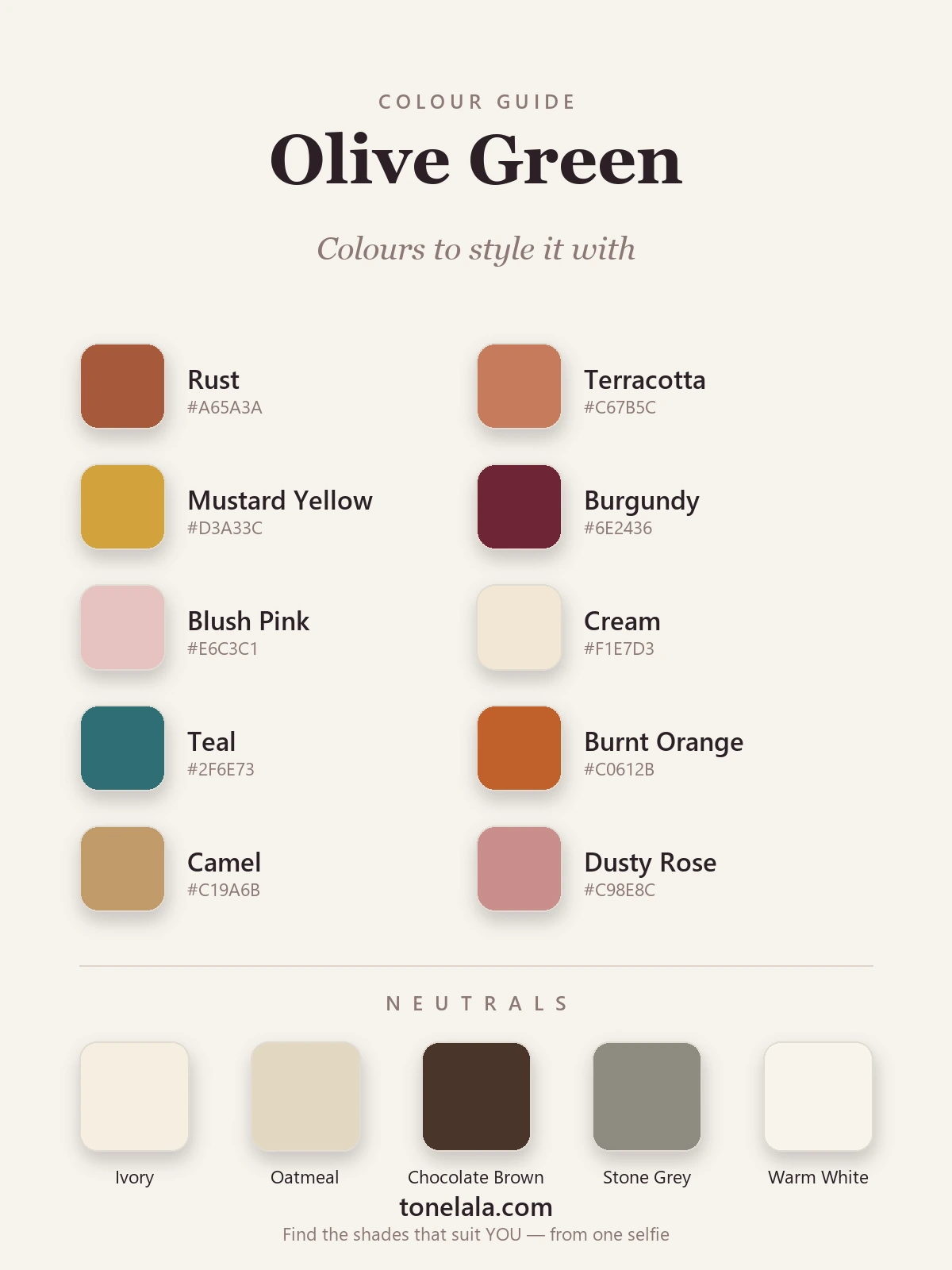
Ten accent colors, each with a hex code so you can match it on a screen or on a hanger.
| Color | Hex |
|---|---|
Rust #A65A3A |
The strongest pairing. Warm reddish clay sits near olive's complement, so it makes the green look deeper and more alive. |
Terracotta #C67B5C |
A softer, sun-baked rust; the easiest warm accent to wear with olive from head to toe. |
Mustard Yellow #D3A33C |
Picks up the yellow already inside olive for a rich autumn harmony. |
Burgundy #6E2436 |
Deep wine red adds polish; the best partner for evening and tailoring. |
Blush Pink #E6C3C1 |
Dusty, soft pink against olive's earthiness, a modern pairing that photographs well. |
Cream #F1E7D3 |
Warm cream lifts olive and keeps it fresh, and lets the green stay the point. |
Teal #2F6E73 |
A controlled cool note; both colors are muted and slightly blue-green, so it reads considered, not clashing. |
Burnt Orange #C0612B |
A bolder rust that makes olive look rich in cold months. |
Camel #C19A6B |
Warm tan bridges olive and brown leather; the quietest way to look polished. |
Dusty Rose #C98E8C |
A muted rose with enough gray to match olive's softness. |
Neutrals to wear with olive green: Ivory #F4EEE0, Oatmeal #E2D8C3, Chocolate Brown #4A352A, Stone Gray #8E8B82 and Warm White #F7F4EC, all warm, earthy neutrals that echo olive's dusty character rather than fighting it.
The everyday neutrals
Olive pairs with the same neutrals as jeans, which is why it slots into a wardrobe so easily.
| Neutral | Hex | How it works with olive |
|---|---|---|
| Denim | #4C6A92 |
The most useful partner of all. Mid and dark washes keep olive rich; light washes make it summery. |
| Navy | #1E2A44 |
Two deep, quiet colors. Add cream or white between them if the outfit reads dark. |
| White | #F7F4EC |
Crisp contrast. Warm white or ivory suits most olives better than optic white. |
| Gray | #8E8B82 |
Soft, low-contrast and easy; heather gray knits with olive trousers is the classic version. |
| Black | #1A1A1A |
Works with a lighter third piece in the outfit; heavy on its own with olive for lighter coloring. |
| Sage | #9CAF88 |
Tonal green on green. Keep the two shades clearly different so it reads intentional. |
| Plum and lilac | #6E3A5C / #B7A2C9 |
Purple sits opposite green, so both give contrast without shouting; lilac is the softer, spring version. |
Is YOUR best shade of olive green warm or cool?
Find your color season →Olive green outfit ideas by occasion
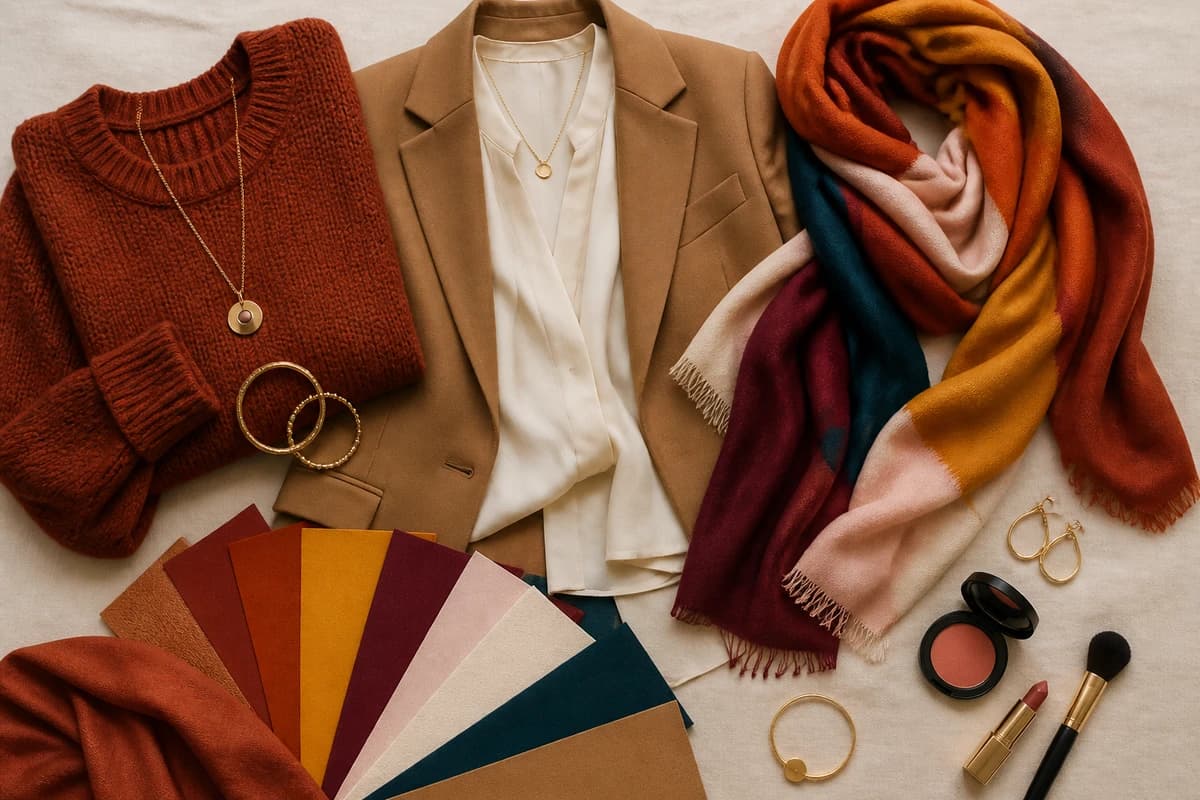
- Weekend: olive utility jacket, cream knit, straight jeans, tan boots, gold hoops. The cream keeps it light and the tan leather pulls the whole thing together.
- Everyday casual: olive wide-leg trousers, white T-shirt, white sneakers, a denim jacket. The easiest way to wear olive trousers without thinking about it.
- Autumn tonal: olive wide-leg trousers, rust knit, chocolate loafers, a brown belt. Earth tones from head to toe; the belt sharpens it.
- Office: olive blazer, blush silk top, camel tailored trousers, nude or tan heels. A warmer version of the black suit.
- Office, darker: olive trousers, navy fine-knit sweater, cream shirt collar showing, brown brogues or loafers.
- Evening: olive slip dress or satin skirt, burgundy heels, gold jewelry, a chocolate brown clutch. The wine red deepens the olive and the gold gives it shine.
- Head to toe: olive shirt and olive trousers in two different shades and fabrics, for example a light khaki cotton shirt over dark moss wool trousers, with tan or cognac shoes. The difference in shade is what makes it work.
- Olive with a print: an olive jacket or trousers with leopard print, a floral in cream and rust, or a stripe in ivory and navy. Olive calms a print the way navy does, so it is a good base for one.
What shoes go with olive green
Tan, cognac and chocolate brown leather suit almost every olive outfit and are the shoes to buy first. White sneakers keep olive casual and are the right choice with denim. Burgundy or oxblood adds depth for evening and tailoring. Black shoes work when black appears somewhere else in the outfit, a black bag or belt is enough, and look disconnected when they are the only black piece. For occasions, gold and bronze metallics pick up olive's warmth in a way silver does not.
Colors and styling to avoid with olive green
- Black as a two-color outfit. Olive and black alone often look heavy, and on lighter coloring a little cold. It works with a third, lighter piece (a white T-shirt, a cream coat) or on deep coloring that carries black well. Chocolate brown, charcoal and burgundy ground olive with more warmth.
- Cool, icy brights. Electric blue, fuchsia, optic white in large amounts. They are too cold and too high in contrast for olive's earthy character, and they make the green look muddy rather than rich.
- Too much shine. Olive is a matte, lived-in color. Sequins, high-gloss satin or a very glossy patent shoe fight it; keep textures natural and let it stay understated.
Wearing olive green for your coloring
There is no single olive green. The color runs from a warm, golden, almost khaki olive to a cooler, grayer, dustier moss, and the right version depends on the wearer's own coloring. Worn near the face, the wrong temperature of olive can make even this forgiving color look sallow.
As a rough map: warm and deep coloring suits a golden olive and can take it with the strongest rust, mustard and burnt orange. Soft and cool coloring suits a grayer olive and looks best with blush, dusty rose and teal. Light and bright coloring is happiest in a clearer, fresher olive worn in lower-contrast, softer combinations. These are starting points rather than rules. The color analysis guides explain how warmth, depth and contrast work season by season, and a personal analysis names the exact shade of olive, and the partners, that suit one face rather than a category.
Frequently asked questions
How do you wear olive green?
Treat it as a neutral. Pair olive green with cream, tan, chocolate brown or denim for everyday outfits, add one warm accent such as rust, mustard or burgundy when you want more color, and keep the metal gold and the leather tan or brown. Olive works best in natural fabrics and relaxed cuts.
What colors go with olive green?
Rust, terracotta, mustard, burgundy, burnt orange, camel, cream, blush, dusty rose and teal are the strongest partners. For neutrals, cream, tan, chocolate brown, denim, navy, gray and white all work. Plum and lilac work as softer contrasts. Icy brights such as electric blue and fuchsia are the colors to skip.
Does olive green go with black?
Yes, with a lighter piece in the outfit. Olive trousers with a black top and white sneakers, or an olive jacket over a black dress with tan boots, both work. Olive and black as a two-color outfit can look heavy on lighter coloring; chocolate brown, charcoal or navy gives the same anchoring effect with more warmth.
What is the best neutral to wear with olive green?
Cream. It lifts olive without the hard contrast of bright white and suits every shade of olive from khaki to dark moss. Tan and chocolate brown are the next best, and denim is the most useful everyday partner.
What shoes go with olive green?
Tan, cognac and chocolate brown leather are the safest choices and suit most olive outfits. White sneakers keep it casual, burgundy or oxblood adds depth for evening, and black works when black appears elsewhere in the outfit. Gold or bronze metallics suit olive for occasions.
Who can wear olive green?
Almost everyone, because olive comes in warm and cool versions. Warm and deep coloring suits a golden, khaki-leaning olive; soft and cool coloring suits a grayer, dustier olive; light and bright coloring suits a clearer, fresher olive worn in softer combinations. The wrong temperature of olive near the face can look sallow, so the shade matters more than the color.
Related guides
How to Wear Emerald Green: Outfit Ideas & Color Pairings
How to wear emerald green: which shade of emerald suits you, 10 pairing colors and 5 neutrals with hex codes, outfits for work, evening and weekends, plus shoes and jewelry.
How to Wear Sage Green: Outfit Ideas & Color Pairings
A stylist's guide on how to wear sage green, 10 pairing colors with hex codes, the best neutrals, outfit formulas by occasion and what to avoid.
How to Wear Beige: Outfit Ideas & Color Pairings
A stylist's guide to wearing beige, 10 color pairings with hex codes, the best neutrals, outfit formulas by occasion and what to avoid.
How to Wear Brown: Outfit Ideas & Color Pairings
How to wear brown without looking dull: 10 color pairings with hex codes, 5 neutrals, outfit formulas by occasion, and the right shade for your coloring.
How to Wear Orange: Outfit Ideas & Color Pairings
A stylist's guide on how to wear orange, 10 pairing colors with hex codes, the best neutrals, outfit formulas, and the right shade for your coloring.
How to Wear Red: Outfit Ideas & Color Pairings
How to wear red without it wearing you, a stylist's outfit formulas, the 10 best colors to pair with red (plus neutrals)
Prefer in person? Find color analysis near you
Browse local color analysts by city, or get the same season, palette and best-colors breakdown online from one selfie.
See your colors on a photo of you
Upload one selfie and ToneLala reveals your season, your full palette, and your best hair, makeup, jewelry and outfits, styled on you.