In a sentence: Wear red as the one bold thing, match its undertone to your coloring, keep its partners quiet (navy, cream, denim, camel), and choose a matte fabric over a shiny one. Skip to the pairing palette or find your most flattering colors.
How to Wear Red: Outfit Ideas & Color Pairings
By ToneLalaUpdated July 9, 2026
Contents
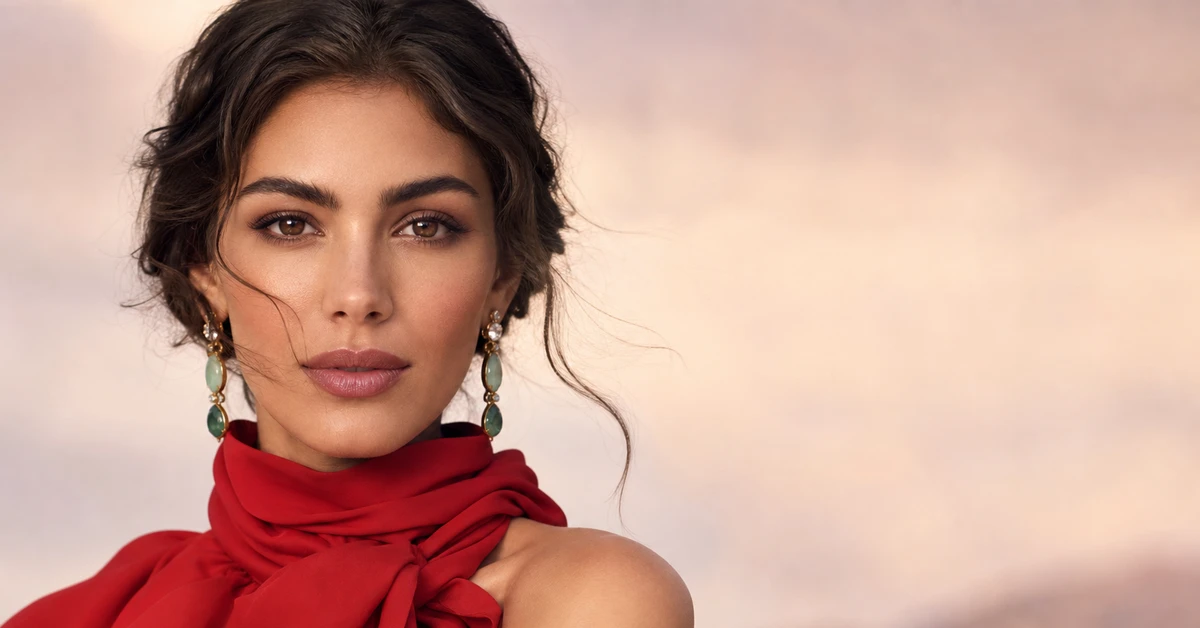
A red blazer thrown over a white tee and jeans is, to my eye, one of the most expensive-looking things a person can wear that costs almost nothing to put together. It works because the red is doing one job and the rest of the outfit politely steps back. That balance, one confident color, everything else quiet, is the whole secret to wearing red, and it's the thing most people get backwards.
The fear I hear most is that red is "too much." It almost never is. What's too much is red plus a second equally loud color, or a red in a fabric so shiny and saturated it reads as fancy dress. Get the shade right for your coloring and give it room to breathe, and red stops being the color you save for parties and becomes the one you reach for when you want to look like you've made an effort without trying.
What red brings to an outfit
Red is the most extroverted color in the wardrobe. It signals energy, confidence and a bit of nerve, which is exactly why a single red piece can lift an otherwise plain outfit from fine to memorable. It photographs beautifully, it reads as decisive, and it draws the eye straight to wherever you put it. Wear a red lip and a red coat and people remember you.
That power is also why it needs handling. Red is high in chroma, saturated and demanding by nature, so it behaves best next to calmer, lower-chroma colors and worst next to other brights. The mood shifts enormously with the shade, too: a soft watermelon reads gentle and modern, a true red reads classic and grown-up, a deep scarlet or burgundy reads rich and a little dramatic. Pick the version that matches the occasion, and red will do half your styling for you.
The best colors to pair with red
These are the ten I reach for most, ordered from safest to boldest, every one tested on real outfits, not just a color wheel.
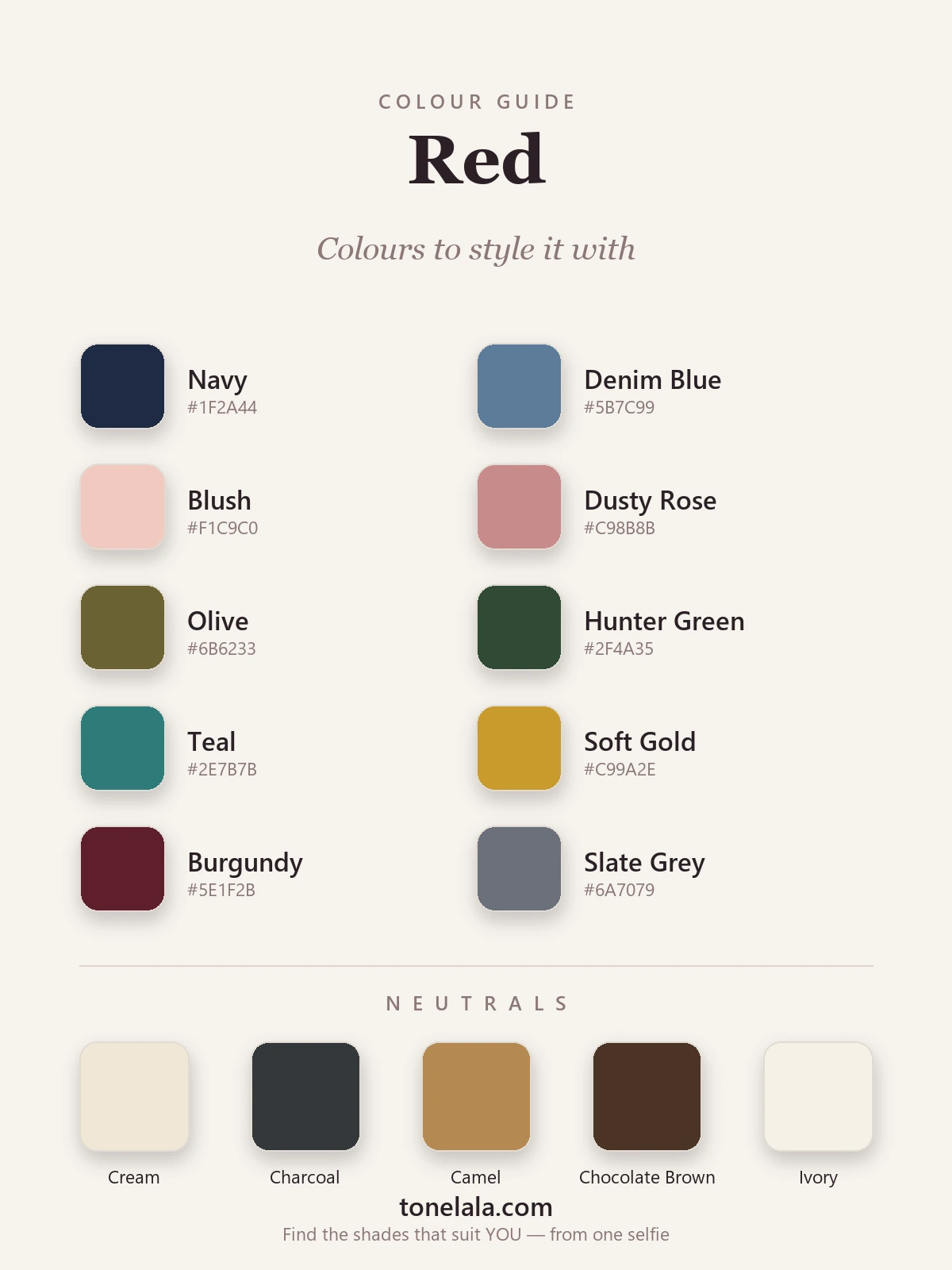
| Color | Hex | Why it works |
|---|---|---|
| Navy | #1F2A44 |
The most reliable partner red has. Deep enough to ground red's energy without ever competing, quietly chic and never tries too hard. |
| Denim Blue | #5B7C99 |
Why a red top with jeans always lands. Mid-blue denim is a relaxed neutral that lets red be the bold thing while keeping the look casual. |
| Blush | #F1C9C0 |
A pale tint of red itself, so it's effortlessly harmonious. Softens the whole outfit into something warm and approachable. |
| Dusty Rose | #C98B8B |
A grayed, grown-up pink that's tonal with red without matching it. Lovely for a soft, monochromatic-ish look that still has depth. |
| Olive | #6B6233 |
My favorite unexpected pick. Olive's muted, golden green calms a warm red beautifully, reads as autumn, not Christmas. |
| Hunter Green | #2F4A35 |
Red's true complement, done the grown-up way. Deep and saturated rather than bright, so it looks luxe instead of festive. |
| Teal | #2E7B7B |
A blue-green with enough depth to stand up to red without shouting. Sophisticated and slightly unexpected. |
| Soft Gold | #C99A2E |
Shares red's warmth and adds a vintage glow. A mustard-gold knit or scarf with a brick red is a 1970s pairing that still works. |
| Burgundy | #5E1F2B |
Red's deeper relative. Tonal dressing, a bright red with a burgundy, looks considered and rich, especially in winter fabrics. |
| Slate Gray | #6A7079 |
A cool, soft gray that pulls red back from "bold" to "elegant." The understated way to wear red to the office. |
Neutrals to wear with red: Cream #EFE7D6, charcoal #34373B, camel #B68A52, chocolate brown #4A3526, and ivory #F6F1E7. These are your safety net, any one of them lets red be the only statement in the outfit, which is exactly where red is happiest.
Is YOUR best shade of red warm or cool?
Find your color season →Red outfit formulas
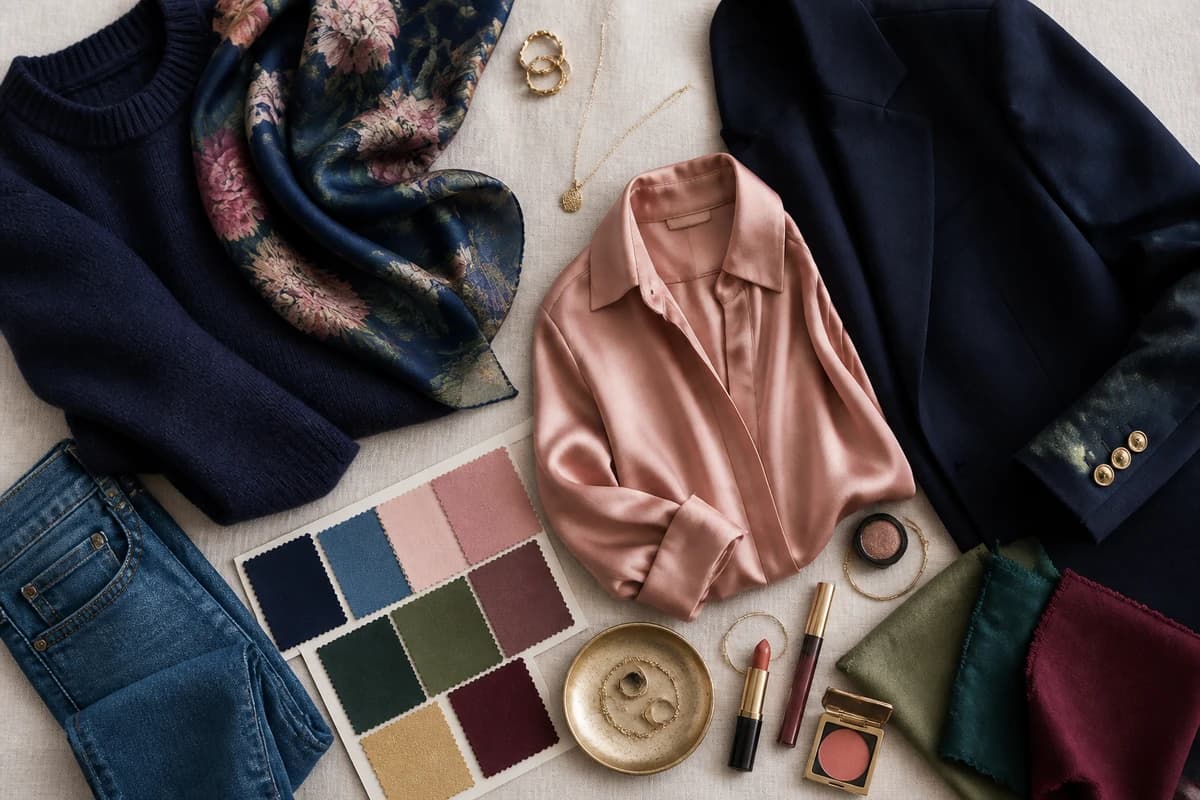
- Casual, everyday: a red knit or tee with mid-wash denim and white trainers. Add a camel jacket and gold hoops. This is the no-fail formula, the denim and neutrals do the calming, the red does the lifting.
- Work and tailored: a true-red blazer over an ivory shell and charcoal or navy trousers, with nude or black pumps. The red is sharp but contained, so it reads as confident rather than loud. Swap in red trousers with a crisp white shirt if you'd rather wear the color below the waist.
- Evening: a red midi or slip dress with nude or black heels and gold jewelry, let the dress be the whole story and keep accessories minimal. For colder nights, a burgundy-and-red tonal look (burgundy coat, brighter red dress) feels rich and intentional.
- One bold accent: an all-neutral outfit, cream, beige, a touch of chocolate brown, lifted by a single red bag, shoe or lip. The least intimidating way to wear red, and often the most striking.
Colors and styling to avoid with red
- Two brights at once. Red beside bright orange, hot magenta or acid yellow makes both vibrate and reads as costume. Keep red as the only high-chroma color and let everything else stay calm.
- Mismatched red undertones. A cool blue-red top with warm tomato-red shoes is the quiet killer. Keep your reds in the same temperature family, or separate them with a neutral.
- Shiny, head-to-toe saturated red. A high-shine synthetic red, or red from collar to hem in one flat fabric, tips into fancy dress. Choose matte wools, knits and good cottons, and break the color up with neutrals.
Wearing red for your coloring
Here's the part most styling guides skip: there is no single "red." The version that makes you glow depends on your coloring, and matching it is what turns red from risky to reliable.
If you're warm (golden, peachy skin), your reds are tomato, brick and warm coral, and they sit naturally with the camel, olive and gold end of this palette. If you're cool (rosy or blue-undertoned skin), reach for true red, raspberry and blue-based crimson, and lean into navy, slate and cool whites. Deep coloring carries the saturated, dramatic reds, scarlet, burgundy; light or soft coloring is flattered by a gentler watermelon or muted brick, with blush and cream nearby, rather than a hard fire-engine red that overwhelms.
This is where seasonal color analysis earns its keep. My color analysis guides walk through each of the twelve seasons, and a personal analysis pins down your exact red, and which of the pairings above will look made for you.
Putting it together
Wearing red well comes down to three decisions: pick the shade that matches your own undertone, give it one quiet partner, navy or denim if you want safe, olive or teal if you want clever, blush if you want soft, and choose a matte fabric that lets the color look grown-up. Do that and red becomes the most useful thing in your wardrobe rather than the most intimidating. If you want to know which red is genuinely yours, find your color season and start there.
Frequently asked questions
How do you wear red without it looking too much?
Give red one job and keep everything else quiet. Wear it as a single statement, one red piece against neutrals like ivory, navy, charcoal or camel, rather than head-to-toe brights. The other trick is fabric: a matte wool or a soft knit red reads as grown-up, while a shiny, saturated synthetic red tends to read as costume. Let red lead and let the rest of the outfit hold back.
What should you wear with red?
For everyday polish, pair red with navy, denim blue, cream or camel. When you want more interest, reach for olive, hunter green, teal, soft gold or a tonal burgundy. The rule is one loud color at a time, surround red with neutrals or deeper, less saturated shades so nothing competes with it.
What color shoes go with a red outfit?
Nude or tan shoes lengthen the leg and keep a red dress looking effortless. Black or charcoal sharpen it for evening; ivory or cream feel fresh in warmer months; and a camel or cognac boot is my favorite with a brick or tomato red. Save matching red shoes for when the rest of the outfit is plain, red-on-red works best as a deliberate, head-turning choice.
Can you wear red to work?
Yes, the key is proportion. A red blazer over a neutral outfit, red trousers with a crisp white shirt, or a single red accessory all read as confident rather than loud. Keep the red tailored and matte, pair it with navy, charcoal or gray, and let it be the one bold note in an otherwise calm palette.
Which shade of red suits my skin tone?
Match the red to your undertone. Warm, golden skin glows in tomato, brick and warm coral-reds; cool skin suits true red, raspberry and blue-based crimson. Deep coloring carries rich scarlet and burgundy; light or soft coloring is flattered by a muted watermelon or brick rather than a hard fire-engine red. A personal color analysis pins down your exact shade.
Related guides
How to Wear Beige: Outfit Ideas & Color Pairings
A stylist's guide to wearing beige, 10 color pairings with hex codes, the best neutrals, outfit formulas by occasion and what to avoid.
How to Wear Brown: Outfit Ideas & Color Pairings
How to wear brown without looking dull: 10 color pairings with hex codes, 5 neutrals, outfit formulas by occasion, and the right shade for your coloring.
How to Wear Orange: Outfit Ideas & Color Pairings
A stylist's guide on how to wear orange, 10 pairing colors with hex codes, the best neutrals, outfit formulas, and the right shade for your coloring.
How to Wear Navy: Outfit Ideas & Color Pairings
A stylist's guide to wearing navy, 10 color pairings with hex codes, 5 neutrals, outfit formulas by occasion, and the right shade of navy for your coloring.
How to Wear Lavender: Outfit Ideas & Color Pairings
A stylist's guide to wearing lavender, 10 color pairings and 5 neutrals with hex codes, outfit formulas by occasion, and the right shade for your coloring.
How to Wear Coral: Outfit Ideas & Color Pairings
A stylist's guide to wearing coral, 10 pairing colors with hex codes, the best neutrals, outfit formulas, and how to find your most flattering coral.
Prefer in person? Find color analysis near you
Browse local color analysts by city, or get the same season, palette and best-colors breakdown online from one selfie.
See your colors on a photo of you
Upload one selfie and ToneLala reveals your season, your full palette, and your best hair, makeup, jewelry and outfits, styled on you.