In a sentence: the best blush for your skin tone follows your undertone first, warm skin glows in peach, coral and warm rose, cool skin in soft pink, rose and berry, neutral skin in balanced rose, then you match the depth of the shade to your own. See the full palette or find your season.
Best Blush for Your Skin Tone
By ToneLalaUpdated July 8, 2026
Contents
A bride once sat in my chair already half-finished, and her cheeks were doing the thing I see most often: two flat, slightly purplish discs that didn't quite belong to her face. She'd bought the most-recommended blush of the year, a cool berry-pink, and dutifully applied it. The trouble was she was warm, gold underneath, the kind of skin that tans in an afternoon, and that cool pink sat on top of her like a sticker. I wiped one cheek, swapped in a soft peach-coral, and the difference was almost comic. One side looked flushed from a walk in cold air; the other looked like makeup. Same woman, same brush, the only change was temperature.
Blush is the most forgiving product to get right and the easiest to get wrong, because it lives high on the face where everyone reads it first. The good news is you don't need a drawer full of pans. You need to know your undertone, pick the version of peach, rose or berry that matches it, then dial the depth to suit you. Get the temperature right and your cheeks look like you on a good day. Get it wrong and even a beautiful blush announces itself as a circle of color.
Start with your undertone, not the color
Before you reach for "pink" or "peach," work out whether your skin is warm, cool or neutral underneath, because that one fact decides which version of every blush will flatter you.
Warm undertones have gold, peach or yellow running through them. Quick checks: your veins look more green than blue, gold jewelry suits you better than silver, and you tend to tan rather than burn. Cool undertones lean pink, red or blue, blue-ish veins, silver beats gold, skin that flushes and pinks in the sun. Neutral sits between the two, with no strong pull either way, and gets to borrow from both camps.
Here's why it matters more than the name on the pan. Blush mimics a flush, the color your face goes naturally when blood rises to the surface, and your natural flush is tied to your undertone. Warm skin flushes peachy-coral; cool skin flushes rosy-pink. So a peach blush on warm skin echoes what the face already does and reads as effortless health. A cool berry-pink on that same warm skin paints on a flush her body would never produce, and the eye clocks it instantly as applied. Flip it: a soft rose on cool skin looks like she's just come in from the cold, while a warm apricot can look muddy or orange on her. The color isn't good or bad. It's the right or wrong temperature for you.
The best blush shades by skin tone
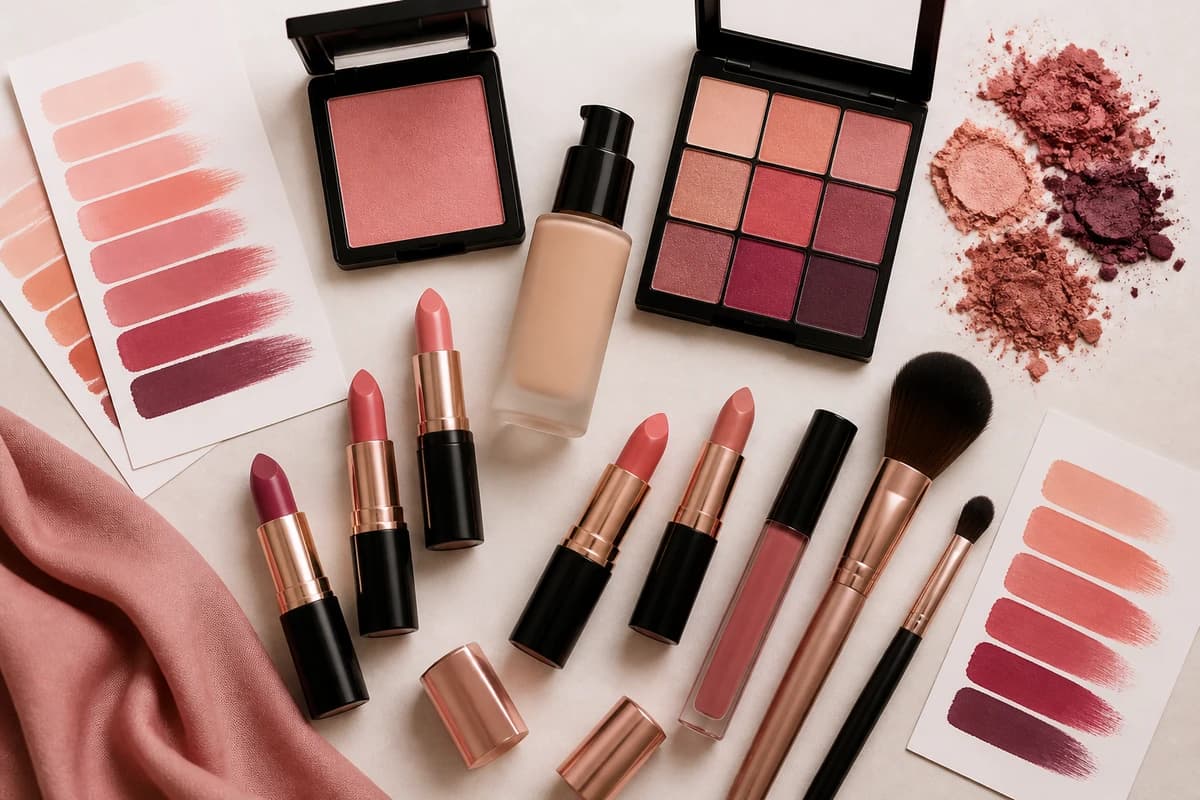
These are the ten I reach for across warm, cool and neutral clients, a full spread of peaches, corals, roses and berries with their warm and cool versions, so you can find the one pointed your way.
::img:palette:: {#the-palette}
| Shade | Hex |
|---|---|
| Peach | #F2A488 |
| Apricot | #EE9E6A |
| Coral | #F07F5E |
| Warm Rose | #D87E76 |
| Soft Pink | #F0B6BE |
| Cool Rose | #D87490 |
| Raspberry | #C24A6E |
| Berry | #9E3A5C |
| Plum | #7E3A57 |
| Terracotta | #C2674A |
The warm row runs left to right from gentle to bold: peach #F2A488 is warm skin's easy everyday flush, apricot #EE9E6A adds golden depth for warm medium tones, coral #F07F5E is the livelier statement for clear, bright coloring, and terracotta #C2674A is the deep warm hero, earthy and glowing where pale peaches would vanish. Warm rose #D87E76 is the bridge, a dusty rose with warmth folded in that flatters warm and neutral skin. The cool family climbs the same way: soft pink #F0B6BE for fair cool skin, cool rose #D87490 for cool medium tones, then raspberry #C24A6E, berry #9E3A5C and plum #7E3A57, rich, deep options that read luxurious rather than loud on medium-to-deep complexions.
Supporting neutrals: Cream #EFE0CD, Champagne #E6CBA8, Tan #C79A74, Rosewood #9A6A66 and Cocoa #5C3A30. These are the bronzers, contours and skin tones the blush sits against, and they shift the read: peach glows warmest over a champagne-and-tan base, cool rose looks crispest against a rosewood contour, and on deep skin cocoa is the depth your blush layers over so it reads luminous, never chalky.
Want to know YOUR exact blush shade?
Find your color season →Peach, coral, rose and berry, which version is yours
Peach, apricot and coral. The warm everyday workhorses. Peach and apricot read like a natural sun-flush rather than makeup, which is exactly why warm skin loves them; coral is the brighter option for warm skin with enough clarity to carry it. A little goes a long way. On cool skin all three can tip slightly orange, so cool tones should pass them by, and if coral ever looks harsh on you, the softer peach is usually the answer.
Soft pink and cool rose. Cool skin's home base. Soft pink is the gentle, fair-skin everyday flush; cool rose is the more pigmented version for cool medium tones. Both read fresh and clean on pink-based skin. The tell is the same as always, does the pink lean blue and rosy (cool) or peachy and warm (warm rose)?
Berry, plum and terracotta. The deep, rich shades, split by temperature. Raspberry, berry and plum give cool medium-to-deep skin color without going garish; terracotta and brick are the warm answer, handing deep warm skin the same richness in an earthy, sun-baked register. If a plum ever looks bruised on you, it's almost always too cool or too deep for your coloring, drop to terracotta instead.
Blush and your color season
This is where "best blush for your skin tone" stops being one chart and becomes yours. Undertone gets you into the right family, but your exact best blush depends on three dials together: undertone, depth (how light or deep you are) and chroma (how clear or muted). That combination is what a color season actually describes.
A few examples of how much it changes things. A Bright Spring suits a clear, high-chroma coral that would visually flatten a Soft Summer, who comes alive in a muted rose instead. A True Autumn wants terracotta, warm peach and brick; a Light Spring glows in a fresh peach, but a deep plum would wear her. The same advice, "warm skin likes warm blush", splits into genuinely different shades once depth and chroma come in, which is exactly why a generic undertone chart only gets you most of the way.
Our color analysis guides walk through each season in detail, so once you know roughly where you sit you can read your exact cheek recommendations. If you'd like to see how it works for two clearly different seasons, compare the vivid coral of Bright Spring with the soft, muted rose of Soft Summer, and because cheeks and lips share an undertone, it's worth reading alongside best lipstick for your skin tone so the two work together.
Applying and testing blush the smart way
Two habits save a lot of money and a lot of clown-cheek moments. First, swatch on your face, not just the back of your hand, the apple of your cheek tells the truth your hand won't. Smile, dab a little on the high point of the cheek, and watch what it does to your whole face, not just the patch of color. If your skin looks lit and even and the flush looks like it belongs, that's your temperature. If the color reads as a separate disc, or your skin around it looks faintly gray or tired, the blush is fighting you.
Second, match the formula and the hand to your depth. Cream and liquid blushes melt into the skin and look most natural on fair and on deep skin alike; dense powders can sit on top, especially on fair skin where blush shows fast. Build in thin layers and stop early, you can always add, but a heavy first pass on fair skin is hard to walk back. And if a shade is almost right but a touch too cool or too warm, a sheer wash of a neighbouring tone over the top will nudge the temperature without buying a whole new pan.
Putting it together
You don't need a collection of blushes. Once you know your undertone, one or two shades cover almost everything: an everyday flush in your temperature, peach for warm, soft rose for cool, and, if you like a little drama, one richer shade for color (coral or terracotta if you're warm, berry or plum if you're cool). Match them to your undertone, keep the depth in line with your own, and your cheeks stop looking made-up and start looking healthy. That's the whole payoff. Get the family from this guide, then let a proper analysis hand you your exact blush, the difference between "that's nice" and "you look so well, what have you been doing."
Frequently asked questions
How do I choose the best blush for my skin tone?
Lead with undertone, then adjust for depth. If your skin is warm (gold or peach underneath, veins lean green, gold jewelry flatters you), reach for peach, apricot, coral and warm rose. If you're cool (pink or blue underneath, veins lean blue, silver flatters you), pick soft pink, cool rose, raspberry, berry and plum. Neutral undertones look best in balanced rose and soft coral. Then match the depth of the blush to your own depth, fair skin wants sheer, soft washes, while medium and deep skin carry richer, more pigmented shades. The right blush looks like a natural flush, not a separate stripe of color.
What blush suits warm undertones?
Warm undertones glow in blushes that carry peach, gold or orange. Peach (#F2A488), apricot (#EE9E6A), coral (#F07F5E) and warm rose (#D87E76) all read like a real, healthy flush on golden skin, and terracotta (#C2674A) is gorgeous on deeper warm complexions. Avoid cool, blue-based pinks, they can sit on top of warm skin and read slightly ashy or mauve rather than fresh. If a blush ever makes warm skin look tired, it's almost always too cool for you.
What is the best blush color for fair skin?
Fair skin is about depth as much as undertone, a little pigment goes a long way, so the goal is a soft, sheer wash rather than a bold pop. Fair-and-warm skin suits a light peach or apricot; fair-and-cool skin suits a soft cool pink or a gentle rose. Build it in thin layers and stop the moment it looks like a healthy flush, because fair skin shows blush quickly and a heavy hand can look like two bright circles. Cream and liquid formulas tend to melt in more naturally on fair skin than a dense powder.
What blush looks best on deep skin?
Deep skin carries rich, saturated blush beautifully, the mistake is going too pale, which reads chalky and gray rather than glowing. Deep warm skin glows in terracotta, brick and warm berry; deep cool skin glows in raspberry, true berry and plum. Pigment-rich cream and liquid blushes give the most luminous result on deep skin, and a tiny touch of a brighter shade on top adds dimension. Think depth and warmth, never pastel.
How do I find my exact most-flattering blush shade?
Undertone gets you the right family, peach and coral for warm, rose and berry for cool, but your exact best blush depends on your depth, contrast and chroma together, which is what your color season pins down. A Bright Spring suits a clear, vivid coral that would overwhelm a Soft Summer, who glows in a muted rose. A photo-based color analysis reads all three at once, so you get your specific blush rather than a generic chart. You can start one at tonelala.com/onboarding.
Related guides

Best Lipstick for Your Skin Tone
A color analyst's guide to the best lipstick for your skin tone, how to pick reds, nudes, pinks and berries by undertone, with real hex codes and examples.

Fair Skin Tone: Undertones & Best Colors
A color analyst's guide to fair skin tone, how to spot it, read your cool, warm or neutral undertone, the seasons it suits

Types of Skin Tones Explained
A color analyst explains the types of skin tones, depth (fair to deep) and undertone (warm, cool, neutral), how they differ, and how to find yours.

Warm vs Cool Undertones
A color analyst's guide to warm vs cool undertones: simple at-home tests, the neutral middle ground, and example colors with hex codes for each.
Skin Tone Chart: Find Your Shade & Undertone
A color analyst's skin tone chart to find your shade (fair to deep) and undertone (warm, cool or neutral) with simple at-home tests, and your color season.

Warm-Toned Skin: How to Tell & Best Colors
How to tell if you have warm-toned skin, the vein, jewelry and white-paper tests, plus the colors, metals and neutrals that flatter warm skin
Prefer in person? Find color analysis near you
Browse local color analysts by city, or get the same season, palette and best-colors breakdown online from one selfie.
See your colors on a photo of you
Upload one selfie and ToneLala reveals your season, your full palette, and your best hair, makeup, jewelry and outfits, styled on you.