In a sentence: the best lipstick for your skin tone follows your undertone first, warm skin glows in coral, brick and warm reds, cool skin in blue-reds, berries and fuchsia, neutral skin in balanced rose, then you match the depth of the shade to your own. See the full palette or find your season.
Best Lipstick for Your Skin Tone
By ToneLalaUpdated September 29, 2026

Contents
Lipstick sits next to your teeth and in the middle of your face, so a shade that is slightly off shows more than a top in the wrong color. The most common problem is temperature. A cool, blue-based pink on warm skin can look slightly purple at the edges and make teeth look duller; a warm orange-red on cool skin can look muddy. The same shade on the right skin looks clean.
There are two things to sort out: undertone (warm, cool or neutral), which decides the version of each color, and depth (fair, medium, olive, deep), which decides how light or rich it should be. This guide covers both, then goes through reds, nudes, pinks and berries.
Start with your undertone, not the color
Before you think "red" or "nude," work out whether your skin is warm, cool or neutral underneath, because that decides which version of every shade suits you.
Warm undertones have gold, peach or yellow in them. Cool undertones lean pink, red or bluish. Neutral sits between, with no strong pull either way, and can wear shades from both groups. Olive skin has a green or golden cast; guides place it under warm or neutral, and it has its own section below.
Three quick checks, best done in daylight without makeup:
- Jewelry. If gold makes your skin look even and silver makes it look gray, you lean warm. If silver looks better, you lean cool. If both work, you are probably neutral.
- White fabric. Hold optic white and cream under your chin. Cool skin looks cleaner in white; warm skin looks fresher in cream.
- Sun. Skin that burns easily and turns pink leans cool; skin that tans easily leans warm.
The vein test (green veins for warm, blue for cool) is common, but it is harder to read, especially on deeper skin, so use it only as a tiebreaker. The guide to finding your undertone goes through more tests.
The best lipstick shades by skin tone
These ten cover reds, nudes, pinks and berries in warm and cool versions, so every undertone has several options.
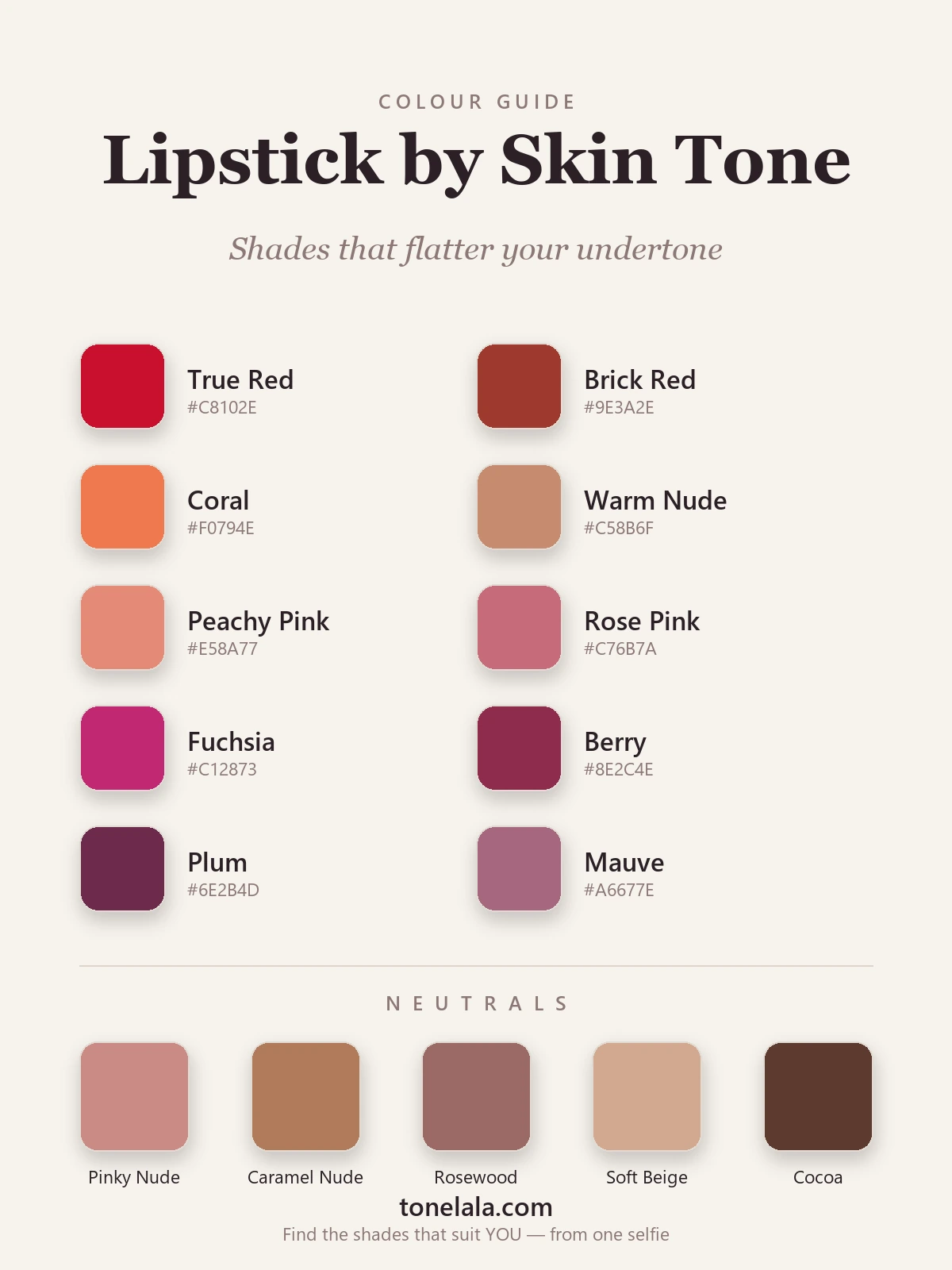
| Shade | Hex |
|---|---|
| True Red | #C8102E |
| Brick Red | #9E3A2E |
| Coral | #F0794E |
| Warm Nude | #C58B6F |
| Peachy Pink | #E58A77 |
| Rose Pink | #C76B7A |
| Fuchsia | #C12873 |
| Berry | #8E2C4E |
| Plum | #6E2B4D |
| Mauve | #A6677E |
Who each one is for. True red #C8102E is a clean, blue-based red for cool and neutral skin; it tends to make teeth look whiter. Brick red #9E3A2E is the warm version, with orange and brown in it, for warm skin that finds true red too sharp. Coral #F0794E is an easy everyday color for warm skin. Warm nude #C58B6F is a caramel beige for warm tones that avoids the gray look of cooler nudes. Peachy pink #E58A77 is a soft warm pink; rose pink #C76B7A is its cooler, dustier counterpart for cool and neutral skin. Fuchsia #C12873 is a strong cool pink that shows best on cool medium and deep skin. Berry #8E2C4E and plum #6E2B4D are cool, deep shades that look rich on medium and deep skin. Mauve #A6677E is a muted, grayed rose for soft, low-contrast coloring.
Supporting nudes: Pinky Nude #C98B85 (cool), Caramel Nude #B07A5A (warm), Rosewood #9A6A66 (a neutral medium nude that suits many people), Soft Beige #D2A98F (a light warm everyday shade), and Cocoa #5C3A30 (a deep brown nude for deep skin).
Want to know YOUR exact red and nude?
Find your color season →Lipstick by skin depth and undertone
Most guides organize lipstick either by depth or by undertone. You need both. The table puts them together; the sections after it explain each depth.
| Depth | Warm | Cool | Neutral |
|---|---|---|---|
| Fair | Peach, soft coral, sheer brick, light caramel nude | Soft rose, sheer cherry, pinky nude, light berry | Rose, soft mauve, rosewood |
| Medium | Coral, terracotta, tomato red, caramel nude | Raspberry, blue-red, berry, rosy nude | Rosewood, true red, soft berry |
| Olive | Brick, red-orange, golden beige nude, warm rose | Berry, wine, deep rose | Rosewood, warm berry, caramel nude |
| Deep | Brick, burnt orange, chocolate and terracotta nudes | Fuchsia, plum, deep berry, blue-red | Wine, cocoa nude, deep red |
Best lipstick for fair skin
Fair skin shows a strong lipstick more than any other depth, so softer or sheerer versions of your colors usually look best in the daytime. Warm fair skin suits peach, soft coral and a light caramel nude; cool fair skin suits soft rose, pinky nudes and a sheer cherry or berry. A full-strength red works well at night; pick the version that matches your undertone and keep the rest of the face simple. The fair skin guide covers clothing colors too.
Best lipstick for medium skin
Medium skin can carry most shades at full strength. Warm medium skin looks best in coral, terracotta, tomato red and caramel nudes. Cool medium skin suits raspberry, blue-red, berry and rosy nudes. This is the depth where a nude that is too pale shows most, so choose one with some color in it.
Best lipstick for olive skin
Olive skin has a green or golden cast that cool pinks and grayish taupes can make look sallow. Guides that cover olive skin agree on caramel and golden beige nudes, warm roses, brick and red-orange reds, and, on medium to deep olive skin, berries and wine shades. Many people with olive skin can wear a wide range, but a quick test is worth it: if a pink makes the skin around your mouth look greenish, choose a warmer rose. The olive undertones guide goes into how to tell if you are olive.
Best lipstick for deep skin
Deep skin carries rich, saturated color: brick, burnt orange, plum, fuchsia, deep berry, wine and blue-red all look good. The main thing to avoid is a pale beige "nude," which can look ashy or chalky. Choose chocolate, cocoa, terracotta or warm brown nudes instead, or wear a lighter shade with a deeper lip liner. See the deep skin tone guide for more.
Reds, nudes, pinks and berries, which version is yours
Red. Everyone can wear red; you need your version. Warm skin suits the orange and brick end: brick red #9E3A2E, tomato, warm coral-red. Cool skin suits the blue end: true red #C8102E, cherry, raspberry-red. Neutral skin can carry a balanced true red. Depth decides intensity: fair skin often looks best in a slightly softer or sheer red, while medium and deep skin carry deep reds and wine shades.
Nude. A nude has to be matched to your undertone and should not be lighter or grayer than your bare lip. Sources disagree on how much deeper to go: some brands say one or two shades darker than your lips, Charlotte Tilbury says to stay close to your natural lip pigment, and L'Oreal suggests a shade or two darker than your skin for medium and olive skin. Start close to your lip color and go deeper if it looks flat. Warm skin: caramel, honey, peachy beige. Cool skin: rosy and pink-mauve nudes. Deep skin: terracotta, warm brown and cocoa.
Pink. Warm skin looks best in coral and peachy pinks; cool skin in rose, raspberry and fuchsia; neutral skin in soft rose. The test is whether the pink leans orange-peach (warm) or blue-berry (cool).
Berry and plum. These are mostly cool, deep shades and suit cool medium and deep skin best. Warm versions exist, such as warm wine and mulberry with a brown base. If a plum looks harsh on you, it is usually too cool or too deep for your coloring.
Lipstick and your color season
Undertone gets you to the right family, but your best lipstick depends on three things together: undertone, depth (how light or deep you are) and chroma (how clear or muted). That combination is what a color season describes.
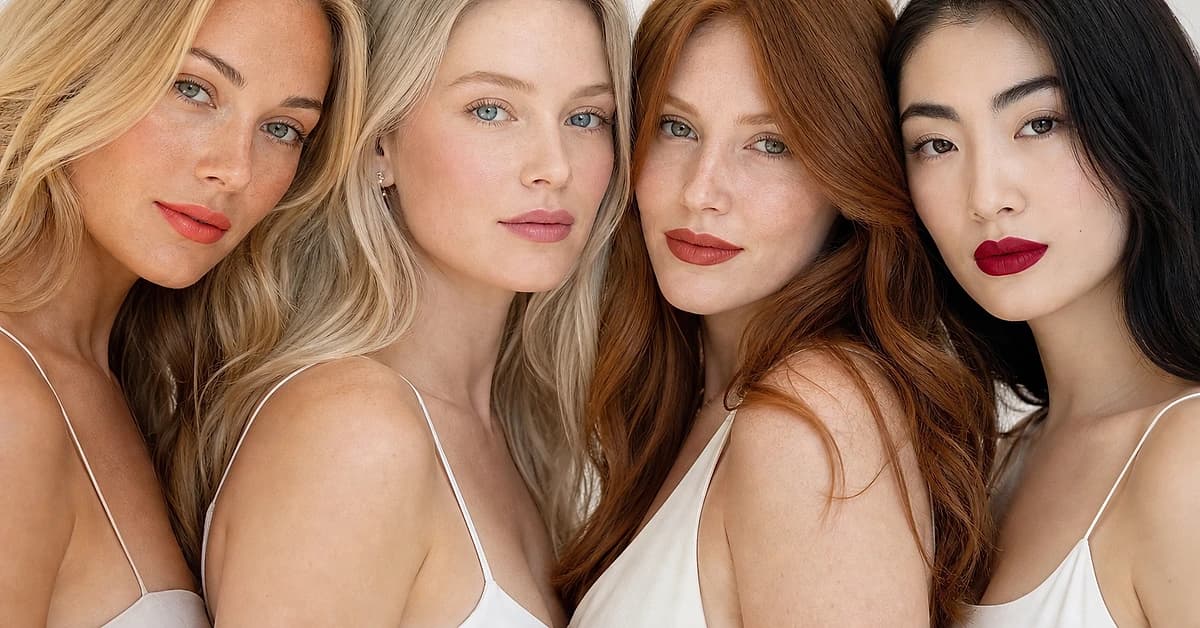
It changes the answer a lot. A Bright Winter suits a clear blue-red and a vivid fuchsia, colors that would overpower a Soft Summer, who looks best in a muted rose or soft berry. A True Autumn suits brick, terracotta and warm cinnamon nudes; a Light Spring suits fresh coral and peachy pink, and a deep wine would look heavy on her. "Warm skin likes warm lipstick" splits into different shades once depth and chroma come in.
If you'd like to see how it works for two clearly different cool seasons, compare the punchy lips of Bright Winter with the soft, muted rose of Soft Summer, same cool undertone, different lipstick. The lipstick by color season guide lists shades for every season, and the color analysis guides explain each one.
How to test a lipstick shade
Swatch on your lips or right beside your mouth if you can; the back of the hand is useful for comparing two shades but does not show what a color does to your face. In daylight, look at your teeth and the skin around your mouth rather than the bullet. If teeth look whiter and skin looks even, the temperature is right. If teeth look duller or the color goes purple or muddy at the edges, it is the wrong temperature.
Finish is mostly preference. Matte makes a shade look deeper and more intense; satin and gloss soften it. A deep berry or red that feels too strong in matte often works as a satin or a sheer balm. A lip liner that matches the lipstick, or is one shade deeper, keeps strong colors neat. And if a shade is almost right but a little too cool or too warm, a clear gloss or a warmer nude layered underneath can shift it without buying a new one.
Where to start
Once you know your undertone, three lipsticks cover most days: a red in your temperature, a nude close to or slightly deeper than your lip in your temperature, and one pink or berry. Buy those three first and test each against your teeth and skin in daylight.
If you are unsure of your undertone or keep landing between warm and cool, a personal color analysis reads undertone, depth and chroma from a photo and gives you your specific red and nude. For cheeks, the blush guide follows the same rules.
Frequently asked questions
How do I choose the best lipstick for my skin tone?
Work out your undertone first, then adjust for depth. Warm skin (gold or peach underneath, gold jewelry suits you) looks best in lipsticks with orange, coral or warm brown in them: tomato and brick reds, coral, caramel and terracotta nudes. Cool skin (pink or rosy underneath, silver suits you) looks best in blue-based shades: blue-red, raspberry, fuchsia, berry, plum and cool rose. Neutral undertones can wear both and often look best in rose and soft berry. Then match the depth of the shade to your skin: fair skin suits softer or sheerer versions, and deep skin carries rich, saturated color.
What lipstick suits warm undertones?
Shades with gold, orange or warm brown in them. Warm reds are tomato and brick rather than blue-red; warm nudes are caramel, honey and peachy beige rather than pink-gray; warm pinks lean coral and peach. Terracotta and warm berry with a brown base also work. Icy blue-pinks and grayish beige nudes can make warm skin look gray. Coral (#F0794E) and brick red (#9E3A2E) are good first shades to try.
What is the best nude lipstick for your skin tone?
One matched to your undertone and slightly deeper than your natural lip color. Brands disagree on the exact rule: some say one or two shades darker than your lips, others say to stay close to your natural lip color, and L'Oreal suggests going a shade or two darker than your skin for medium and olive skin. They agree that a nude lighter or grayer than your lips looks washed out. Warm skin suits caramel, honey and peachy beige; cool skin suits rosy and pink-mauve nudes; deep skin suits chocolate, cocoa, terracotta and warm brown rather than pale beige, which can look ashy.
Can I wear red lipstick with any skin tone?
Yes, as long as the red matches your undertone and depth. Warm skin suits orange-leaning, tomato and brick reds; cool skin suits blue-based reds and cherry; neutral skin can wear a balanced true red. Fair skin often looks best in a slightly softer or sheer red, while medium and deep skin carry deep, saturated reds and wine shades. There is a red for everyone, but no single red that suits everyone.
How do I know my exact most-flattering lipstick shade?
Undertone gets you to the right family, but the exact shade depends on undertone, depth and chroma (how clear or muted your coloring is) together, which is what a color season describes. A Bright Winter suits a clear blue-red that would overpower a Soft Summer, who looks best in a muted rose. A photo-based color analysis reads all three at once, so you get a specific red and nude instead of a general chart. You can start one at tonelala.com/onboarding.
What lipstick color suits olive skin?
Olive skin has a green or golden cast, and guides describe it differently: some treat it as warm, others as neutral. Most agree on the shades that work: caramel, golden beige and peachy nudes, warm roses, brick and red-orange reds, and deeper berries and wines on medium to deep olive skin. Cool pinks and grayish taupe nudes tend to make olive skin look sallow.
How can you tell if a lipstick is warm or cool?
Look at what the color leans toward next to a pure version of itself. A red that leans orange or brown is warm; one that leans blue or purple is cool. A pink that leans peach or coral is warm; one that leans blue, violet or berry is cool. Swatching two reds side by side on your hand makes the difference obvious.
Should lipstick be matte or glossy for my skin tone?
Finish is mostly personal preference, and it does not change which color suits you. Matte makes a shade look deeper and more intense; satin and gloss soften it and make lips look fuller. A deep or bright shade that feels too strong in matte often works as a satin or a sheer balm.
Related guides
Best Blush for Your Skin Tone
A color analyst's guide to the best blush for your skin tone, how to pick peach, coral, rose and berry by undertone and depth, with real hex codes.
Warm vs Cool Undertones
A color analyst's guide to warm vs cool undertones: simple at-home tests, the neutral middle ground, and example colors with hex codes for each.
Best Lipstick Shades for Every Color Season (All 12 Seasons)
A color analyst's lipstick guide by season, the best red, nude, pink and berry for every Spring, Summer, Autumn and Winter sub-type, with hex codes and the shades to avoid.
Skin Tone Chart: Find Your Shade & Undertone
A color analyst's skin tone chart to find your shade (fair to deep) and undertone (warm, cool or neutral) with simple at-home tests, and your color season.

Fair Skin Tone: Undertones & Best Colors
A color analyst's guide to fair skin tone, how to spot it, read your cool, warm or neutral undertone, the seasons it suits

Warm-Toned Skin: How to Tell & Best Colors
How to tell if you have warm-toned skin, the vein, jewelry and white-paper tests, plus the colors, metals and neutrals that flatter warm skin
Prefer in person? Find color analysis near you
Browse local color analysts by city, or get the same season, palette and best-colors breakdown online from one selfie.
See your colors on a photo of you
Upload one selfie and ToneLala reveals your season, your full palette, and your best hair, makeup, jewelry and outfits, styled on you.