In a sentence: The colors that go with blue are its warm opposites, coral, terracotta, mustard and camel, plus blush, fuchsia, emerald, teal, lavender and burgundy, anchored by white, gray and navy. Skip to the pairings by shade of blue, the full palette, or find your most flattering blue.
Colors That Go With Blue: 12 Stylish Combinations (with Hex Codes)
By ToneLalaUpdated September 5, 2026

Contents
Blue is the color people reach for when they want to feel safe, and that instinct is exactly what flattens so many blue outfits. A navy jumper with black trousers, a blue shirt with gray everything, technically fine, quietly forgettable. The color has far more range than that, and the trick is almost always the same: give blue something warm to push against. The moment you put a coral or a camel next to it, the blue stops receding and starts to glow.
I pair blue more than any other color in client wardrobes, because nearly everyone owns a lot of it. So I've become opinionated about what actually lifts it, and about the fact that "blue" is at least six different colors that want different partners. Below is the palette I actually use, with hex codes, a shade-by-shade pairing table, the combinations that look considered rather than accidental, and the garment-specific answers most people are really asking.
What kind of color blue is
Blue sits at the cool end of the spectrum, it's the color of distance, water and shadow, and it visually recedes. That's the single fact that drives everything about pairing it. Because blue retreats, it leaves room for a warmer color to step forward, which is why its most satisfying partners come from the opposite, warm side of the color wheel: orange and everything adjacent to it.
The wrinkle is that "blue" isn't one color. A green-leaning teal behaves differently from a violet-leaning indigo, and a chalky powder blue plays by gentler rules than an electric cobalt. Warmth, depth and brightness all shift what looks right next to it. But the underlying principle holds across all of them, cool blue is happiest with a touch of warmth nearby, and it needs a clean neutral to keep the whole thing from feeling like a color-theory exercise.
Colors that go with blue, by shade
| Blue | Character | Best partners | Best neutral | Avoid |
|---|---|---|---|---|
| Navy | Deep, cool, a neutral | Camel, coral, mustard, blush, red, burgundy | White, cream, tan | Black (heavy), near-navy |
| Royal, cobalt | Bright, clear | White, camel, fuchsia, emerald, coral | Crisp white, gray | Muddy brown |
| Cornflower, mid-blue | Friendly, forgiving | Mustard, terracotta, blush, coral | Camel, ivory | A second mid-blue |
| Teal, petrol | Green-leaning, rich | Terracotta, mustard, coral, cream, burgundy | Camel, chocolate | Cool gray (flat) |
| Powder, sky, baby blue | Light, soft | Blush, lavender, soft mint, ivory | Light gray, navy | Black, neon |
| Denim, chambray | Casual, textured | White, mustard, olive, coral, camel | Tan, white | Black-blue denim (mismatch) |
Pin your blue to one of those rows and the right pairings get a lot more obvious. For the dedicated guides: colors that go with navy blue, how to wear cobalt blue, colors that go with teal and colors that go with turquoise.
The best colors to go with blue
Here are the ten I trust most, a mix of warm complements, jewel tones and a couple of soft surprises.
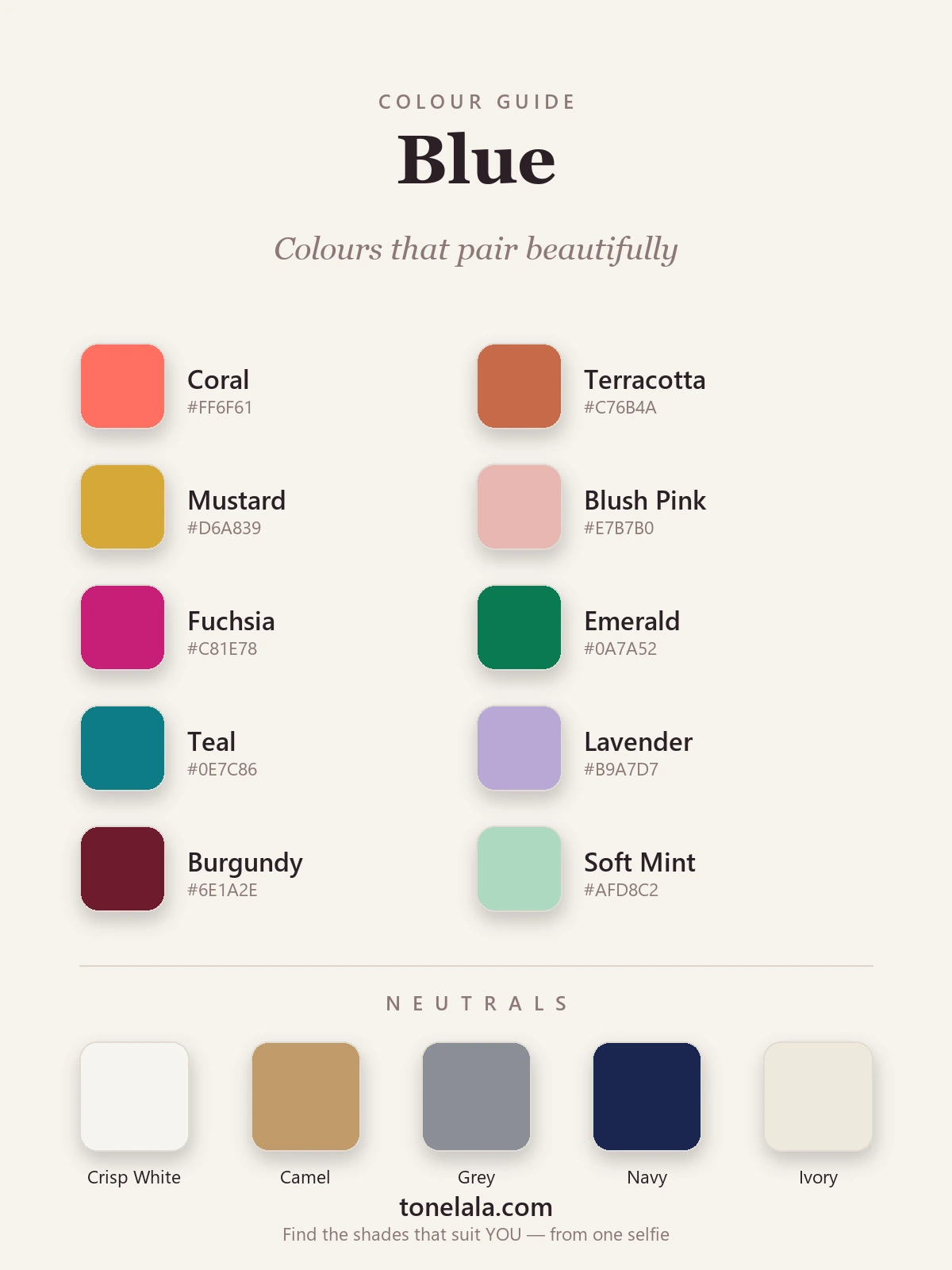
| Color | Hex | Why it works |
|---|---|---|
| Coral | #FF6F61 |
Blue's warm opposite, softened into something wearable; the most flattering partner there is. |
| Terracotta | #C76B4A |
A muted, grown-up orange; earthy warmth that makes denim and petrol blue look expensive. |
| Mustard | #D6A839 |
Golden warmth that turns up the contrast; brilliant with navy and mid-blue. |
| Blush Pink | #E7B7B0 |
A quiet, warm pink that makes blue feel soft and modern rather than corporate. |
| Fuchsia | #C81E78 |
The high-energy pairing; a cool-warm pink that reads bold and deliberate against blue. |
| Emerald | #0A7A52 |
A near-neighbour on the wheel, so it harmonizes; jewel-rich and luxurious with royal blue. |
| Teal | #0E7C86 |
Tonal blue-green; the easiest way to wear "blue with blue" without it looking like a mismatch. |
| Lavender | #B9A7D7 |
Analogous and gentle, lavender melts into blue for a soft, romantic combination. |
| Burgundy | #6E1A2E |
Deep, warm and confident; a sophisticated cold-weather pairing with navy and indigo. |
| Soft Mint | #AFD8C2 |
Fresh and airy, mint keeps lighter blues feeling spring-like rather than washed out. |
More pairings worth knowing: Camel #C19A6B (the best warm neutral for any blue), Rust #A24E29 (with denim and navy in autumn), Tan #B98B5E (leather, always), Red #C8102E (nautical with navy), Peach #F7B27A (with powder blue), Olive #6B6B3A (with chambray and denim), Gold #C9A24D (jewelry with every blue) and Chocolate #4A3526 (with teal and petrol).
Neutrals that go with blue: crisp white #F6F5F1 (the cleanest), camel #C19A6B (the most stylish), gray #8B8E95 (the most effortless), navy #1B2750 (a deep neutral for brighter blues) and ivory #EFE9DC (a softer alternative to stark white).
Which shade of blue actually suits YOU?
Find your color season →Colors to avoid with blue
Nothing here is forbidden, but these are the pairings I see go wrong most often:
- A second, slightly-different blue. Two cool blues that are close but not matching look like a laundry accident. Either match them properly or put a clear gap between them (powder with navy, not powder with periwinkle).
- Muddy warm browns. A heavy, orange-brown next to blue can turn murky and dated. Swap it for a cleaner camel or a deep chocolate and the same idea suddenly works.
- Black, if you want freshness. Blue and black isn't wrong, but it reads heavy and corporate fast. White, gray or navy will keep a blue outfit looking current.
- Cool gray with teal or petrol. The green in those blues wants warmth; a cool gray flattens them. Camel or chocolate instead.
- Neon with pale blue. Powder and sky blue are overwhelmed by fluorescent partners; keep their company soft.
Blue outfit combinations
A few combinations I come back to again and again:
- Cobalt + camel + white. A cobalt knit, camel coat and white trainers, crisp, warm and quietly expensive. My favorite everyday formula.
- Navy + coral. A navy dress or suit with a coral lip, scarf or heel. The warmth stops navy from looking like a uniform.
- Powder blue + blush + ivory. All soft, all gentle, a tonal, romantic look that's lovely for spring and for lighter coloring.
- Denim + mustard + white. Mid-blue jeans, a mustard jumper and a white shirt underneath. The golden yellow does all the lifting.
- Teal + terracotta + camel. A teal top with terracotta accessories over camel trousers. All warm-leaning, all earthy, the most autumnal way to wear blue.
- Royal blue + emerald. Two jewel tones together, kept rich rather than bright. Add gold jewelry and it tips into properly evening-worthy.
- Navy + burgundy + tan. The winter formula: a burgundy knit, navy trousers, tan boots.
- Chambray + olive + white trainers. The weekend one.
A quick rule for accessories: gold metals warm blue up and feel rich, while silver keeps it crisp and cool. If you've gone for a coral, camel or mustard pairing, gold ties it together; with an icy or powder blue, silver keeps the freshness. And a tan or cognac leather bag and shoe will flatter nearly any blue you own, it behaves like a wearable version of camel.
What to wear with a specific blue garment
- Blue jeans: white, cream, mustard, coral, olive, camel and burgundy on top; tan, white or cognac on the feet. The one rule is contrast, light shirt with dark denim, dark shirt with light wash.
- Navy trousers: cream, camel, light blue, coral, mustard or burgundy on top, and brown shoes rather than black. Full guide: what goes with navy blue pants.
- Blue shirt: camel, white, gray or navy trousers, tan or cognac shoes, a coral or mustard accent. Full guide: what to wear with a blue shirt.
- Blue dress: nude, tan, gold or silver shoes; a camel coat or denim jacket; coral, blush or burgundy accents depending on the shade. Navy dresses take gold and coral; cobalt takes white and silver; powder blue takes blush and nude.
- Blue blazer: white or cream underneath, camel, gray or white trousers, brown shoes. Never a second, different blue trouser.
How to wear blue for your color season
Here's the part most pairing guides skip: the best blue for you, and the colors you pair with it, depend on your own coloring, not on a chart.
- Cool, deep coloring: Deep Winter, True Winter, carries royal blue, cobalt and navy beautifully, and can take crisp white and fuchsia alongside.
- Cool, soft coloring: Soft Summer, Light Summer, suits slate, powder, periwinkle and denim blue with blush, lavender and pewter.
- Warm coloring: Spring, Autumn, is flattered by teal, petrol, turquoise and warm cornflower with camel, terracotta and mustard nearby.
- Light coloring suits powder and sky blue; deep coloring can wear cobalt and navy at the face.
The same logic runs through every season, which is exactly what the color analysis guides map out, shade by shade. A personal analysis goes one better: it tells you your exact blue and the precise partners that flatter your face, so you stop guessing and start buying clothes that work.
Putting it together
Treat blue as a base, not the whole story. Work out which blue you're holding, navy, cobalt, teal, powder, denim, then add one warm color to bring it forward (coral, camel, terracotta or mustard) and let a clean neutral hold it all together. Do that and even a wardrobe full of blue stops feeling safe and starts feeling like a choice. The only thing left to pin down is which blue is genuinely yours.
Frequently asked questions
What colors go with blue?
Blue is cool, so it comes alive next to warm shades from the opposite side of the color wheel, coral, terracotta, mustard and camel are the reliable wins. It also pairs beautifully with blush pink, fuchsia, emerald, teal, lavender and burgundy, plus the easy neutrals white, gray, navy and ivory. Warm or cool, deep or light, the exact shade of blue that flatters you depends on your coloring.
What color best complements blue?
Orange is blue's direct complement on the color wheel, which is why its softer relatives, coral, terracotta and a muted burnt orange, look so good against blue without shouting. Coral is the single most flattering, wearable partner: warm enough to balance blue's coolness, soft enough to feel modern rather than sporty.
What colors go with navy blue?
Navy pairs with camel, cream, white, coral, mustard, blush, burgundy, red and light blue, with tan or cognac leather underneath. It is the most versatile blue because it behaves like a neutral, and warm colors make it look richest.
What colors go with light blue?
Light and powder blue suit soft, gentle partners: blush, ivory, soft mint, lavender, camel and light gray. Navy adds depth without harshness. Very dark or very bright colors can overwhelm a light blue, so keep the contrast gentle.
What colors should you not wear with blue?
Be careful pairing blue with a clashing different blue (two cool blues that are close but not matching read as a mistake), with brown that's too muddy and warm, and with black if you want a fresh look rather than a heavy corporate one. None are banned, they just need the right shade and intent behind them.
Does blue go with green?
Yes, blue and green are neighbours on the color wheel, so they harmonize. Emerald with royal blue is a rich jewel-tone pairing, teal with navy is tonal and calm, and soft mint with powder blue is fresh. Keep both clear or both muted so they agree.
What neutrals go with blue?
Crisp white is the cleanest, camel is the most stylish warm neutral, and gray is the most effortless. Navy works as a deep neutral with brighter blues, and ivory softens the whole thing. White and camel are the two I reach for most with blue.
How do I wear blue for my skin tone?
Cool, deep skin tones suit royal blue, cobalt and navy; warmer coloring is flattered by teal, petrol and softer cornflower blues; lighter, softer coloring wants powder and sky blue. The most reliable way to know your exact best blue, and the colors to pair with it, is a personal color analysis that reads your undertone, depth and contrast.
Related guides

Colors That Go With Navy Blue: 12 Stylish Combinations (with Hex Codes)
A stylist's guide to the colors that go with navy blue, 10 pairings and 5 neutrals with hex codes, outfit ideas, what to avoid
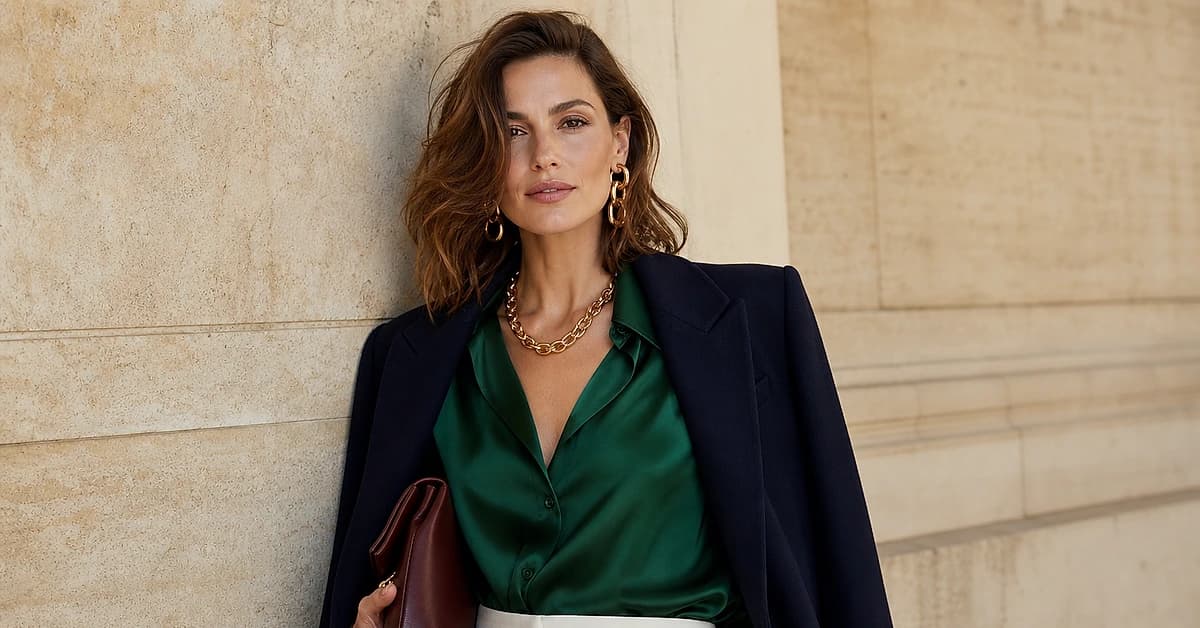
Colors That Go With Emerald Green: 10 Stylish Combinations (with Hex Codes)
A stylist's guide to the colors that go with emerald green, gold, navy, blush, burgundy, ivory and more, with hex codes, neutrals, outfit ideas and the shades to avoid.
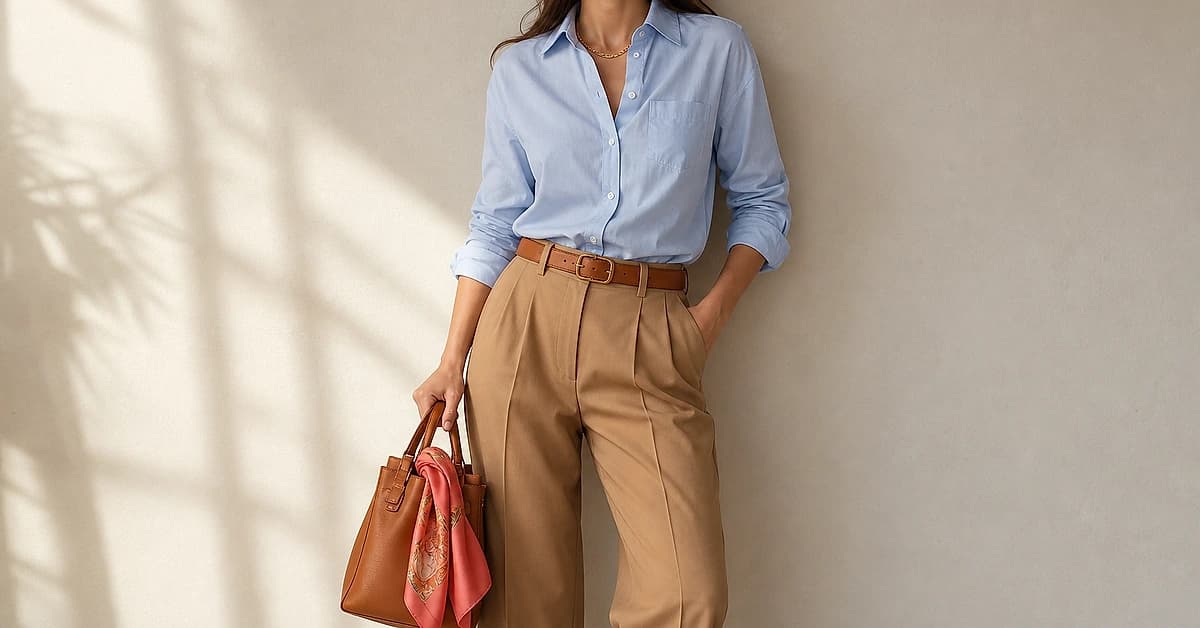
What to Wear With a Blue Shirt: Bottoms, Shoes and Colors That Match
A stylist's guide to what goes with a blue shirt, the trouser, skirt and shoe colors that match light blue, chambray, cobalt and navy shirts, with hex codes and outfit formulas.
Colors That Go With Sage Green: 12 Stylish Combinations (with Hex Codes)
A stylist's pick of the colors that go with sage green, terracotta, blush, cream, navy and more, with hex codes, outfit ideas and shades to avoid.
Colors That Go With Teal: 12 Stylish Combinations (with Hex Codes)
The colors that go with teal: 12 combinations with an outfit for each, 10 pairing colors and 5 neutrals with hex codes, shoes and jewelry, and what to avoid.
Colors That Go With Burgundy: 12 Stylish Combinations (with Hex Codes)
12 colors that go with burgundy, each with a hex code and an outfit to copy: cream, camel, navy, green, blush, gold, teal, gray, denim, olive and more, plus what to avoid and which burgundy suits you.
Prefer in person? Find color analysis near you
Browse local color analysts by city, or get the same season, palette and best-colors breakdown online from one selfie.
See your colors on a photo of you
Upload one selfie and ToneLala reveals your season, your full palette, and your best hair, makeup, jewelry and outfits, styled on you.