In a sentence: fair olive skin is light in depth but carries the green-gray olive cast, so it needs muted colors with depth: soft teal, sage, slate blue, rosewood, plum, cranberry, never pastels, pale beige or stark black near the face. Skip to the tests, the palette, or find your season from a selfie.
Fair Olive Skin: How to Tell, the Best Colors, Foundation and Hair
By ToneLalaUpdated September 5, 2026
Contents
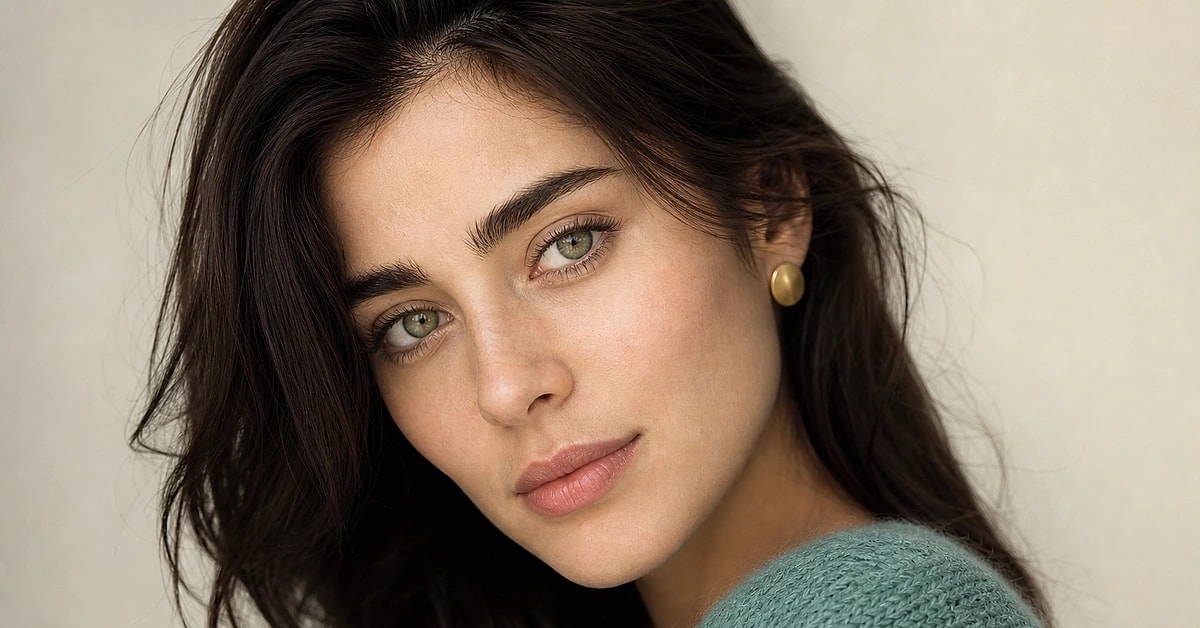
Fair olive is the olive nobody believes in, including the people who have it. You are pale, so you assume you're "fair" the way magazines mean it, pink cheeks, porcelain, peach. Then the porcelain foundation turns gray on you, the blush pink blouse makes you look ill, and the "fair" advice keeps failing. What's actually happening is that your skin is light and olive: a faint green-gray wash over a pale base. It is common in Mediterranean, Middle Eastern, Eastern European, South Asian and mixed-heritage families, and it's the depth of olive skin most often misdiagnosed, because everyone looks for olive in medium and deep complexions only.
This guide is for you. How to confirm it, the colors that make fair olive skin look clear and rested, the foundation trap and how to escape it, hair color, and where you probably sit in the seasons. If you want the bigger picture first, read the olive skin tone guide and olive skin undertones.
What fair olive skin actually is
Skin has depth (light to dark) and a cast (the tint that lies over the base). Olive is a green-gray cast, and it appears at every depth, the deep olive version is easy to spot, the fair version is not. On light skin the cast is subtle: a slight grayness, a yellow-green lean, an absence of pink. The tell-tale signs:
- You don't flush pink. Blushing, exercise and sunburn turn you tan-ish or slightly ruddy-brown rather than rosy.
- You look sallow in pastels. Baby pink, lavender and pale yellow turn your skin yellow-green instead of fresh.
- Foundation is a nightmare. The lightest shades are pink and turn you gray; the warm shades turn you orange. Nothing "disappears."
- You tan evenly rather than burning red, even though you're fair.
- Your veins look greenish-blue or hard to read, rather than clearly blue or clearly green.
- Stark white and pale beige both look wrong, but cream looks lovely.
If four of those six are true, you're fair olive.
How to confirm it
- The paper test. In daylight, hold the inside of your wrist against plain white paper. Pink-based fair skin reads pink or peach against the white; fair olive reads faintly green, gray-green or "muddy yellow."
- The pastel test. Hold a pale-pink and a pale-yellow top under your chin. If your face goes yellow-green in both, that's the cast talking.
- The nude test. Try a classic pink-beige nude lipstick. On fair olive it looks chalky and slightly gray; a rose-brown nude looks natural.
- The metal test tells you the undertone underneath the cast: gold flatters a warm fair olive, silver a cool one, both a neutral one. Fair olives are a little more likely to be neutral or cool than medium olives are.
Still unsure? A photo-based color analysis reads the cast, undertone and contrast together, which is the only reliable way to place a fair olive.
The palette for fair olive skin
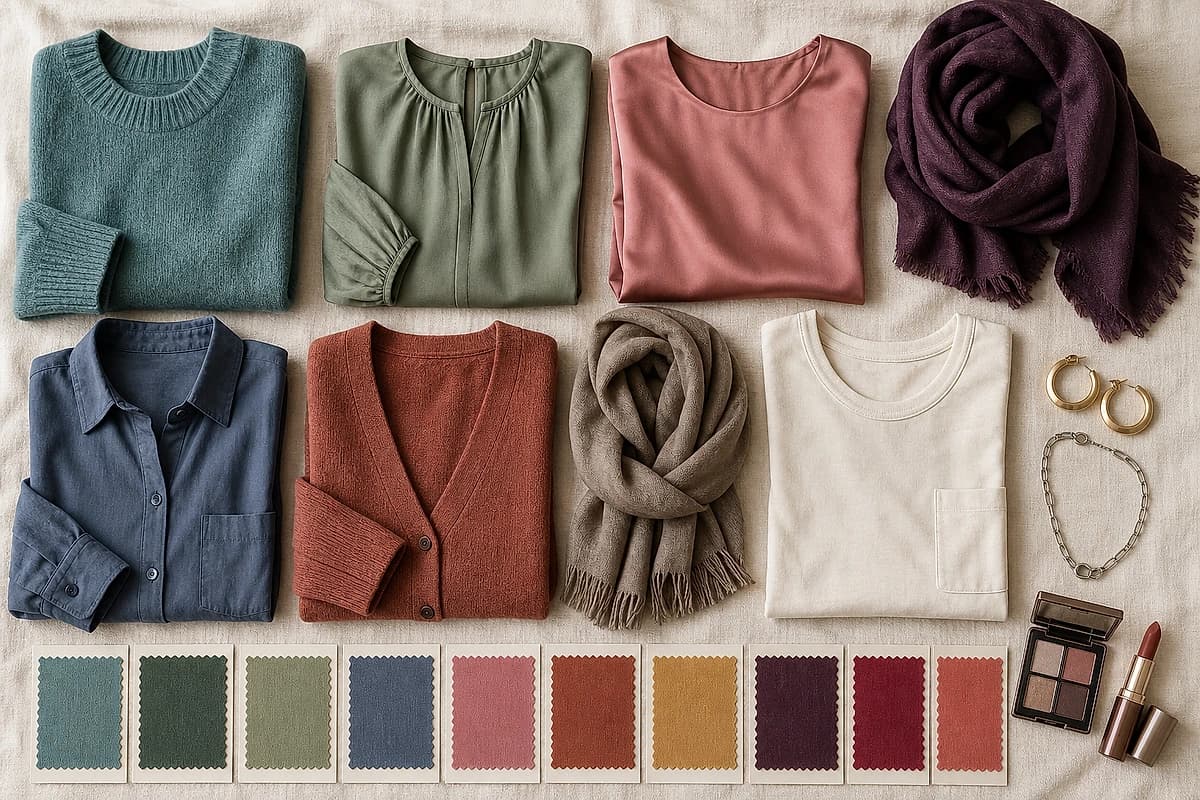
Fair olive can't carry the full-strength jewel tones a deep olive wears, and it can't carry pastels either. The answer is the middle: muted colors with depth. Every shade below has been softened with a little gray, which is exactly what harmonizes with the cast.
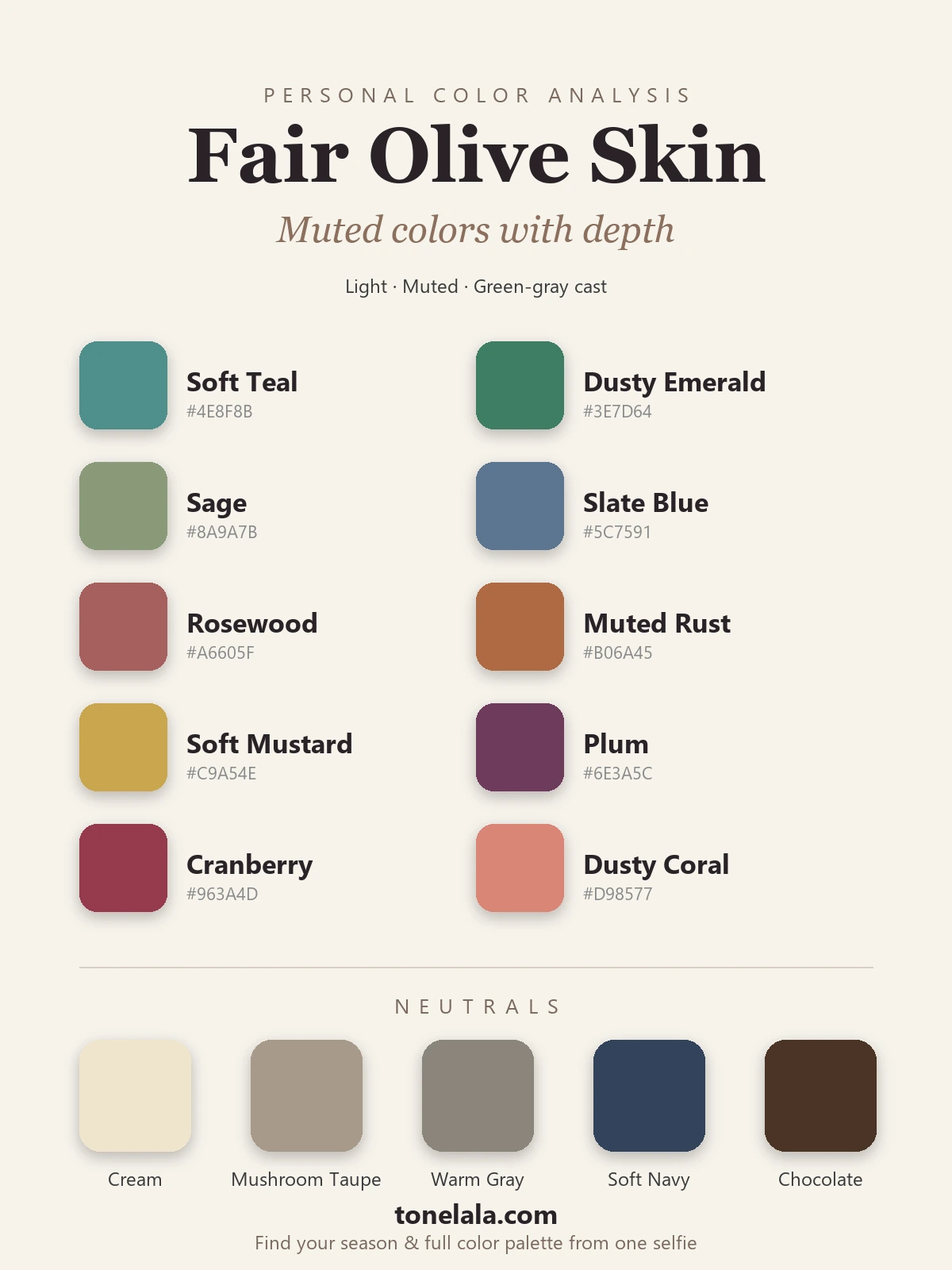
| Color | Hex | Why it works |
|---|---|---|
| Soft Teal | #4E8F8B |
Teal echoes the green cast; the softened version doesn't overpower fair skin. Your safest color. |
| Dusty Emerald | #3E7D64 |
A grayed emerald, clear enough to brighten, muted enough not to swamp. |
| Sage | #8A9A7B |
A pale green that works because it's gray-green like the cast; pastel mint would not. |
| Slate Blue | #5C7591 |
Cool, muted blue that makes fair olive look clear and calm. |
| Rosewood | #A6605F |
The pink fair olives can wear, brown-based, never candy. |
| Muted Rust | #B06A45 |
Rust cancels the green cast; muted so it doesn't shout on light skin. |
| Soft Mustard | #C9A54E |
The one yellow that doesn't turn you sallow, because it's deep and golden. |
| Plum | #6E3A5C |
Flatters every olive; on fair olive it doubles as a "dark." |
| Cranberry | #963A4D |
Your best red, between warm tomato and cool berry, muted enough for fair skin. |
| Dusty Coral | #D98577 |
The bright you can wear: coral with the volume turned down. |
Neutrals: Cream #EFE4CD (your white), Mushroom Taupe #A89A8A (your beige, grayed, so it doesn't match the cast), Warm Gray #8A857C, Soft Navy #34435C (your black) and Chocolate #4A3526.
Metals: brushed or antique gold and bronze suit most fair olives; a soft, matte silver if you tested cool. Very shiny, bright metal of either kind can look hard against fair olive skin.
Not sure whether you're a Soft Summer or a Soft Autumn?
Find your color season →Colors to avoid with fair olive skin
- Pale pastels: baby pink, powder blue, lilac, pale lemon, mint. Instant sallowness.
- Pale beige, sand and stone at the face. Too close to the cast; the face disappears.
- Stark optic white. Makes the cast read gray. Cream and ivory instead.
- Pure black near the face. Casts shadows on light skin. Soft navy, charcoal and chocolate are your darks.
- Neon and electric brights. Fair olive is muted by nature; high-chroma color wears you rather than the other way round.
- Orange-toned reds if you tested cool; blue-toned reds if you tested warm. Cranberry sits safely between them.
Foundation and makeup for fair olive skin
Foundation is the single biggest frustration for fair olives, and the fix is to stop shopping by lightness and start shopping by undertone. You need the lightest neutral or olive-labeled shade a brand makes, not its lightest pink one. Look for words like fair neutral, light olive, fair with yellow undertones, or "N" in the shade code. Swatch three stripes on the jaw in daylight and leave them ten minutes, the one that vanishes is right. If everything is slightly pink, a tiny drop of a yellow or green-leaning corrector mixed in usually fixes it. The full method is in how to find your foundation shade.
Blush: muted rose-brown, rosewood or a soft terracotta. Bright pink and peach both turn muddy. Lips: rosewood, cranberry, brick-rose, or a rose-brown nude one shade deeper than your lips. Eyes: taupe, soft plum, mossy green, slate and bronze, nothing frosted, nothing pale-shimmery.
Hair color for fair olive skin
Keep the depth close to your natural level and the tone muted. Fair olives shine in mushroom brown, soft chestnut, cool-neutral light brown, dark blonde with a matte finish and, for cooler fair olives, ash-brown. What fights the skin is warmth without depth: golden or honey blonde, brassy highlights and copper make the green cast look yellow. Going very light also tends to make the skin look grayer, not brighter, so if you want lighter hair ask for a soft, neutral balayage rather than an overall lift. There's more in the best colors for pale skin and the mushroom brown hair guides.
Which season fair olive skin usually is
Fair olive is nearly always a muted season, because the cast softens everything:
- Soft Summer if the cast reads gray-green and cool colors flatter, slate blue, plum, rosewood.
- Soft Autumn if the cast reads yellow-green and warm colors flatter, muted rust, soft mustard, sage.
- Deep Winter occasionally, when fair olive skin comes with very dark hair and brows and the contrast is high, those fair olives can wear clearer, deeper color than the palette above.
- True Summer rarely, for the softest, coolest, lightest fair olives.
The Soft Summer vs Soft Autumn comparison is the one most fair olives need.
Putting it together
Three anchors, soft teal, soft navy and cream, then your accents: rosewood and cranberry if you're neutral or cool, muted rust and soft mustard if you're warm. Swap your foundation for a neutral one shade "yellower" than you think, retire the pastels and the pale beige tops, and keep your hair tone matte and close to natural. Fair olive skin done right doesn't look pale. It looks clear, calm and quietly expensive, which is the whole point.
Frequently asked questions
What does fair olive skin look like?
Fair olive skin is light in depth but has a faint green-gray or yellow-green cast instead of the pink or peach glow of most fair skin. It rarely flushes pink, often looks slightly sallow in pastels and pale beige, tans evenly rather than burning, and can make pink-based foundations turn gray.
How do I know if I have fair olive skin?
Compare the inside of your wrist to plain white paper: fair olive reads faintly green or gray-green rather than pink or peach. Then hold a baby-pink top to your face, if your skin instantly looks yellow-green, you almost certainly have olive skin. Foundation that turns pink or gray on you is the third clue.
What colors suit fair olive skin?
Muted colors with depth: soft teal, dusty emerald, sage, slate blue, rosewood, muted rust, plum and cranberry. Cream is your white and soft navy your black. Pale pastels, pale beige and neon brights are the shades to avoid because they make the cast look greener.
What foundation works for fair olive skin?
The lightest neutral or olive-labeled shades, not the lightest pink ones. Fair olive skin turns gray in pink-based foundation and orange in warm-gold foundation. Look for descriptors like fair neutral, light olive or fair with yellow undertones, and swatch on the jaw in daylight.
What color season is fair olive skin?
Most fair olives are Soft Summer or Soft Autumn, muted, medium-light seasons, depending on whether the cast reads cool-gray or warm-green. A fair olive with strong contrast (very dark hair and brows) can type as Deep Winter, and a very soft, lighter one occasionally as True Summer.
Can fair olive skin wear black?
Near the face, black usually throws gray shadows onto fair olive skin. Soft navy, charcoal, chocolate and aubergine give the same depth without the harshness. Black trousers and skirts are fine, keep it away from the collar.
Related guides
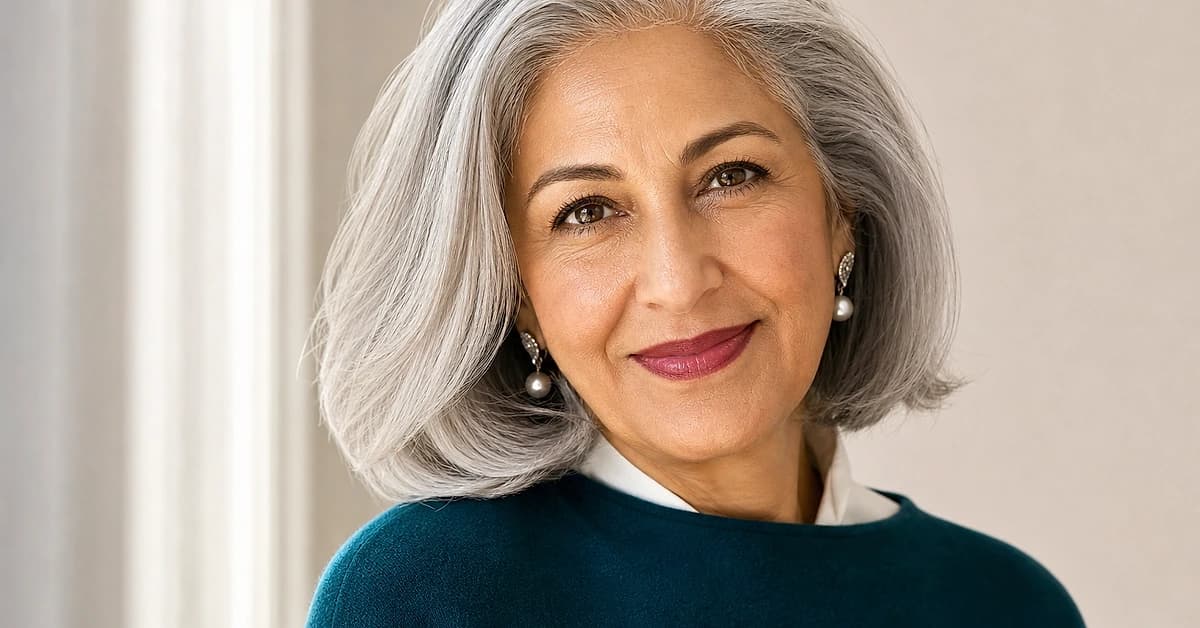
Best Colors to Wear With Gray Hair and Olive Skin
Silver hair changes what olive skin can wear. A color analyst's guide to the best colors for gray hair and olive skin, teal, plum, berry, soft white, plus what to avoid.
Deep Olive Skin Tone: The Best Colors, Makeup and Hair
Deep olive skin carries a green cast over a rich brown base. A color analyst's guide to the jewel tones, whites, makeup and hair colors that make it glow, with hex codes.
What to Wear With Gray Hair: The Best Colors by Skin Tone
The colors that flatter gray and silver hair, by fair, medium, olive and deep skin tone, with hex codes, the shades that age you, and the metals and makeup to match.
Olive Skin Tone: The Complete Guide
What olive skin tone actually is, how to tell if you have the green-gray cast, your likely undertone, the seasons it maps to and the colors that flatter it.
Fair Skin Tone: Undertones & Best Colors
A color analyst's guide to fair skin tone, how to spot it, read your cool, warm or neutral undertone, the seasons it suits
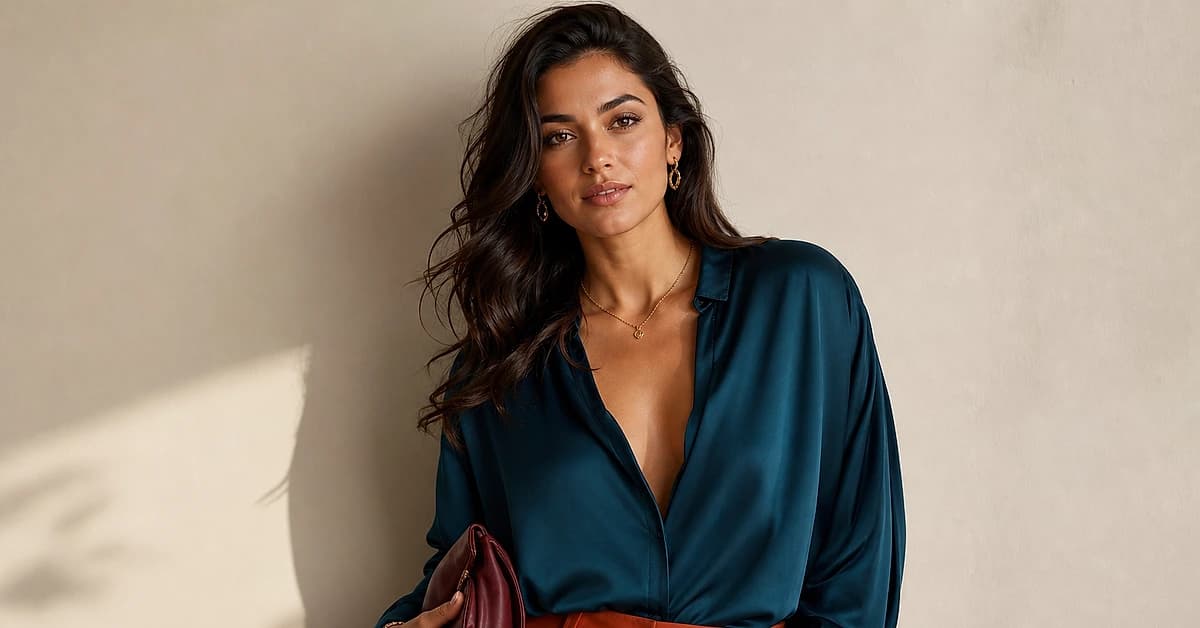
Olive Skin Color Palette: The Best Colors to Wear (with Hex Codes)
The olive skin color palette with hex codes: 10 best colors, 5 neutrals and metals, grouped by light, medium and deep olive and by undertone, plus what to avoid.
Prefer in person? Find color analysis near you
Browse local color analysts by city, or get the same season, palette and best-colors breakdown online from one selfie.
See your colors on a photo of you
Upload one selfie and ToneLala reveals your season, your full palette, and your best hair, makeup, jewelry and outfits, styled on you.