In a sentence: olive skin is a green-gray cast, not an undertone, it can sit over a warm, neutral or cool base, and which one you have decides whether rust and gold or berry and silver flatter you. Skip to the tests, the palette for each olive, or find your season from a photo.
"I've been told I'm warm, cool and neutral by three different people." If you have olive skin, I would bet you have said some version of that sentence. It is the single most common thing olive-skinned clients tell me, and it is not because the three people were careless. It is because olive skin genuinely does something the standard warm-or-cool tests were never designed for: it carries a green-gray cast that reads slightly cool next to warm colors and slightly warm next to cool ones. Hold up a peach and you look gray; hold up an icy pink and you look yellow. Neither is "you."
This guide fixes the confusion properly. I'll explain what olive skin actually is, why it hides its undertone so well, how to work out whether your olive is warm, neutral or cool, and then give you the colors, makeup and hair for each. If you're not yet sure you have olive skin at all, start with the olive skin tone guide and come back.
What "olive" actually means
Skin color has two separate layers:
- Depth: how light or dark the skin is: fair, light, medium, tan, deep.
- Undertone: the temperature underneath: warm (golden or peachy), cool (pink or blue-ish) or neutral (a balance of both).
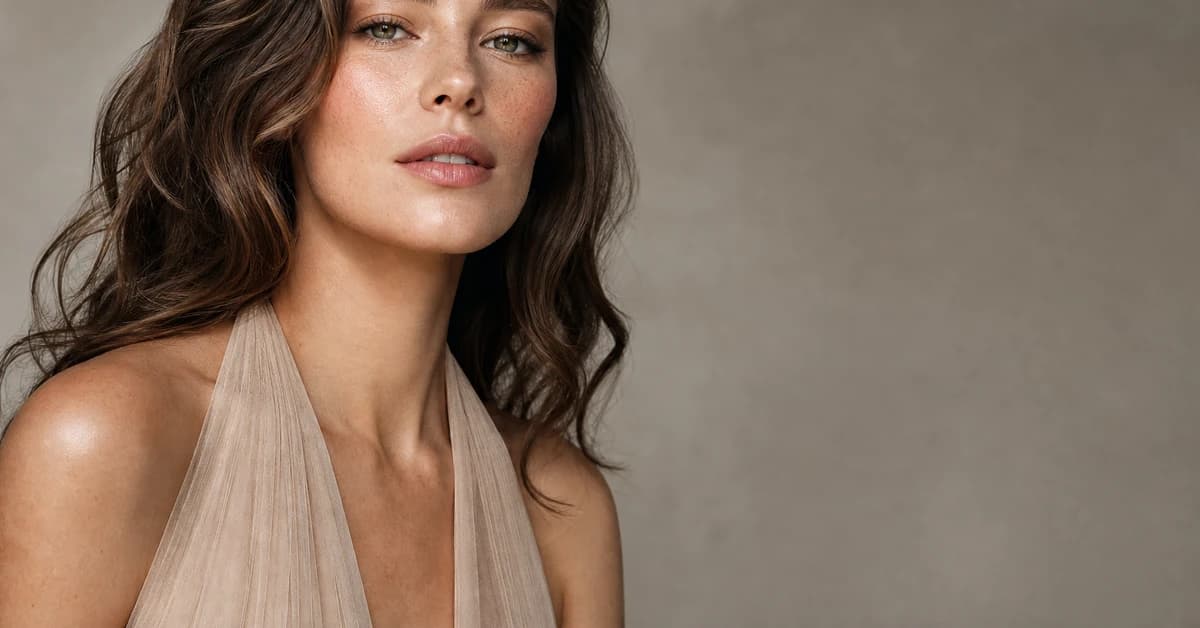
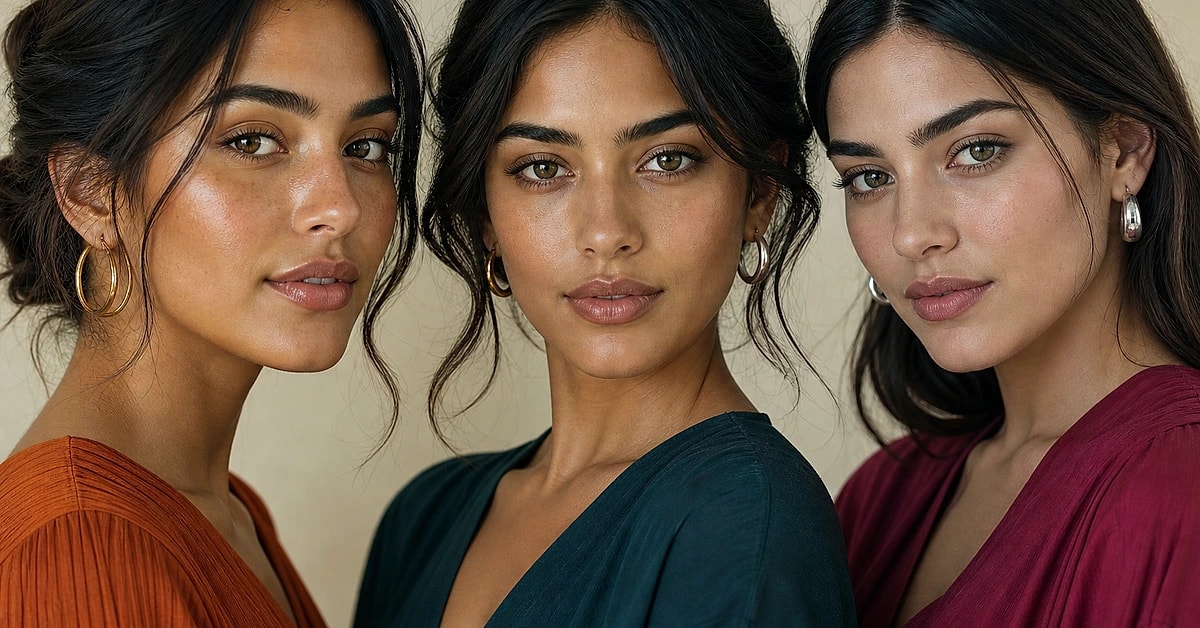
Olive sits in between those two ideas. It is a cast: a green-gray tint that lies over the base like a sheer wash, and it can appear at any depth from fair to deep. Under that wash is still a warm, neutral or cool base, which is why "olive" and "warm" are not opposites. You can be warm olive, neutral olive or cool olive, and the three behave very differently in front of a mirror.
The green comes from a mix of melanin and the yellow in the skin softened by a little gray, which is why olive skin so rarely flushes pink, why it tans so evenly, and why so many foundations turn orange, gray or pink on it. Once you know the cast is separate from the undertone, every confusing test result you have ever had suddenly makes sense.
The three kinds of olive
| Warm olive | Neutral olive | Cool olive | |
|---|---|---|---|
| The cast reads | Green-gold | Green-gray | Green-ash |
| Best metal | Gold | Both | Silver, white gold |
| Best "white" | Cream, ivory | Soft white | Crisp white |
| Best reds | Tomato, rust, brick | Cranberry, wine | Berry, raspberry |
| Flushes | Peachy-tan | Barely | Slightly mauve |
| Most common seasons | True Autumn, Deep Autumn | Soft Autumn, Deep Winter | Deep Winter, Soft Summer |
| Share of olives (my clients) | About half | About a third | The rest |
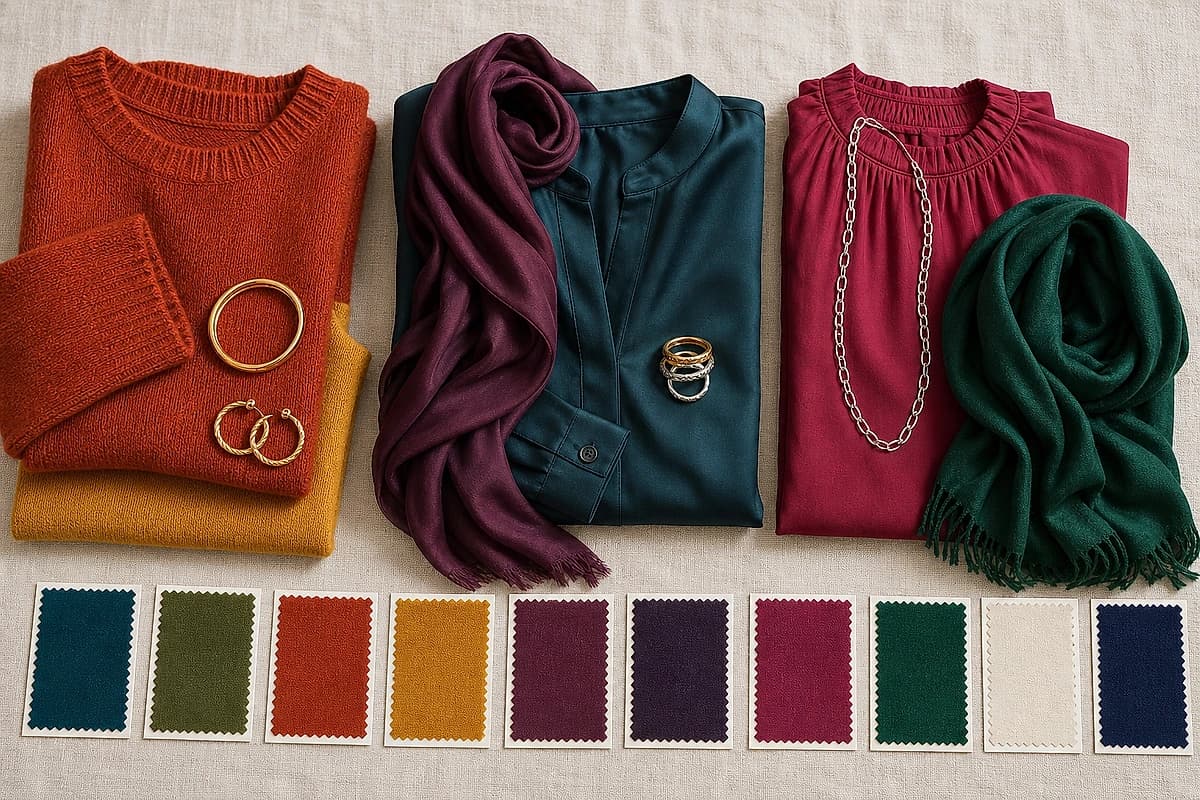
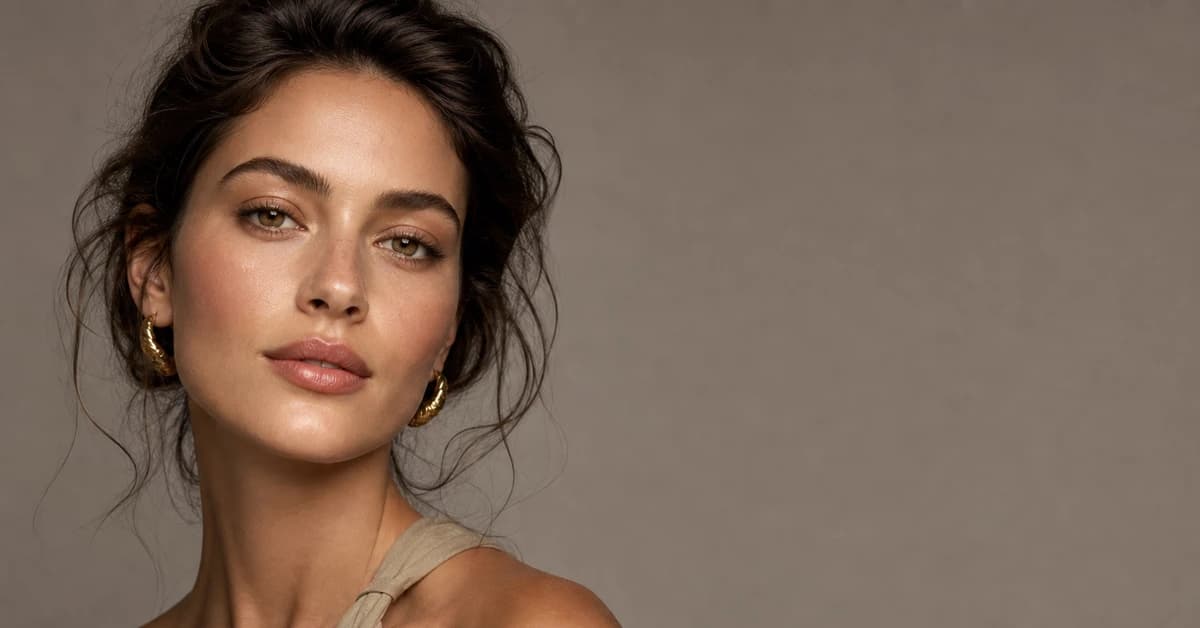
Warm olive is the most common. The green cast has gold in it, the skin tans to bronze rather than brown, and earthy colors, rust, mustard, olive, terracotta, look like they were mixed for you. Gold jewelry makes the face glow; silver looks a little tinny. These are the olives who usually land in True Autumn or Deep Autumn.
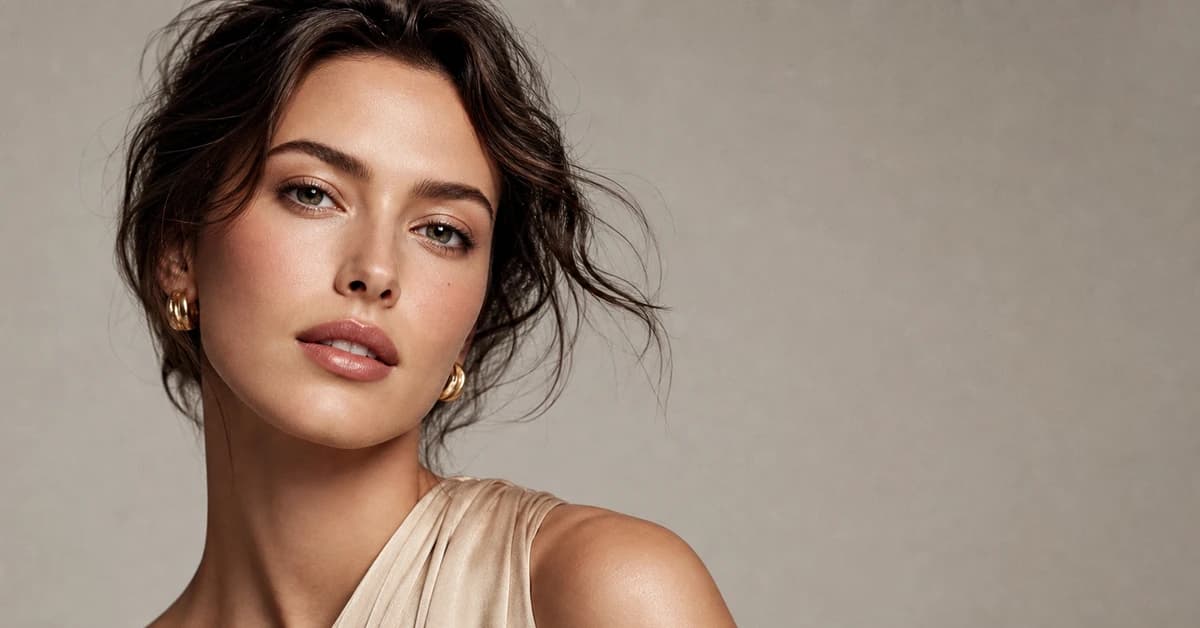
Neutral olive is the one that gets every test "wrong." Gold and silver both look fine. Cream and white both look fine. Rust looks good and burgundy looks good. What neutral olives cannot wear is anything pale and pastel, because a color with no depth of its own leaves the green cast doing all the talking. Their sweet spot is muted, mid-to-deep color: teal, plum, olive, peacock. Neutral olives often type as Soft Autumn or a warmer-leaning Deep Winter.
Cool olive is the least common and the least understood. The cast reads ashy or slightly gray-green, the skin never really goes golden in the sun, and warm colors make it look sallow. Silver, white gold and crisp white flatter; berry, raspberry, emerald and slate blue light the face up; rust and mustard do the opposite. Cool olives are usually Deep Winter or, if softer and lower-contrast, Soft Summer.
How to tell which olive you are
Run all five of these in daylight, near a window, with no makeup. One test can lie; five rarely do.
- The metal test. Hold a gold piece and a silver piece against the side of your jaw. Warm olive: gold wakes the skin up and silver looks flat. Cool olive: the reverse. Neutral olive: honestly, both look fine, that is the result.
- Cream versus white. Drape a cream top and a stark white one under your chin. Cream flatters warm olive; white flatters cool olive; if neither is clearly worse, you're neutral.
- Rust versus berry. This is the one I trust most for olive skin. A rust or burnt-orange top against a raspberry or berry one. Warm olive glows in rust and looks tired in berry; cool olive is the opposite. Neutral olive looks decent in both and best in something between them, cranberry, wine, plum.
- The foundation stripe. Swatch a warm (golden) shade, a cool (pink) shade and a neutral shade on the jaw and let them sit ten minutes. The one that disappears is your undertone. On most olive skin the warm and cool stripes both look wrong, one gray, one orange, and a neutral or olive-labeled shade wins.
- The pastel test. Hold a baby-pink or pale-lemon top to your face. If your skin instantly looks yellow-green, you have olive skin (any undertone). Pastels flatter very few olives; if one does work, it will be a cool pastel on a cool olive.
Score it: three or more "warm" results and you're warm olive; three or more "cool" and you're cool olive; a mixed or shrugging scorecard means neutral olive, which is not a failure to decide, it's a genuine, common result. If you would rather not judge your own face in your own bathroom, a photo-based color analysis reads undertone, depth and contrast together and lands you in a season, which is the most useful answer of all.
The palette for olive undertones
Ten colors that harmonize with the green cast, plus the shift each undertone should make.
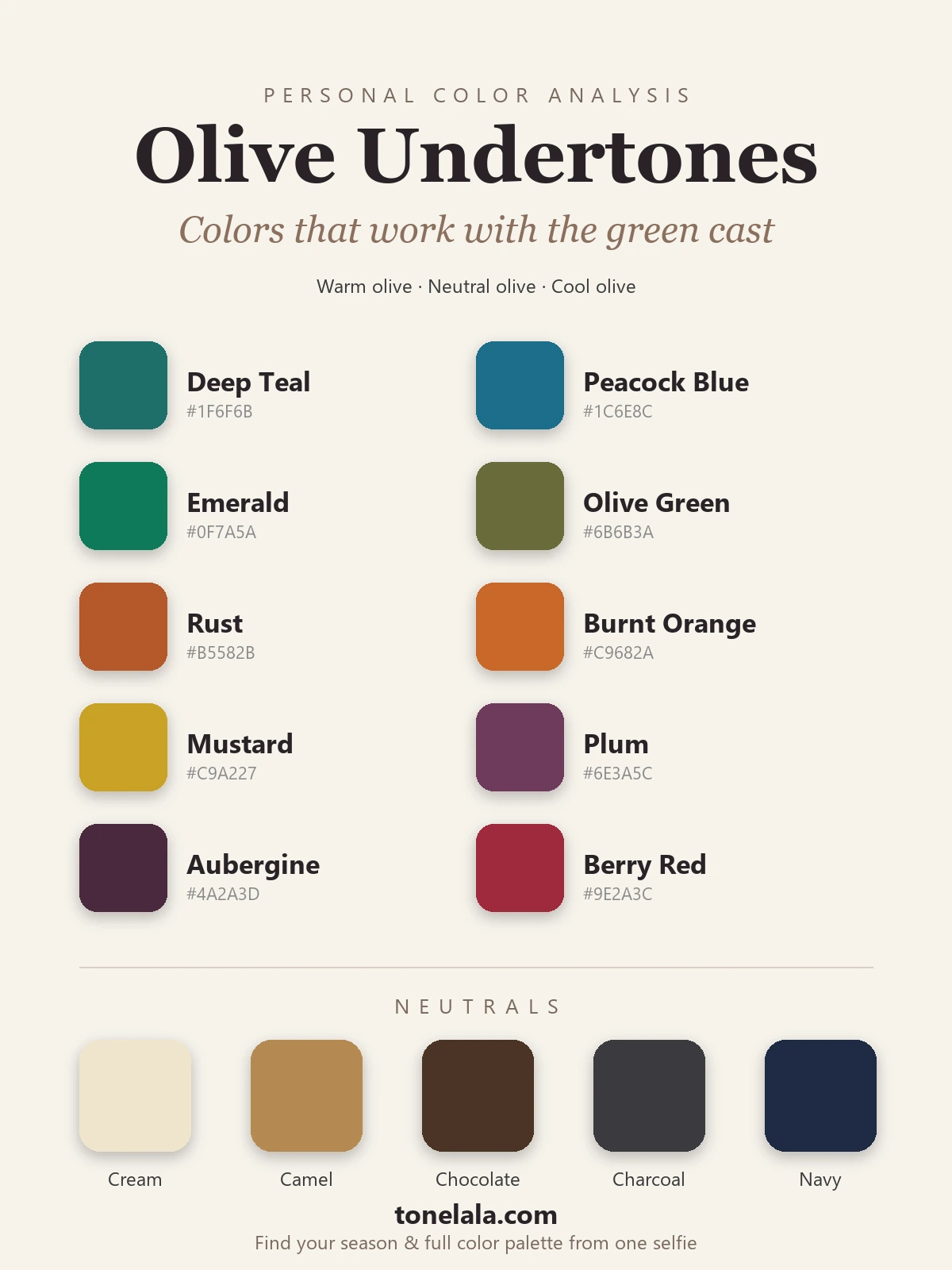
| Color | Hex | Warm olive | Neutral olive | Cool olive |
|---|---|---|---|---|
| Deep Teal | #1F6F6B |
Yes | Yes | Yes |
| Peacock Blue | #1C6E8C |
Yes | Yes | Yes |
| Emerald | #0F7A5A |
Softer, bluer version | Yes | Yes, your best green |
| Olive Green | #6B6B3A |
Yes | Yes | Only the grayer sages |
| Rust | #B5582B |
Your signature | Yes, muted | Skip |
| Burnt Orange | #C9682A |
Yes | Sparingly | Skip |
| Mustard | #C9A227 |
Yes | Muted only | Skip |
| Plum | #6E3A5C |
Yes | Your signature | Yes |
| Aubergine | #4A2A3D |
Yes | Yes | Yes |
| Berry Red | #9E2A3C |
As cranberry | Yes | Your signature |
Neutrals: Cream #EFE4CD (warm and neutral olives), Camel #B68A52 (warm), Chocolate #4A3526 (all three), Charcoal #3B3B40 (neutral and cool) and Navy #1E2A44 (all three, the most flattering dark for every olive). Cool olives can add crisp white; warm olives should keep white for trousers rather than tops.
Metals: gold for warm olive, silver or white gold for cool olive, and neutral olives can wear both, a mixed-metal stack is genuinely your look, not a compromise.
Not sure which olive you are?
Find your color season →Colors that fight olive skin (every kind)
- Pale pastels: baby pink, powder blue, pale lemon, mint. They have no depth to balance the cast, so the skin reads sallow.
- Yellow-beige and khaki that match your cast: sand, stone, khaki, camel right at the face on a neutral or cool olive. When the garment is the same color family as the cast, the skin disappears into it.
- Orange-toned reds on cool olives, blue-toned reds on warm olives. Red is olive skin's best friend when the temperature is right and its worst enemy when it isn't.
- Pure black on lighter olives. It throws gray shadows onto the green cast. Navy, charcoal and aubergine do the same job more kindly. Deep olives are the exception and wear black beautifully.
Makeup for each olive undertone
Foundation is where olive skin suffers most, so start there. Look for shades labeled olive, golden-olive, neutral-olive or "yellow-green" in the description; several brands now add a small olive range, and it is worth ordering samples of two. Warm olives want a golden-olive; cool olives a neutral-to-olive with no peach; neutral olives a true neutral. If a shade sits slightly pink, a single drop of a green-leaning color corrector mixed in usually fixes it. Full guidance is in how to find your foundation shade.
Blush: brick, terracotta and warm apricot for warm olive; muted rose-brown and cranberry for neutral olive; cool berry and plum-rose for cool olive. A peachy-pink blush turns muddy on most olives, see best blush for your skin tone.
Lips: warm olive, brick, tomato, warm nude-brown; neutral olive, cranberry, wine, rosewood; cool olive, raspberry, berry, blue-based red. The nude that works on every olive is a muted rose-brown a shade deeper than the lips.
Eyes: bronze, copper and moss on warm olives; taupe, plum and teal on neutral olives; slate, aubergine and silver-gray on cool olives.
Hair color by olive undertone
Warm olives shine in warm chestnut, caramel, golden brown, copper-brown and warm espresso, anything with gold or red in it. Ash tones make a warm olive look unwell. Neutral olives suit rich neutral browns, dark chocolate, mushroom-brown and soft black, with either warm or cool dimension in small doses. Cool olives look best in cool dark brown, espresso, blue-black and, for the brave, cool aubergine; brassy or golden highlights are the one thing to avoid. Whatever your olive, keep the depth close to your natural level: very light blonde over olive skin tends to make the cast look greener, not the hair look brighter. There is more in the best colors for olive skin and the olive skin and brown eyes guides.
Where olive undertones land in the seasons
Because olive skin usually pairs with dark hair and eyes, it clusters in the deeper, more muted seasons:
- Warm olive → True Autumn if rich and golden, Deep Autumn if very dark.
- Neutral olive → Soft Autumn if muted and medium, Deep Winter if high-contrast.
- Cool olive → Deep Winter if dramatic, Soft Summer if soft.
A fair olive with lighter hair can occasionally type as Light or True Summer; a very deep olive almost always sits in Deep Autumn or Deep Winter. Each season page gives you the full palette with hex codes.
Putting it together
Start with the three colors every olive can wear, teal, plum and navy, and build a small capsule around them. Then let your undertone choose the accent: rust and mustard if you're warm, cranberry and olive if you're neutral, berry and emerald if you're cool. Match your metal to the same answer and stop buying pastels. Do those four things and the "am I warm or cool?" question stops mattering, because your wardrobe already knows.