In a sentence: The colors that go with terracotta are cool, deep partners, teal, sage, navy, olive and forest green, plus warm, dusty companions like blush, mustard and burnt orange, all softened with cream and taupe neutrals. Skip to the full pairing palette or find your most flattering colors.
Colors That Go With Terracotta
By ToneLalaUpdated October 7, 2026
Contents
- 01 What kind of color terracotta is
- 02 The best colors to go with terracotta
- 03 Colors to avoid with terracotta
- 04 Terracotta outfit combinations
- 05 Shoes, bags and jewelry with terracotta
- 06 Makeup to wear with terracotta
- 07 How to wear terracotta for your color season
- 08 Terracotta at home
- 09 Where to start
Terracotta is easy to buy and harder to style. It looks great on the hanger, then sits awkwardly with the rest of the closet because it is too warm to treat as a plain neutral and too earthy to treat as a bright. Most of the trouble comes from pairing it out of habit, usually with stark white or black, without deciding what you want it to do.
There are two ways to wear it. Put it next to cool blues and greens and it becomes the point of the outfit. Put it with creams, camels and other warm earth colors and it settles down into a soft, almost-neutral warmth. Both work. Below are the ten pairings in our palette plus denim, white, brown, black and gray, each with an outfit you can copy, then shoes, jewelry, makeup and how to choose the right terracotta for your coloring.
What kind of color terracotta is
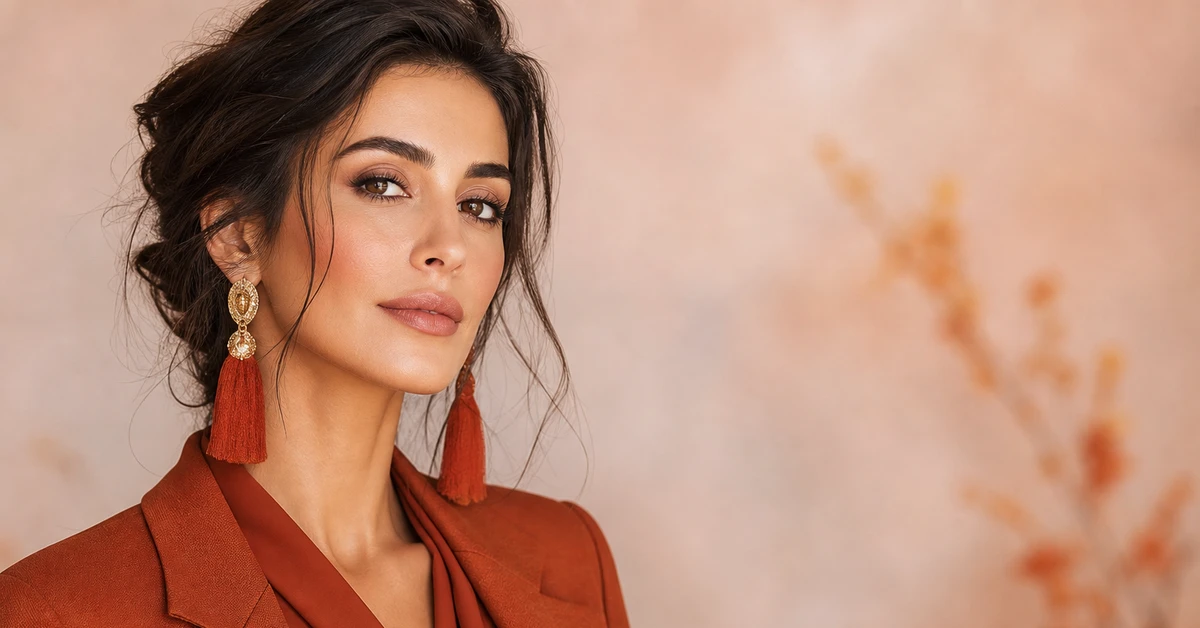
The name is Italian for "baked earth", after the fired clay of roof tiles and flowerpots. As a color it is a muted orange-brown, and there is no single official shade: Wikipedia lists terra cotta as #E2725B, other color references give #CB6843, and real fabrics run from a pinkish clay to a deep brick near #B5562A. Pantone's color report for New York Fashion Week Fall/Winter 2026/27 included a terracotta tone, 16-1330 Muted Clay.
What matters for pairing is that terracotta is a muted, low-chroma orange. It has brown and a little gray mixed in, which is why it looks grounded rather than loud like a pumpkin orange. Two things follow. Its complement on the color wheel is blue, so teal, navy and denim make it look richer. And because it is soft, it gets along with other soft colors, such as dusty pink, sage and cream. Very clean, saturated colors next to it can make terracotta look dull.
Terracotta, rust and burnt orange
These three get mixed up in shops and in search results. Terracotta has a clay or pinkish tint. Rust is redder and usually darker, like oxidized iron. Burnt orange is brighter and more orange. They share most partners, but rust leans harder toward deep greens and navy; our guide to colors that go with rust covers that one.
The best colors to go with terracotta
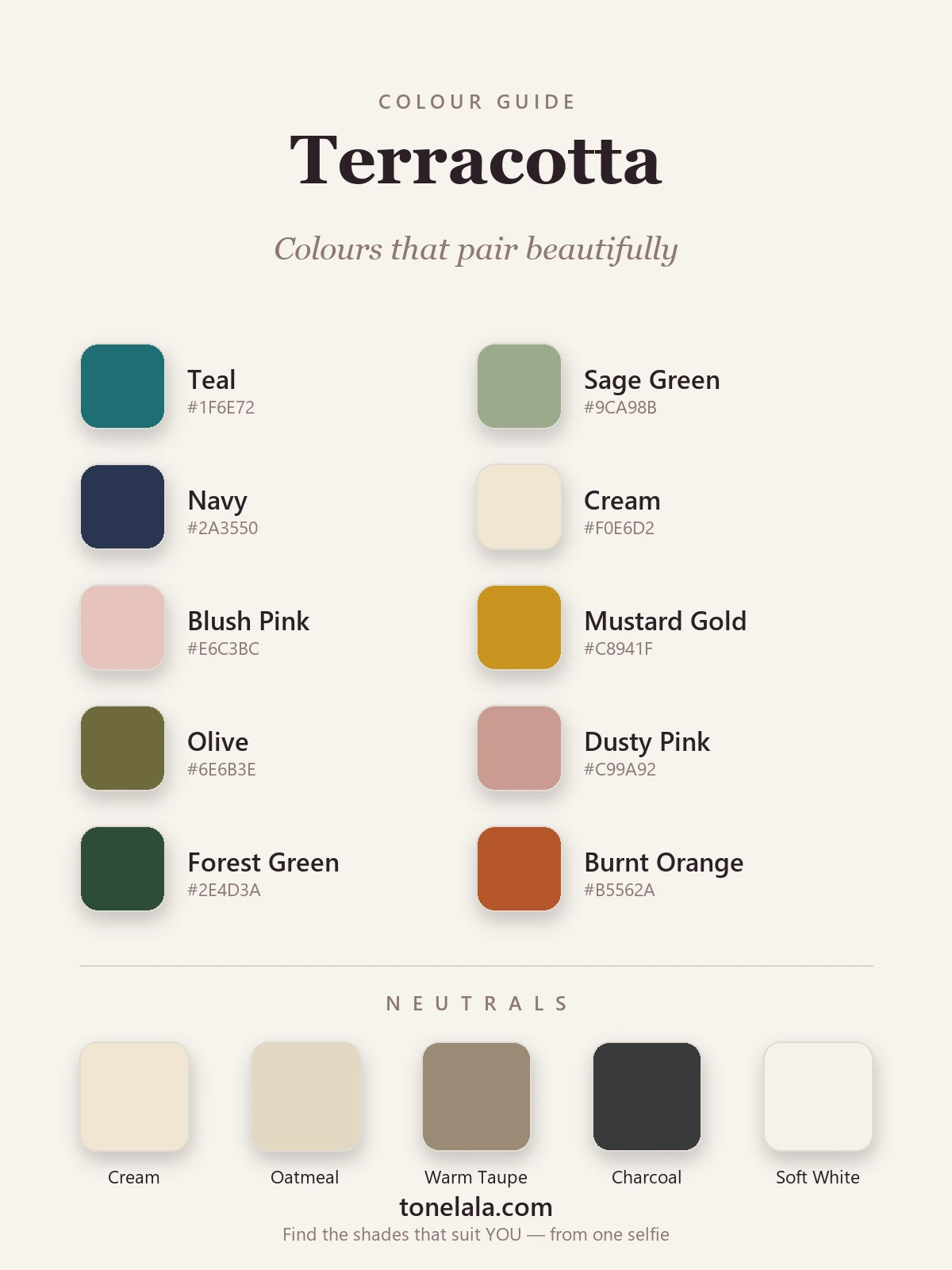
Half of these are cool partners that make terracotta stand out, and half are warm ones that let it blend in.
| Color | Hex |
|---|---|
Teal #1F6E72 |
The classic complement, a cool blue-green opposite terracotta on the wheel; makes it look richer. |
Sage Green #9CA98B |
A softer, dustier cool partner for when teal feels too bold. |
Navy #2A3550 |
A dark anchor that adds polish without the hardness of black. |
Cream #F0E6D2 |
Warm cream lets terracotta breathe and keeps the look soft. |
Blush Pink #E6C3BC |
A dusty pink in the same warm family, gentle and easy to wear. |
Mustard Gold #C8941F |
Earthy golden warmth; a classic fall pairing. |
Olive #6E6B3E |
A warm, muted green that sits in terracotta's world. |
Dusty Pink #C99A92 |
A deeper, mauve-tinged rose that tones with the clay. |
Forest Green #2E4D3A |
A deep cool green for strong contrast, good for evenings. |
Burnt Orange #B5562A |
Terracotta's bolder cousin; worn together they look deliberate and seasonal. |
Neutrals that go with terracotta: Cream #F0E6D2, Oatmeal #E3D8C2, Warm Taupe #9C8A74, Soft White #F6F2E9, and Charcoal #383B3A (the dark neutral that suits terracotta on most people).
Which shade of terracotta actually suits YOU?
Find your color season →Terracotta and teal
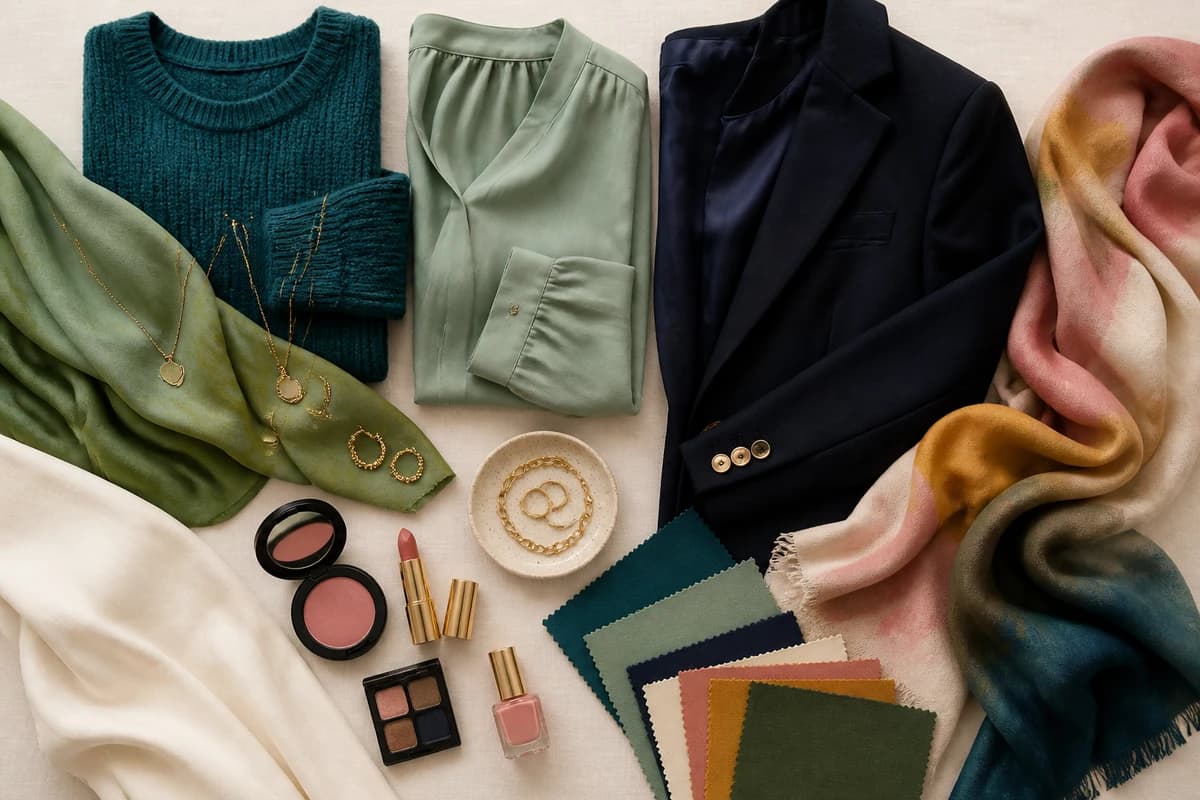
Blue-green against orange-brown is the strongest contrast in the list, and teal is deep enough that terracotta doesn't overwhelm it. Outfit: terracotta sweater, teal wide-leg trousers, cream sneakers and gold studs. Our guide to colors that go with teal has more teal combinations.
Terracotta and sage green
Both colors are muted, so they sit together calmly. Home-design guides put it near the top of their lists too. Outfit: sage linen shirt, terracotta midi skirt, tan sandals. If sage is becoming your favorite partner, see colors that go with sage green.
Terracotta and navy
Navy gives the depth of black with less weight, and the blue-orange contrast still works at that darkness. Outfit: terracotta blazer, cream silk top, navy tailored trousers, cognac loafers. A reliable work outfit.
Terracotta and cream
The softest pairing, and one that appears in almost every terracotta guide. Cream shares terracotta's warmth, so the outfit looks calm and expensive. Outfit: terracotta knit dress, cream long cardigan, cream or tan boots.
Terracotta and blush pink
Terracotta already has some pink in it, which is why warm, dusty pinks sit well beside it. Cool, bright pinks are a different story (see the avoid list). Outfit: blush blouse, terracotta trousers, nude sandals.
Terracotta and mustard
Two earth colors from the same side of the wheel. Keep one dominant and one smaller, such as a mustard scarf or bag, so the look stays clear. Outfit: terracotta sweater, dark denim, mustard scarf, brown ankle boots.
Terracotta and olive
Olive is a warm, muted green, so this is a low-contrast earthy pairing that suits casual clothes. Outfit: olive utility jacket, terracotta T-shirt, cream jeans, white sneakers.
Terracotta and dusty pink
Deeper than blush, with a little mauve. Worn together the two read as a soft tonal outfit. Outfit: dusty pink slip skirt, terracotta fine-knit top, gold jewelry.
Terracotta and forest green
Deep green against clay is the more formal version of the teal pairing. Home-design guides often feature it as well. Outfit: terracotta satin skirt, forest green knit, charcoal tights and boots for fall.
Terracotta and burnt orange
Close neighbors, so the outfit looks tonal rather than contrasting. Separate them with texture: suede against knit, or linen against cotton. Outfit: burnt orange suede jacket, terracotta ribbed top, cream trousers.
Terracotta and denim
Denim is a muted blue, so it works for the same reason navy does. Mid and dark washes are easiest; light washes look summery. Outfit: terracotta oversized shirt, straight dark jeans, white sneakers.
Terracotta and white
Bright white makes terracotta look sharper and more summery. It suits warm weather and resort clothes. Soft white or ivory gives a gentler version for the rest of the year. Outfit: terracotta linen trousers, white cotton shirt, tan sandals.
Terracotta, brown and camel
Chocolate brown, camel and tan are all deeper or lighter versions of the same warmth, so they pair easily, mostly as coats, shoes and bags. Outfit: terracotta turtleneck, camel coat, chocolate brown trousers.
Terracotta and black
Guides disagree on black. Some like the sharp contrast and call it modern; others find it heavy against terracotta's softness. One fashion guide notes that black makes terracotta look brighter than it is. If you like black, use it as one piece (boots, trousers or a bag) and keep a lighter neutral in the outfit. Outfit: terracotta wrap top, black straight trousers, gold hoops.
Terracotta, gray and charcoal
Charcoal is the safer gray: it gives depth and keeps a little warmth. Light cool grays can make terracotta look duller. Outfit: charcoal wool coat, terracotta sweater, gray trousers.
Colors to avoid with terracotta
- Cool, icy brights: fuchsia, electric blue and cold, bright pink. They are too cool and too saturated for terracotta's muted warmth, so they fight it rather than complement it, and the clay looks muddy beside them. If you want pink, choose a warm, dusty rose.
- A bright warm red right next to it: a true scarlet beside terracotta tends to blur the two into one confused orange-red. Some home-design palettes do pair it with deep ruby, so if you want red, keep it deep and separated, or use burnt orange instead.
- Head-to-toe black: not wrong, but it can make terracotta look heavy. Charcoal or navy gives the same anchor with less weight.
The quick test: if a color makes the terracotta look browner or muddier, it is the wrong partner. If the terracotta looks more like warm, glowing clay, keep it.
Terracotta outfit combinations
The pairings above each come with an outfit. These are a few more complete looks for specific situations.
- Everyday: terracotta sweater, teal trousers, cream sneakers, gold studs. The cool teal makes the clay stand out and the cream keeps it soft.
- Warm all over: terracotta midi dress, caramel boots, tan belt, gold jewelry. Leaning fully into warm colors makes terracotta look rich.
- Work: terracotta blazer, cream silk top, navy tailored trousers. Proof you don't need black to look sharp.
- Fall and winter: terracotta skirt, forest green knit, charcoal tights and boots. Deep against deep for cooler months.
- Summer: terracotta linen dress, white sneakers or tan sandals, a straw bag.
- Menswear: terracotta overshirt or knit polo with navy chinos or dark jeans, brown suede shoes. For something quieter, a terracotta T-shirt under a navy or olive jacket.
Shoes, bags and jewelry with terracotta
Shoes and bags. Tan, camel and cognac leather are the easiest, since they share terracotta's warmth. Chocolate brown suits fall and winter, cream or white sneakers keep things casual, and gold or bronze sandals work for evenings. Black shoes are fine when there is another dark piece in the outfit to balance them.
Jewelry. Gold is the default in most styling guides because it matches terracotta's warmth. One competing guide goes further and says silver fights it; others pair silver or mixed metals with terracotta when the rest of the outfit is cool, such as with navy, denim or gray. If your own coloring is cool and silver suits you, silver with terracotta and navy is a reasonable combination. Rose gold and brass sit between the two.
Makeup to wear with terracotta
Terracotta near the face looks best with warm, soft makeup. Bronze or copper eyeshadow, a peachy or warm nude lip and a soft peach or terracotta blush keep the face in the same family. For evenings, a berry or brick lip adds depth. Cool, frosty pinks and icy highlighters tend to clash with it, for the same reason fuchsia does in clothing.
How to wear terracotta for your color season
There isn't one terracotta. The color runs from a pinkish, coral-leaning clay to a deep, rusty brick, and the right version for you depends on your own coloring. Warm, deep types suit a rich, earthy terracotta; lighter, brighter types suit a clearer, more coral-tinged version. The wrong temperature of terracotta near your face can make even this flexible color look sallow on you.
Warm, deep seasons, think True Autumn or Deep Autumn, wear terracotta most easily; it echoes the warmth and depth in their coloring, and they can push their pairings warmer still, with mustard, olive and burnt orange. Soft Autumns do best with a gentler, more muted clay in low-contrast outfits with blush, dusty pink and sage. Warm Springs suit the clearer, coral end. Cooler seasons can usually borrow a coral-leaning terracotta as an accent, but tend to look better with it away from the face, as trousers, a skirt or a bag.
If you have held up a terracotta top and found that it either brightened your face or made it look tired, that is undertone at work, and it is hard to judge reliably in your own mirror. Our color analysis guides explain how warmth, depth and contrast work season by season. A personal analysis tells you the exact version of terracotta, and which of these partners, will suit you best.
Terracotta at home
Home-design sites rank for the same searches, and their advice overlaps with clothing. Terracotta walls, tiles and textiles pair with forest and sage green, deep blue, cream and stone, and blush pink for a softer room. Interior designers often treat terracotta as a neutral and use it with natural wood and rattan. The same rule applies as in clothing: muted partners keep it calm, and a deep blue or green makes it the focus of the room.
Where to start
If you already own one terracotta piece, start with what is in your closet: wear it with dark denim and cream, the lowest-risk combination on this page. If that works, try one cool partner next, teal or navy, to see the color at full strength. If you are buying terracotta for the first time, hold the color under your chin in daylight before you decide between the pinker and the browner versions. The one that makes your skin look even is your terracotta, and the pairings above will work with it.
Frequently asked questions
What colors go with terracotta?
Two groups work. Cool, deep colors give contrast: teal, navy, denim, sage, olive and forest green. Warm, soft colors sit alongside it: cream, blush, dusty pink, mustard and burnt orange. For neutrals, cream, oatmeal, warm taupe, camel and charcoal are the easiest; white and black work too but change the mood.
What color best complements terracotta?
Teal, or blue more broadly. Blue sits opposite orange on the color wheel, and terracotta is a muted orange, so a blue-green such as teal makes it look richer. Navy and denim do the same job more quietly, and sage green gives a softer version of the contrast.
What colors should you NOT wear with terracotta?
Cool, icy brights such as fuchsia, electric blue and cold pink tend to fight it and make it look muddy. A bright scarlet right beside it can blur into one orange-red. Black is debated: some guides like the sharp contrast, others find it heavy. If you wear black, keep it to one piece and add a lighter neutral.
What neutrals go with terracotta?
Warm, slightly creamy neutrals: cream, oatmeal, warm taupe, camel and a soft off-white. They share terracotta's earthy warmth, so the outfit looks calm. Charcoal is the best dark neutral for most people. Bright white makes terracotta look sharper and more summery, which suits warm weather.
How do I wear terracotta for my skin tone?
Match the version of terracotta to your coloring. Warm, deep coloring (the Autumns) suits a rich, brick-leaning terracotta. Lighter, brighter coloring suits a clearer, more coral version. Cool coloring usually does better with terracotta away from the face, such as trousers, a skirt or a bag. A personal color analysis tells you which version suits you.
Is terracotta the same as rust?
They are close but not the same. Terracotta is a muted orange-brown with a pink or clay tint, named after fired clay. Rust is redder and usually darker, like oxidized iron. Burnt orange is brighter and more orange than either. All three pair with similar colors, with rust leaning more toward deep greens and navy.
What shoes go with terracotta?
Tan, camel and cognac leather are the easiest because they share its warmth. Cream or white sneakers keep it casual, chocolate brown boots suit fall and winter, and gold or bronze sandals work for evenings. Black shoes work with terracotta when something else in the outfit is dark too.
Can you wear terracotta in winter?
Yes. Pair it with deeper partners, forest green, navy, charcoal and chocolate brown, and heavier fabrics such as wool, suede and corduroy. A terracotta sweater with a charcoal coat, or a terracotta scarf with a navy coat, keeps the color in your wardrobe through the colder months.
Can cool undertones wear terracotta?
Usually with some care. Terracotta is a warm color, so near the face it can make cool skin look sallow. Choose a pinker, softer clay rather than a brick-orange one, pair it with navy, denim or soft white, and wear it below the waist or as an accessory if the color still looks off in daylight.
Related guides
Colors That Go With Charcoal
A stylist's guide to the colors that go with charcoal gray, 10 pairings plus 5 neutrals with hex codes, outfit combinations and what to avoid.
Colors That Go With Khaki
A stylist's guide to the best colors that go with khaki, navy, rust, burgundy, white and more, with hex codes, outfit combinations and what to avoid.
Colors That Go With Peach
The best colors to pair with peach, neutrals, complementary shades and combinations that flatter, with a ready-to-use palette and stylist tips.
Colors That Go With Mint Green
A stylist's guide to the colors that go with mint green, coral, navy, blush, gold and more, with hex codes, outfit combinations and shades to avoid.
Colors That Go With Maroon
A stylist's guide to the colors that go with maroon, 10 pairings and 5 neutrals with hex codes, outfit combinations, what to avoid, and how to wear it.
Colors That Go With Turquoise
A stylist's guide to the colors that go with turquoise, 10 pairings and 5 neutrals with hex codes, outfit ideas, what to avoid
Prefer in person? Find color analysis near you
Browse local color analysts by city, or get the same season, palette and best-colors breakdown online from one selfie.
See your colors on a photo of you
Upload one selfie and ToneLala reveals your season, your full palette, and your best hair, makeup, jewelry and outfits, styled on you.