In a sentence: the best colors for tan skin are warm, saturated, earthy shades, teal, emerald and olive, mustard, rust, coral, tomato red, terracotta, warm pink and cobalt, anchored by cream, camel, warm beige, chocolate and navy. Skip to the full palette or find your exact shades.
Best Colors for Tan Skin: Your Most Flattering Shades (with Hex Codes)
By ToneLalaUpdated July 12, 2026
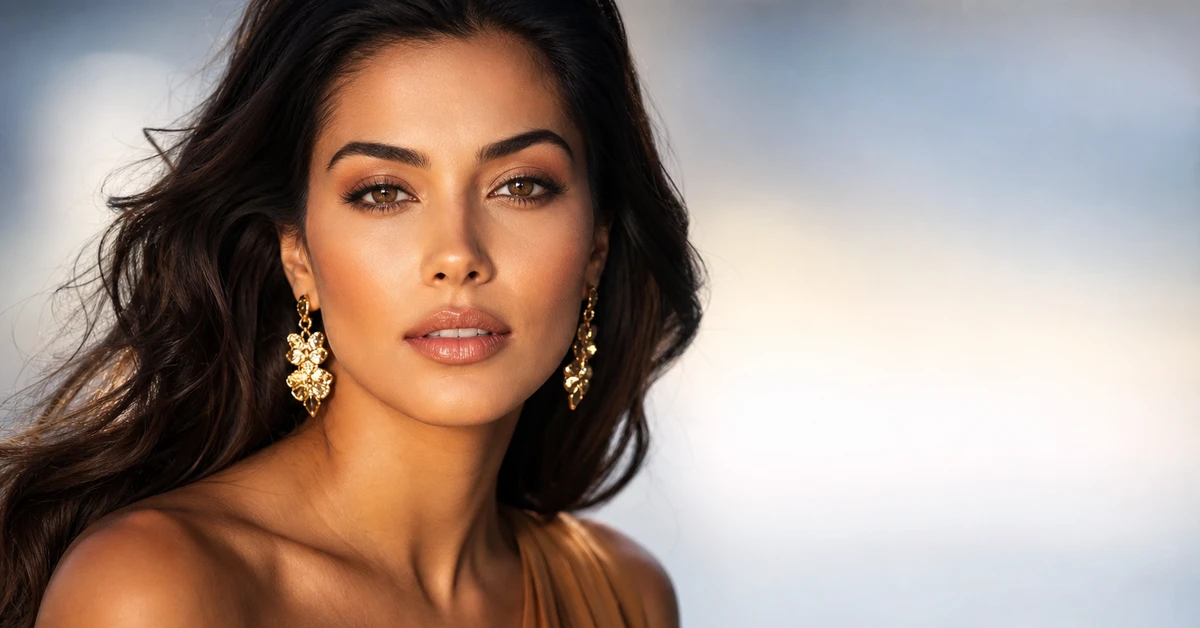
Contents
I draped a client last summer who was convinced she "couldn't wear color". She'd come in wearing the same pale gray she always wore, and against her warm tan it made her look faintly tired, like she'd been up since five. We held a rust knit to her jaw and the change was almost rude in how obvious it was: cheekbones back, eyes clearer, the gray instantly looking like a mistake. Tan skin is one of the easiest complexions to flatter and one of the easiest to accidentally flatten, and the difference is almost always the temperature of the color, not the color itself.
Here's what I want you to take away before the palette: "tan" describes how deep your skin is, not its undertone, and undertone is what actually decides your best colors. Most tan skin leans warm or olive, which is why golden, earthy, jewel-rich colors win so reliably. But a cool-toned tan exists too, and it wants slightly different reds and greens. So treat the list below as the strong, flattering starting point it is, then read on for how undertone narrows it down to your shades.
Understanding tan skin and color
Tan skin sits in the medium band of the depth scale, darker than fair, lighter than deep. That medium depth is genuinely forgiving: it can carry saturated color without being overwhelmed, and it has enough warmth of its own to make rich tones glow rather than fight.
But depth is only half the story. The thing that determines whether a color flatters you is undertone: the warm, cool or olive cast that sits underneath the surface. A warm (golden, peachy) undertone glows next to rust, mustard and warm teal. A cool (rosy, slightly blue) undertone prefers a blue-based red, emerald and cobalt. An olive undertone, extremely common in tan skin, is its own thing: it sits beside green and is flattered by other muted, slightly green-gold colors, while pure cool pastels can make it look sallow.
The reason this matters so much is simple. When the temperature of a color matches your undertone, it harmonizes and your skin looks even and lit. When it clashes, your skin has to "do the work" of the contrast, and that's what reads as tired, sallow or washed out. So the universal advice for tan skin, lean warm, lean saturated, is true on average, but your exact best shades depend on which of those three undertones you have.
The best colors for tan skin
These are the ten I reach for most for tan skin, warm jewel tones, earthy reds and a couple of blues that hold up beautifully against medium, golden-leaning skin.
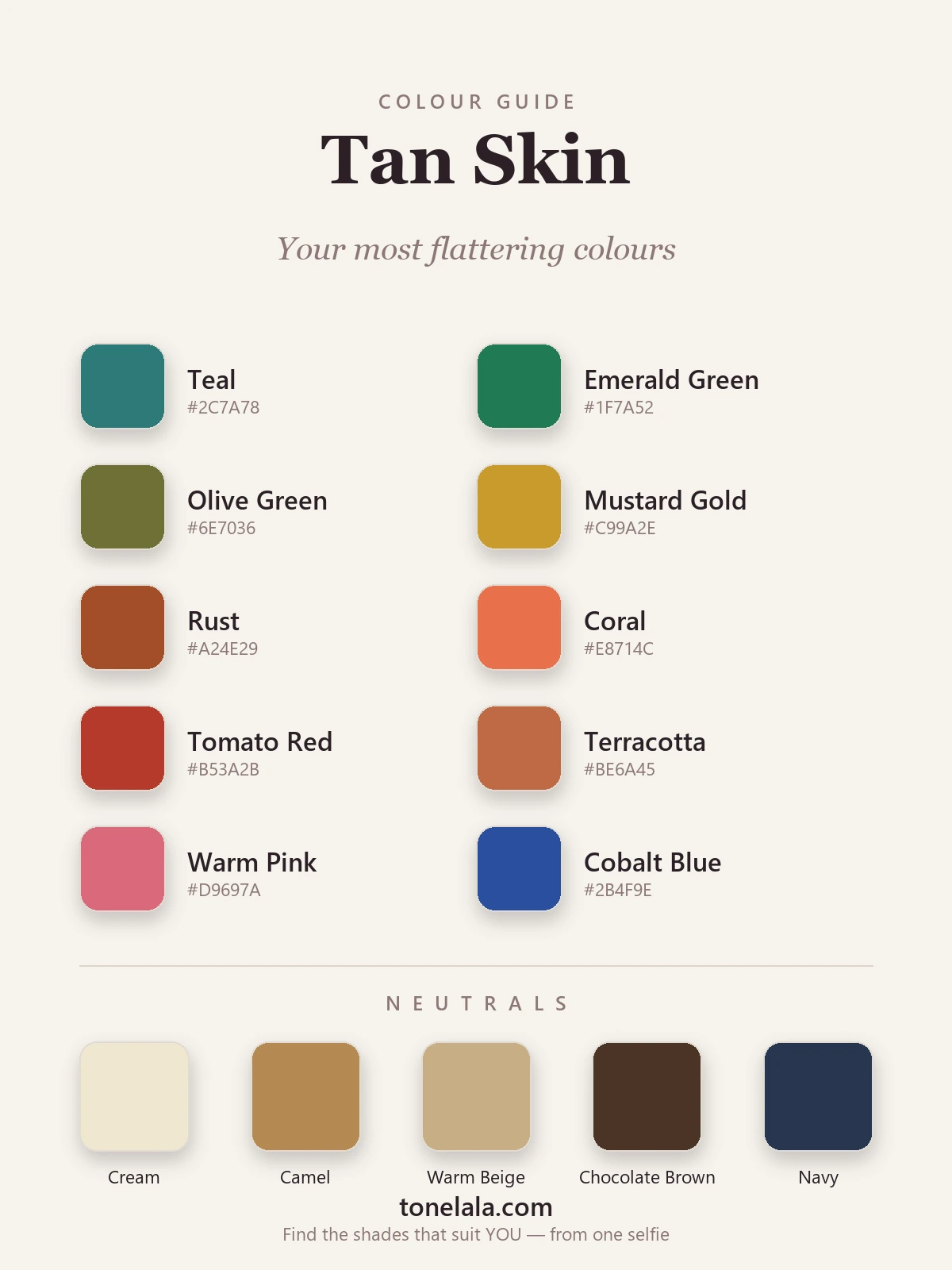
| Color | Hex | Why it works |
|---|---|---|
| Teal | #2C7A78 |
The desert-island color for tan skin. Warm-cool and slightly green, it makes golden skin look lit-from-within without ever overpowering it. |
| Emerald Green | #1F7A52 |
A rich, true green that flatters warm and cool tans alike. Jewel-deep, so it reads expensive against medium skin. |
| Olive Green | #6E7036 |
Made for olive undertones especially. Muted and green-gold, it echoes the skin's own cast and looks effortlessly grown-up. |
| Mustard Gold | #C99A2E |
Golden and earthy, it picks up the warmth in tan skin and makes it glow like late sun. A standout on warm undertones. |
| Rust | #A24E29 |
My go-to "wow" color for warm tans. Deep, burnt and confident, it brings out every bit of golden warmth in the face. |
| Coral | #E8714C |
Warm and peachy, coral flatters tan skin the way it flatters a tan itself, fresh, healthy, a little sun-kissed. |
| Tomato Red | #B53A2B |
A warm-leaning red that suits most tan skin. Rich and slightly orange, it lifts the complexion without going harsh. |
| Terracotta | #BE6A45 |
Soft, earthy and tonal, the gentle alternative to rust when you want warmth without full drama. |
| Warm Pink | #D9697A |
Not baby pink, a deeper, coral-leaning rose. It gives tan skin a healthy flush where cool pastels would drain it. |
| Cobalt Blue | #2B4F9E |
The blue that works hardest for tan skin. Clear and saturated, it sets off the warmth by contrast, especially good on cooler tans. |
Best neutrals: Cream #EFE6D0 (softer and kinder than stark white), Warm Beige #C7AE85 (a tonal, sun-warmed base), Camel #B68A52 (keeps a look polished and expensive), Chocolate Brown #4A3526 (a rich, warm "dark" that flatters more than black), and Navy #27364F (the smart modern stand-in for black).
Want YOUR exact most-flattering shades?
Find your color season →Colors to avoid with tan skin
- Icy cool pastels: baby pink, icy lilac, pale powder blue. They're so cool and pale that they drain the warmth out of tan skin and can leave it looking gray. If you love pastels, choose warmer, deeper versions (coral instead of baby pink, periwinkle instead of icy blue).
- Skin-close beige and washed-out tan: a neutral that sits a shade or two from your own coloring makes you look monochrome and a little ill, because there's no contrast to lift the face. Swap for cream or camel, which read as deliberate.
- Pure neon-white and cold gray: stark white can look harsh against warm skin, and a cool, dusty gray grays you out the same way it grays out warm browns. Reach for cream, or pair gray with a warm color to revive it.
None of these are forbidden, a cool-toned tan can carry a few of them, but they're the shades that most often disappoint, so treat them as "handle with care".
Tan skin and the color seasons
This is where "tan skin" meets the twelve-season system, and where the honest answer lives. Tan skin can appear in almost any season, because season is decided by undertone, depth and contrast together, not by depth alone.
If your tan is warm and rich, you're most likely a True Autumn or Deep Autumn, and the rust, mustard, olive and warm teal end of the palette is your home. If your tan is warm but lighter and clearer, you may be a True or Bright Spring, same warmth, but you'll want those colors a touch brighter and fresher (coral, clear teal, warm cobalt). If your tan is cool or neutral, a Deep Winter or True Winter is in play, and you'll lean into emerald, blue-based red and true cobalt rather than the earthy oranges. And an olive undertone can land in several seasons but almost always loves the muted, green-gold colors, olive, teal, terracotta, over anything icy.
That's the part a one-size chart can't settle for you. The palette above flatters tan skin broadly, but your single most flattering version, your best red, your best green, your best neutral, depends on which season you actually are. Our color analysis guides walk through each one, and a personal analysis reads your photo to place you precisely.
Makeup & styling for tan skin
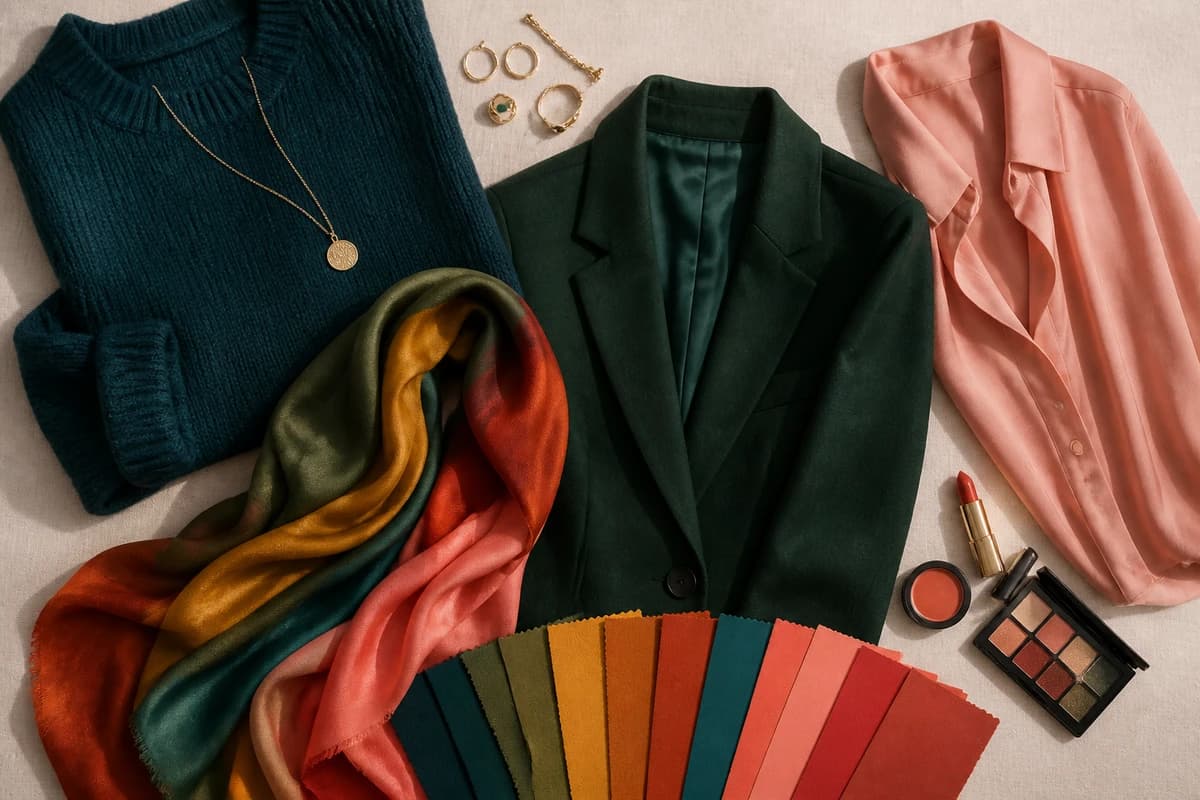
For makeup, follow the same warm-and-saturated logic your wardrobe does. Tan skin glows with warm, terracotta and brick-red lips, peachy-coral or warm-rose blush, and bronze, copper, warm-brown or olive-green eyeshadow, skip the cool blue-pinks and cold grays that flatten the face. Both gold and silver jewelry can work, but warm gold is the natural partner for golden and olive undertones and almost always looks richer against tan skin. For clothing, build outfits around one of the jewel or earth tones above with a warm neutral base, and let the color sit near your face, a scarf, knit or collar in teal or rust does more for you than the same color in your shoes.
Putting it together
Build a small tan-skin capsule and the rest looks after itself: pick a warm neutral base (cream or camel), one or two jewel tones (teal and emerald are foolproof), and one warm "wow" color you love (rust, coral or mustard). Keep the brightest, warmest version near your face and you'll look lit rather than washed out. Just remember the one rule that runs through all of this, your depth says "tan", but your undertone says which tan, and that's the detail worth getting right. If you want it pinned down to the exact hex codes that suit you, find your color season and let the palette do the work.
Frequently asked questions
What colors look good on tan skin?
Tan skin glows in warm, saturated, earthy colors: teal, emerald and olive green; mustard gold; rust, coral, tomato red and terracotta; warm pink; and a rich cobalt blue. Gold-based and jewel tones tend to flatter most because tan skin usually has a warm or olive undertone. The single most flattering set, though, depends on your exact undertone and season, a deep, warm tan suits richer colors than a light, neutral tan does.
What colors should you avoid with tan skin?
The shades that most often fall flat on tan skin are icy, cool-blue pastels (baby pink, icy lilac, pale powder blue), very pale washed-out neutrals like beige that sits close to your own skin, and pure neon-white. They tend to gray the skin or wash out its warmth. None are truly banned, a cool-toned tan can carry some of them, but they're the ones to handle with care.
What are the best neutrals for tan skin?
Cream (#EFE6D0) and warm beige (#C7AE85) are softer and kinder than stark white; camel (#B68A52) keeps a look tonal and expensive; chocolate brown (#4A3526) is a richer, warmer 'dark' than black; and navy (#27364F) is the smart, modern stand-in for black that still flatters. These five do the quiet everyday work in a tan-skin wardrobe.
Does undertone change the best colors for tan skin?
Yes, undertone matters more than the depth of your tan. Two people can both read as 'tan' and suit completely different palettes: a warm, golden undertone glows in rust, mustard and warm teal, while a cooler or olive undertone is kinder to emerald, cobalt and a blue-based red. That's why a personal analysis looks at undertone first, then depth and contrast.
How do I find my exact most-flattering shades for tan skin?
Start with your undertone (warm, cool or olive), then your season. Hold a warm color and a cool color up to your face in daylight and watch which one lifts your skin and which one casts a shadow. For the precise hex-level palette, your best red, your best green, your best neutral, a personal color analysis reads your photo and places you in one of the twelve seasons. You can start one at tonelala.com/onboarding.
Related guides
Best Colors for Tan Skin And Green Eyes: Your Most Flattering Shades (with Hex Codes)
A stylist's edit of the best colors for tan skin and green eyes, olive, teal, rust, gold and more, with hex codes, neutrals and shades to avoid.
Best Colors for Dark Skin And Brown Eyes: Your Most Flattering Shades (with Hex Codes)
A color analyst's guide to the best colors for dark skin and brown eyes, jewel tones, bright clears and the neutrals that glow, with hex codes.
Best Colors for Olive Skin And Brown Eyes: Your Most Flattering Shades (with Hex Codes)
A color analyst's guide to the best colors for olive skin and brown eyes, teal, terracotta, olive, gold and more, with hex codes and shades to avoid.
Best Colors for Medium Skin: Your Most Flattering Shades (with Hex Codes)
A color analyst's guide to the best colors for medium skin, teal, coral, marigold, emerald and more, with hex codes, the right neutrals and what to avoid.

Best Colors for Pale Skin: Your Most Flattering Shades (with Hex Codes)
A color analyst's guide to the best colors for pale skin, 10 flattering shades with hex codes, the best neutrals, what to avoid
Best Colors for Fair Skin: Your Most Flattering Shades (with Hex Codes)
A color analyst's guide to the best colors for fair skin, 10 flattering shades plus 5 neutrals, with hex codes, what to avoid, and how undertone changes it.
Prefer in person? Find color analysis near you
Browse local color analysts by city, or get the same season, palette and best-colors breakdown online from one selfie.
See your colors on a photo of you
Upload one selfie and ToneLala reveals your season, your full palette, and your best hair, makeup, jewelry and outfits, styled on you.