In a sentence: cool-toned skin has a blue, pink or violet wash underneath it, so the colors that flatter you are the cool versions, soft fuchsia, cool ruby, emerald, sapphire and lavender, anchored by pure white, cool gray and charcoal rather than cream and camel, with silver as your hero metal. Skip to the full palette or find your season.
Cool-Toned Skin: How to Tell & Best Colors
By ToneLalaUpdated July 7, 2026

Contents
Hold a silver ring and a gold one against the back of a cool-toned hand and the silver almost disappears into the skin while the gold sits on top like it's borrowed. That single moment tells you most of what you need to know. Cool-toned skin has a quiet blue, pink or violet cast running underneath the surface, and colors that carry the same coolness make it look clear and lit, while warm, golden shades drag it gray.
Here's where people go wrong, though. They read "cool" and reach for the iciest, palest version of everything, or they assume cool means they have to live in navy and gray forever. Neither is true. Cool tells you the direction of your palette, blue-based rather than gold-based, but not how bright or soft those colors should be. I've draped two women who were both unmistakably cool and handed them quite different palettes: one glowed in clear sapphire and true fuchsia, the other in dusty plum and soft mint. Same undertone, different depth. So treat this as the honest starting point, and I'll be straight with you about where you need to go to pin down your exact shades.
How to tell if you're cool-toned
Undertone is the color underneath your skin's surface, and it doesn't shift with a tan or a rough night's sleep. A cool undertone leans pink, rosy, red or blue. Warm undertones lean gold, peach or yellow; neutral sits in between. A handful of practical signs tend to line up on cool skin, and the trick is to read them together rather than betting everything on one.
- The vein test. Look at the veins on the inside of your wrist in natural light. On cool-toned skin they usually read more blue or purple than green. (Green-looking veins point warm.)
- The jewelry test. Hold a silver piece to one side of your face and a gold piece to the other. Cool skin tends to look cleaner and brighter beside silver, while gold can look a touch heavy or yellow against it.
- The sun test. Think about how your skin behaves in summer. Cool skin tends to go pink or burn before it tans, rather than turning an easy golden brown.
- The white-vs-cream test. This is the most reliable one. Drape a pure-white cloth under your chin, then a cream or ivory one. If pure white makes your face look fresh and clear while cream makes it look sallow or tired, you're cool. Warm skin does the opposite.
No single one of these is conclusive, lighting lies, and we're all a little biased about our own faces. But when the veins look blue, silver wins, you go pink in the sun and pure white flatters you, that's four signs pointing the same way, and you can trust it.
Why undertone decides your colors
Color sitting next to your face either echoes your undertone or argues with it, and your eye reads the result instantly as "well" or "tired." Put a cool, blue-based fuchsia beside cool skin and the two read as one harmonious thing, the complexion looks even and lit. Put a warm, orange-based shade there instead and it throws the coolness in your skin into relief, so you suddenly look sallow, as if the color is pulling the life out of your face. That isn't the color being bad. It's the wrong temperature for you.
So the rule for cool-toned skin is simple to say and genuinely transformative to wear: take any color you love and reach for its cool version. Not warm tomato but cool ruby. Not mustard but lemon. Not rust but raspberry. Same colors, dialled toward blue, that one shift is what makes a wardrobe finally feel like it fits, rather than like a collection of near-misses.
The best colors for cool-toned skin
These are the ten I come back to for cool clients again and again, clear blues and pinks, jewel greens, and the cool cousins of the warmer shades.
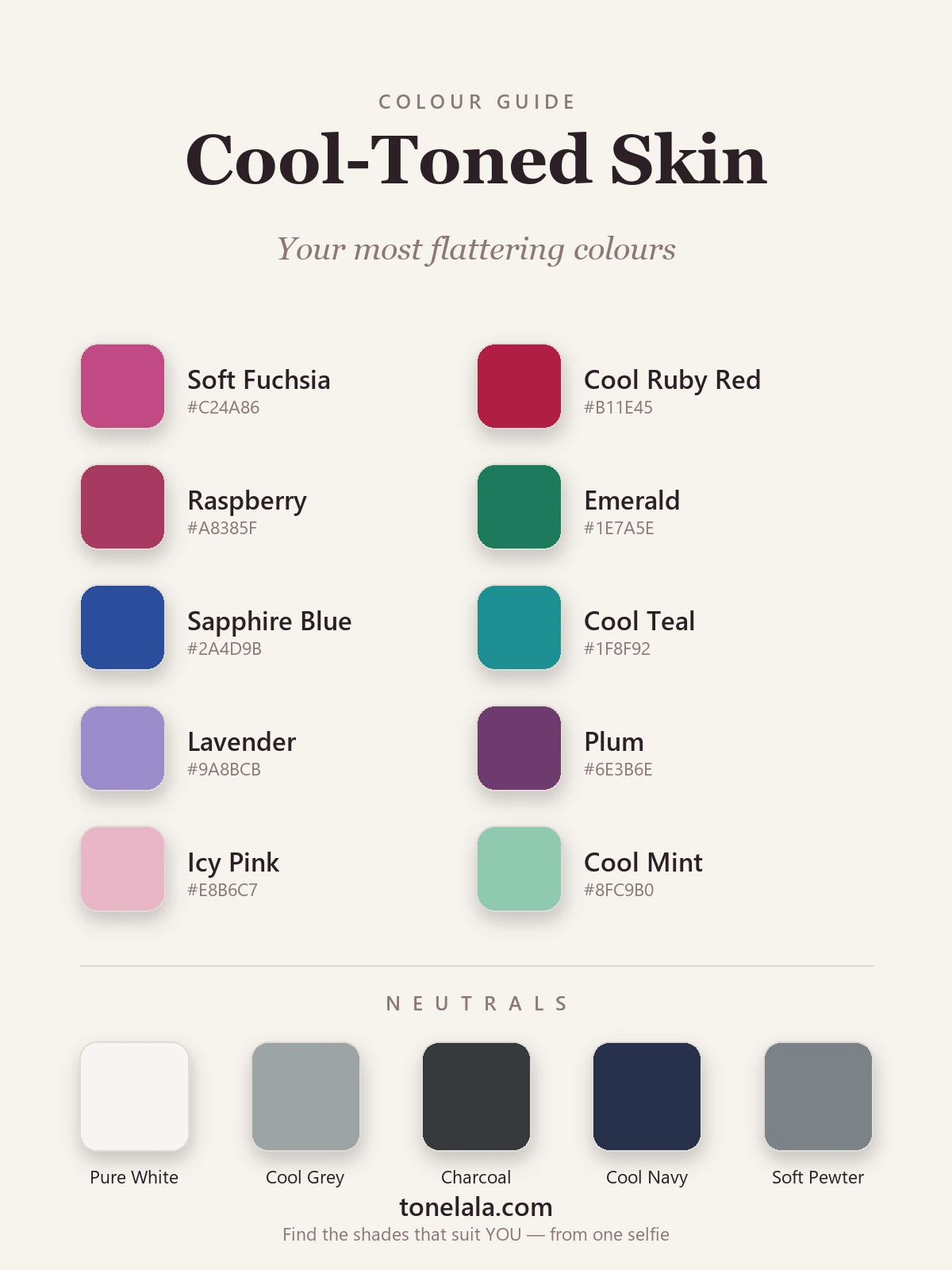
| Color | Hex | Why it works |
|---|---|---|
| Soft Fuchsia | #C24A86 |
A blue-based pink-violet that brings instant life to cool skin without tipping warm. The cool classic. |
| Cool Ruby Red | #B11E45 |
Your red, blue-based and rich, so it reads crisp and expensive rather than harsh or orange. |
| Raspberry | #A8385F |
A deep, cool berry that flatters the cheeks and gives a cool complexion real depth. |
| Emerald | #1E7A5E |
A clear, blue-leaning green that lights cool skin up the way good jewelry does. |
| Sapphire Blue | #2A4D9B |
A true cool blue with no green muddiness, sharp, clean and endlessly flattering. |
| Cool Teal | #1F8F92 |
A blue-green that sits firmly on the cool side of teal, fresh against cool skin. |
| Lavender | #9A8BCB |
A cool, airy violet that makes a cool complexion look fresh and lifted. |
| Plum | #6E3B6E |
A deep cool purple, your softer "dark," giving richness without the hardness of black. |
| Icy Pink | #E8B6C7 |
A pale, cool blue-pink that flatters where a warm peachy pastel would sallow you out. |
| Cool Mint | #8FC9B0 |
A soft, cool green for the days you want something gentle that still reads clean. |
Best neutrals: Pure White #F6F5F2 (your crisp off-white, far kinder to cool skin than cream), Cool Gray #9DA3A6 (a true mid-gray that works near the face), Charcoal #36393D (a soft black-alternative with a cool cast), Cool Navy #27314B (your smart "dark" in place of black), and Soft Pewter #7C8389 (a tonal, slightly blue gray for an easy everyday base).
A quick word on why these earn their place. Soft fuchsia and cool ruby are the cool undertone's best friends, blue-based pink and red that mirror your coolness instead of fighting it. Emerald, sapphire and cool teal are jewel tones doing what they do best on cool skin: looking rich and clear rather than muddy. Lavender and plum prove purple is a cool person's secret weapon, and icy pink with cool mint are how cool skin wears pastels, pick the blue-based versions and they look fresh, not faded.
Want YOUR exact most-flattering shades?
Find your color season →Colors to avoid with cool-toned skin
- Warm, golden shades: orange, tomato red, mustard, golden yellow, warm coral. They're the opposite temperature to your skin, so they pull it gray and leave you looking tired. If you love orange, go cool coral or raspberry; if you love yellow, reach for a clear lemon instead of mustard.
- Warm earthy tones: rust, terracotta, olive and warm browns. These belong to the autumn family and tend to dull a cool complexion rather than flatter it. Swap a warm brown for charcoal or cool navy, and olive for emerald or cool teal.
- Cream and golden beige: the "warm white" neutrals. They can make cool skin look slightly yellow and tired the moment they sit near your face. Pure white and cool gray do the same quiet background work without draining you.
None of these are forbidden, they're just the ones that disappoint most often on cool skin. Treat them as handle-with-care, and when a color looks off, ask whether it's leaning too warm; that's nearly always the culprit.
Gold or silver for cool-toned skin?
Metal sits right at your jaw and neckline, so it follows the same temperature rule as color. On cool-toned skin, silver, white gold and platinum are the heroes, their cool shine echoes the blue-pink in your complexion and looks crisp against it. Yellow gold can read a little heavy or sallow worn right up to the face. That doesn't ban gold from your jewelry box: choose a cooler, white-gold or rose-tinted version, or wear yellow gold lower down, at the wrist or as earrings, where it isn't competing directly with your skin. If you'd like the full reasoning, my guide on gold vs silver: which suits you walks through it in detail, and the best jewelry metal for your skin tone covers every undertone.
Cool-toned skin and the color seasons
This is where "best colors for cool-toned skin" stops being one list and becomes yours. In seasonal color analysis, cool undertone is the through-line of two whole families, the Summers and the Winters: but undertone is only one of three dials. Depth (how light or deep you are) and chroma (how soft or bright) decide your exact palette.
Roughly: if you're cool and soft or muted, you're Summer territory, your colors are gentle and a little dusty (True Summer, Soft Summer). If you're cool and bright and high-contrast: cool skin with dark hair and clear eyes, you're Winter, carrying jewel tones at a saturation that would swamp a softer person (True Winter, Bright Winter). And if you're cool and light, Light Summer is your home. Same cool undertone, but a Soft Summer in a Winter's icy bright can look overwhelmed, and a True Winter in a Summer's dusty pastel can look washed out. That's not a contradiction, it's why a generic "cool" chart only gets you most of the way.
Our color analysis guides walk through each season in detail, so once you know roughly where you sit, you can read your exact palette. And if you're not sure whether you're a light, deep, soft or bright kind of cool, which is genuinely hard to judge in your own mirror, that's exactly what a personal analysis settles.
Putting it together
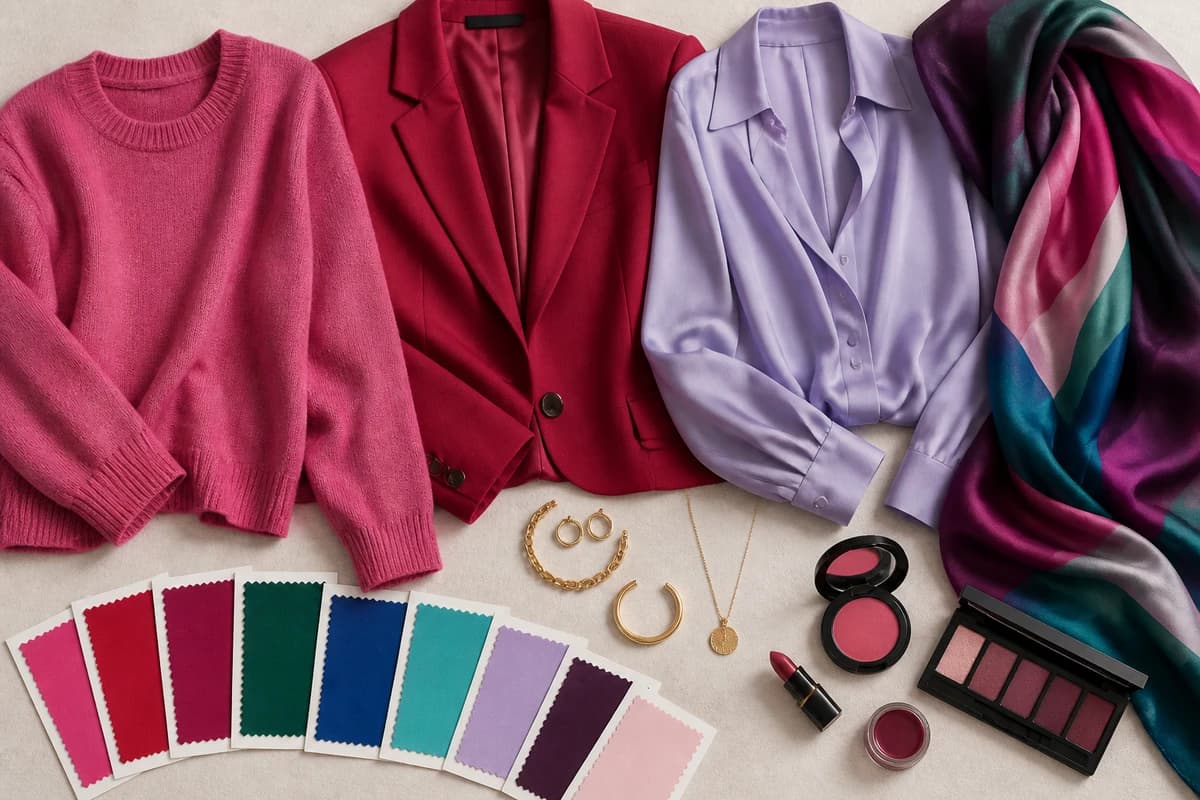
Build a small cool capsule and getting dressed stops being a guessing game: pick two cool neutrals you love, say charcoal and pure white, then add two or three of the colors above, like soft fuchsia, sapphire and emerald. Everything mixes, because it all shares the same blue-based DNA, and your face stays lit in all of it. The only real trap with cool skin is reaching for warmth out of habit, that one camel coat or mustard jumper that quietly drains you every time. Get the family right from this guide, then let a proper analysis hand you your exact fuchsia and your exact sapphire, the two shades that turn "this suits me" into "you look incredible, what's different?"
Frequently asked questions
How do I tell if I'm cool-toned?
Three quick checks point the same way on cool-toned skin: your wrist veins look more blue or purple than green, silver jewelry sits more naturally against your face than gold, and you tend to go pink, not golden, in the sun. The most reliable test is fabric: hold a pure-white cloth and a cream one to your face, and if pure white makes your skin look cleaner and clearer while cream looks sallow, you're cool. No single test is foolproof, so weigh all of them together rather than relying on one.
What colors suit cool-toned skin?
Cool-toned skin is flattered by colors with blue, pink or violet folded into them rather than gold or yellow, soft fuchsia, cool ruby red, raspberry, emerald, sapphire blue, cool teal, lavender, plum, icy pink and cool mint all tend to look lovely. Pure white, cool gray and charcoal are kinder neutrals than cream and warm beige. The single most flattering version of each depends on whether your cool skin is light, deep, soft or bright.
What colors should cool-toned skin avoid?
The hardest colors for cool-toned skin are warm, golden, earthy shades, orange, tomato red, mustard, golden yellow and warm camel, plus warm cream and golden-beige neutrals. They fight the blue-pink in your skin and tend to make it look sallow or tired. None are truly banned: swap orange for cool coral or raspberry, mustard for lemon, and warm cream for pure white or cool gray.
Should cool-toned skin wear gold or silver?
Silver, white gold and platinum are the natural heroes for cool-toned skin, their cool shine echoes the blue-pink in your complexion and looks crisp against it, where yellow gold can read slightly heavy or sallow near the face. You can absolutely still wear gold; choose a cooler, white-gold or rose-tinted version and treat it as an accent rather than your everyday metal closest to your skin.
What color season is cool-toned skin?
Cool-toned skin shows up across the cool seasons rather than belonging to just one. Soft, cool skin often lands in True Summer or Soft Summer; bright, high-contrast cool skin in True Winter or Bright Winter; and light, cool skin in Light Summer. Undertone is only one of three dials, depth and contrast decide the rest, so a personal color analysis is the reliable way to place your cool skin in its exact season. You can start one at tonelala.com/onboarding.
Related guides

Warm-Toned Skin: How to Tell & Best Colors
How to tell if you have warm-toned skin, the vein, jewelry and white-paper tests, plus the colors, metals and neutrals that flatter warm skin

Warm vs Cool Skin Tone: How to Tell
Learn how to tell if you have a warm, cool or neutral skin tone with simple at-home tests, plus the colors that flatter each undertone.

Warm vs Cool Undertones
A color analyst's guide to warm vs cool undertones: simple at-home tests, the neutral middle ground, and example colors with hex codes for each.
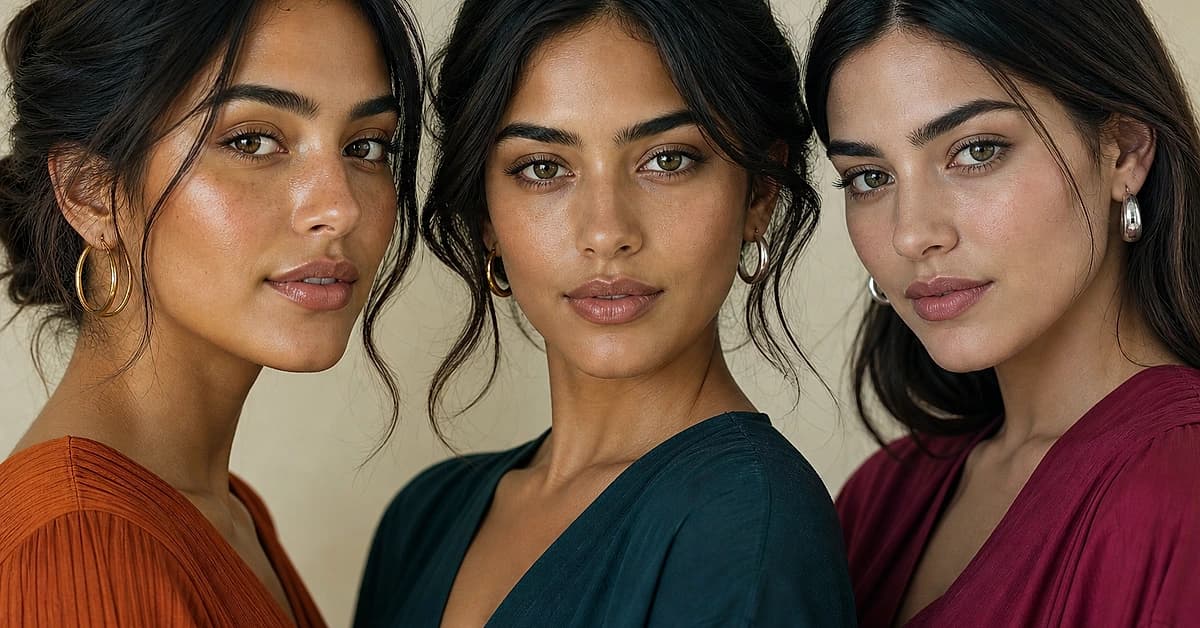
Olive Skin Undertones: Warm, Cool and Neutral Olive Explained
Olive skin is a green-gray cast that can sit over a warm, neutral or cool undertone. Five daylight tests to tell which olive you are, with the colors, makeup, hair and seasons for each.

What Is My Skin Undertone
A color analyst explains what your skin undertone is, how to find it with simple at-home tests, and the colors that flatter cool, warm and neutral undertones.

Skin Tone Chart: Find Your Shade & Undertone
A color analyst's skin tone chart to find your shade (fair to deep) and undertone (warm, cool or neutral) with simple at-home tests, and your color season.
Prefer in person? Find color analysis near you
Browse local color analysts by city, or get the same season, palette and best-colors breakdown online from one selfie.
See your colors on a photo of you
Upload one selfie and ToneLala reveals your season, your full palette, and your best hair, makeup, jewelry and outfits, styled on you.