Warm vs cool skin tone comes down to one thing, the undertone hiding beneath your surface color, and three quick home tests usually settle it. Short on time? Find your season and skip straight to the palette.
Warm vs Cool Skin Tone: How to Tell
By ToneLalaUpdated July 11, 2026

Contents
Hold a piece of cooking foil up to your face in daylight and watch what happens to your skin. For some people it switches the lights on, eyes brighter, skin clearer. For others it drains all the life out of their face and brings up every shadow. That single reaction tells you more about your undertone than an hour of squinting at color wheels ever will.
I've analyzed enough faces to know the warm-versus-cool question trips almost everyone up at first, usually because people confuse it with how light or deep their skin is. A very fair person can be warm. A deep-skinned person can be cool. Depth and undertone are two separate things, and once that clicks, the tests below stop feeling like guesswork.
What "warm" and "cool" actually mean
Your skin has two layers of information. There's the surface color, porcelain, beige, olive, bronze, deep brown, and underneath it sits the undertone, the quiet cast that doesn't change when you tan or flush.
Warm undertones carry gold, peach and yellow. Cool undertones carry pink, red and a touch of blue. Neutral undertones hold a balance of both, which is far more common than people expect. Undertone is what decides whether a color makes your skin look fresh or sallow, so it's the thing worth pinning down before you buy another jumper in a shade that "should" suit you.
A useful way to think about it: surface color is the paint, undertone is the primer underneath. The primer is what you're matching your clothes and makeup to.
The three tests that actually work
No single test is gospel. Run all three and look for agreement, that's where the real answer lives.
1. The wrist-vein test
Turn your inner wrist towards a window in natural daylight and look at the veins.
- Green-ish veins: you lean warm.
- Blue or purple veins: you lean cool.
- Blue-green, genuinely hard to call: you're likely neutral.
Daylight matters here. Yellow indoor bulbs will skew everything warm, so this one is unreliable under a lamp.
2. The jewelry test
Think about which metal makes your skin look healthier, not which you prefer or own more of. Hold gold near your face, then silver.
- Gold flatters you: warm.
- Silver flatters you: cool.
- Both look good: neutral.
Gold tends to bring warmth and glow to warm skin, while silver can make it look slightly gray. The reverse is true for cool skin, where silver looks crisp and gold can read brassy.
3. The white-fabric (or foil) test
Pull your hair back, remove makeup, and hold a sheet of pure white paper or fabric right up under your chin in daylight. Look at the color that bounces back onto your skin.
- Skin looks yellow or sallow next to pure white, you're warm (and you'll prefer ivory or cream).
- Skin looks pink or rosy and the white looks clean, you're cool.
- It's a tie, neutral.
This is where foil comes in handy. Silver foil is an aggressively cool surface, so warm skin tends to look tired against it, while cool skin holds up beautifully.
Not sure which way your tests are pointing?
Find your color season →Reading the signals together
Once you've run all three, lay the answers side by side. Two or three pointing the same way gives you a confident read. A genuine split, green-blue veins, both metals working, white that neither helps nor hurts, is a neutral undertone, and that's a perfectly good place to land.
A few extra clues that often confirm things:
- Natural hair with golden, red or warm-brown highlights usually accompanies warm skin; ashy, cool-brown or blue-black tends to sit with cool skin.
- Eyes with amber, hazel or warm-brown flecks lean warm; gray, cool blue and deep brown with cool flecks lean cool.
- How you tan: easy golden bronzing leans warm; burning, going pink, or tanning to a cooler brown leans cool.
None of these alone decides it. They're tie-breakers when the three main tests don't fully agree.
The colors that flatter each undertone
Here's the practical payoff. Warm undertones light up in golden, earthy, sun-baked shades. Cool undertones come alive in blue-based jewel tones and clean brights.
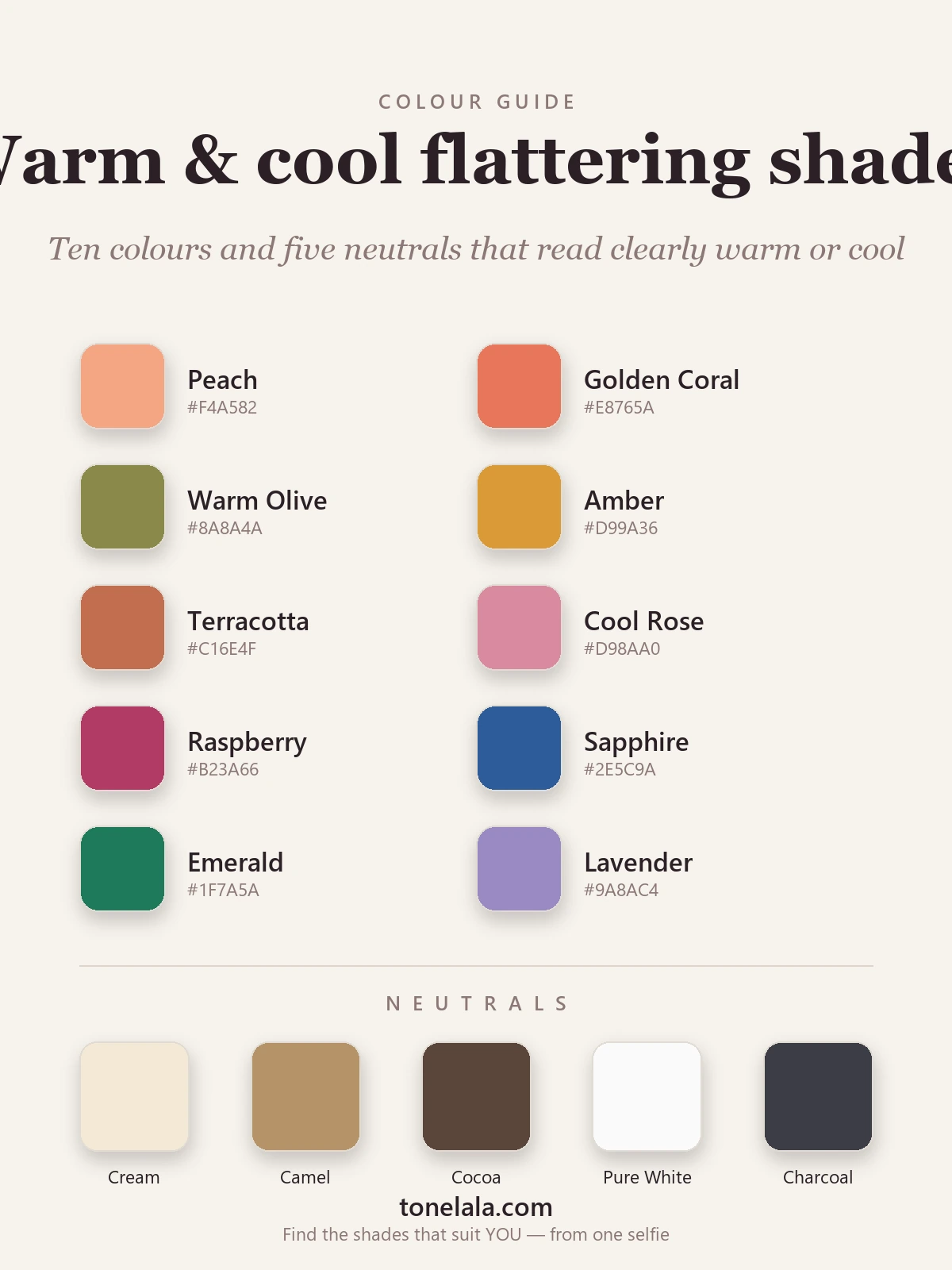
If you're warm, reach for peach, golden coral, amber, terracotta and warm olive. Your best neutrals are cream, camel and warm cocoa rather than stark black or icy white. Gold is your metal.
If you're cool, sapphire, emerald, raspberry, cool rose and lavender will do the heavy lifting. Pure white and charcoal beat beige for you, and silver is your metal.
If you're neutral, you get the run of both, just choose the slightly softer, less saturated versions of each. Dusty rose over hot pink, soft teal over electric blue. The muted middle is your sweet spot.
A quick rule for shopping: warm skin wants colors with a drop of gold or warmth stirred in, cool skin wants colors with a drop of blue. Hold a garment under your chin and ask whether it lifts your face or flattens it, your skin will tell you faster than any label.
Where undertone fits into your full color season
Warm versus cool is the first and biggest fork in personal color analysis, but it's only one of three dimensions. The full system also weighs how light or deep you are and whether your natural coloring is soft and muted or bright and clear. Together those produce the twelve seasons, and they're what turn "I'm warm" into a precise, wearable palette.
If you want to go deeper, browse the full color analysis guides, then read up on how to find your color season to see how undertone, depth and clarity combine into one named season built for you.
The short version
Run the wrist-vein, jewelry and white-fabric tests in daylight, look for agreement across all three, and don't panic if you land on neutral, most people sit closer to the middle than the textbook extremes. Warm skin glows in golden earth tones; cool skin glows in blue-based jewels. Get the undertone right and every color decision after it gets easier.
When you'd like the exact palette built for your skin, hair and eyes rather than a general warm-or-cool split, find your color season and let the analysis do the matching for you.
Frequently asked questions
What is the difference between warm and cool skin tone?
Warm and cool refer to your undertone, the color underneath the surface of your skin. Warm undertones have a golden, peachy or yellow cast; cool undertones have a pink, red or bluish cast. Your surface color (how light or deep you are) is separate from undertone, which is why two people of the same depth can be opposite undertones.
How do I tell if I am warm or cool toned?
Check the veins on your inner wrist in daylight (green leans warm, blue or purple leans cool), notice whether gold or silver jewelry flatters you more, and hold a white sheet next to your face to see whether your skin looks yellow-tinged or pink-tinged. No single test is final, so look for agreement across all three.
Can your skin tone be neutral rather than warm or cool?
Yes. Neutral undertones sit between warm and cool, veins look blue-green, both gold and silver suit you, and the tests give mixed answers. Neutral skin is common and usually means you can wear softer, slightly muted versions of both warm and cool colors.
Does my skin undertone change over time?
Your underlying undertone stays largely fixed, but sun exposure, medication, flushing and skincare can shift your surface color temporarily. Always test on untanned skin in natural daylight for the most reliable reading of your true undertone.
Which colors suit warm skin tones versus cool skin tones?
Warm undertones glow in golden, earthy shades, peach, coral, amber, terracotta, warm olive and cream. Cool undertones come alive in jewel and blue-based shades, sapphire, emerald, raspberry, cool rose and lavender, with crisp white and charcoal as neutrals.
Related guides

Warm vs Cool Undertones
A color analyst's guide to warm vs cool undertones: simple at-home tests, the neutral middle ground, and example colors with hex codes for each.

Warm-Toned Skin: How to Tell & Best Colors
How to tell if you have warm-toned skin, the vein, jewelry and white-paper tests, plus the colors, metals and neutrals that flatter warm skin

Types of Skin Tones Explained
A color analyst explains the types of skin tones, depth (fair to deep) and undertone (warm, cool, neutral), how they differ, and how to find yours.

What Is My Skin Undertone
A color analyst explains what your skin undertone is, how to find it with simple at-home tests, and the colors that flatter cool, warm and neutral undertones.

Skin Tone Chart: Find Your Shade & Undertone
A color analyst's skin tone chart to find your shade (fair to deep) and undertone (warm, cool or neutral) with simple at-home tests, and your color season.

Olive Skin Undertones: Warm, Cool and Neutral Olive Explained
Olive skin is a green-gray cast that can sit over a warm, neutral or cool undertone. Five daylight tests to tell which olive you are, with the colors, makeup, hair and seasons for each.
Prefer in person? Find color analysis near you
Browse local color analysts by city, or get the same season, palette and best-colors breakdown online from one selfie.
See your colors on a photo of you
Upload one selfie and ToneLala reveals your season, your full palette, and your best hair, makeup, jewelry and outfits, styled on you.