In a sentence: self-tan changes your depth, not your undertone, so go one to two shades deeper, keep your undertone family but lean slightly more golden, and match to the tanned neck in daylight after the tan has developed. Skip to the how-many-shades rule, the undertone answer, or find your season and undertone from a photo.
The most common foundation complaint I hear in summer is not "I can't find my shade." It's "my shade stopped working." The person hasn't changed brands or formulas, they've put on self-tanner, and the foundation that was perfect in March now sits on the face like a pale, slightly gray mask. The neck is golden, the jaw is beige, and the whole thing looks like two different people.
This is fixable in one sentence: tan changes depth, not undertone. Once you understand that, matching foundation to a fake tan becomes a simple two-step, go deeper, stay in your undertone family (with a small golden nudge). This guide walks through exactly how far to go, which undertone to pick, where to test and the mistakes that produce the gray-mask effect. If you've never pinned down your undertone at all, start with how to find your undertone and how to find your foundation shade.
What self-tan actually does to your skin
Self-tanner works with DHA, a sugar that reacts with the outer layer of skin and stains it brown over a few hours. Three things follow:
- Depth goes up. The skin gets darker, usually by one to two foundation shades depending on the product and how many layers you apply.
- A golden-orange cast appears. DHA tan is warm by nature. Even on cool-toned skin, the tanned surface reads warmer than before.
- Undertone underneath stays the same. Your natural pink, golden, olive or neutral base doesn't change. It's still there under the tan, which is why the tan can look "off" on some people (cool undertone + orange tan = the classic fake-tan look) and natural on others.
So a foundation for tanned skin has to do two jobs: match the new depth, and sit comfortably on top of a warmer surface without fighting the undertone below.
How many shades deeper?
| Tan strength | Typical shade change | Notes |
|---|---|---|
| Gradual tan, one application | Half to one shade | Often your usual shade with bronzer is enough |
| Medium tan (one full application) | One shade | The most common case |
| Dark tan or two layers | Two shades | Recheck after each top-up |
| Face untanned, body tanned | One shade deeper than face + bronzer | Blend into the neck carefully |
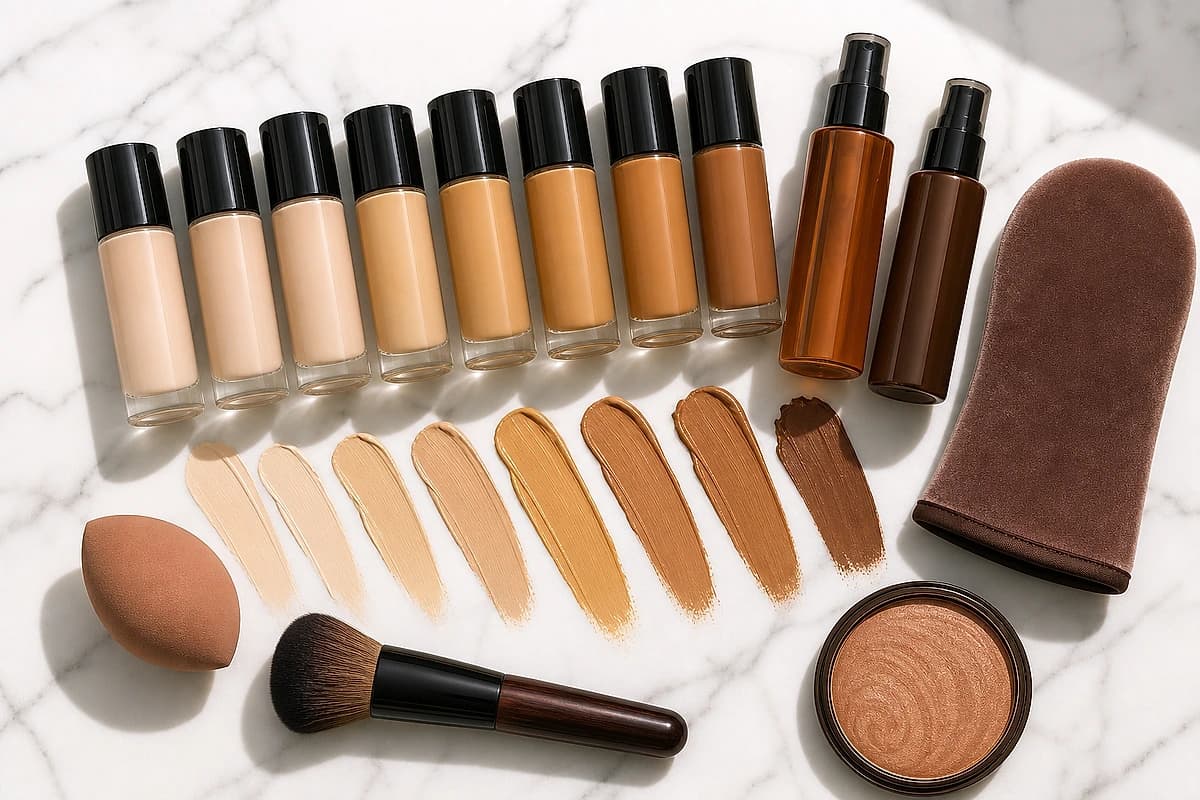
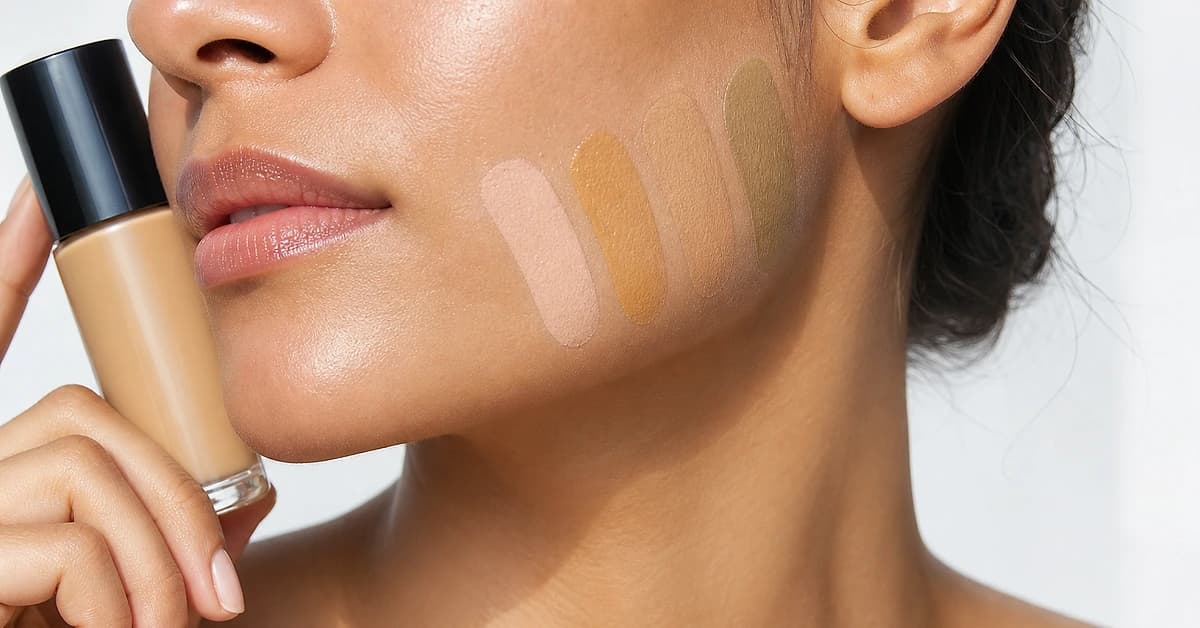
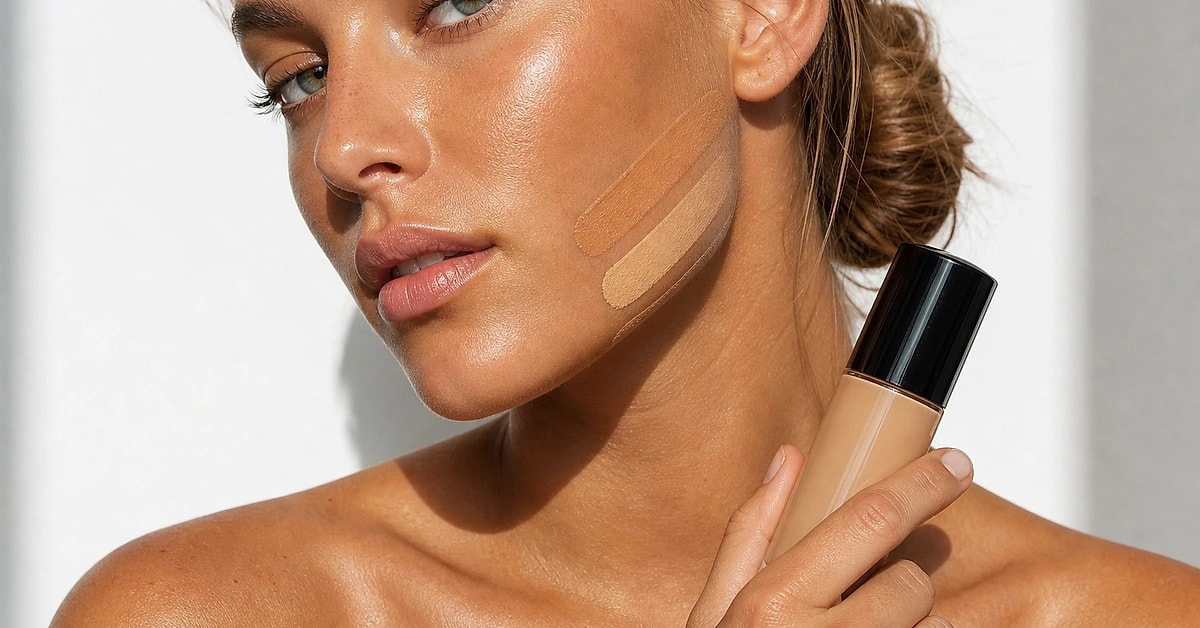
The reliable method: buy or sample the next two shades deeper than your normal one, swatch all three on the tanned jaw and neck, and pick the one that vanishes. It is nearly always the middle or darkest stripe, not the one you own.
Which undertone to choose
This is where most people go wrong, because the instinct is to buy "the same undertone, just darker", and for warm and neutral skin that's exactly right. For cool skin it isn't.
- Warm or golden undertone: stay warm. Choose the deeper shade in the same warm or golden line. Self-tan and warm skin agree with each other.
- Neutral undertone: stay neutral, or take the neutral-warm option if the brand has one. The tan's golden cast means a slightly warmer neutral looks more natural than a slightly cooler one.
- Cool or pink undertone: don't go deeper in a pink-based shade. Pink foundation over a golden tan turns ashy or muddy, the tan and the foundation pull in opposite directions. Choose a neutral shade (not warm, not pink) one to two steps deeper. It bridges your cool base and the warm tan.
- Olive undertone: stay olive or neutral-olive. Olive skin tans beautifully with self-tan, and a golden-olive shade deeper than usual usually matches perfectly. Avoid warm-peach shades, which turn orange on tanned olive skin. See olive skin undertones.
The palette below shows the depth ladder and the five undertone bases.
The self-tan foundation chart
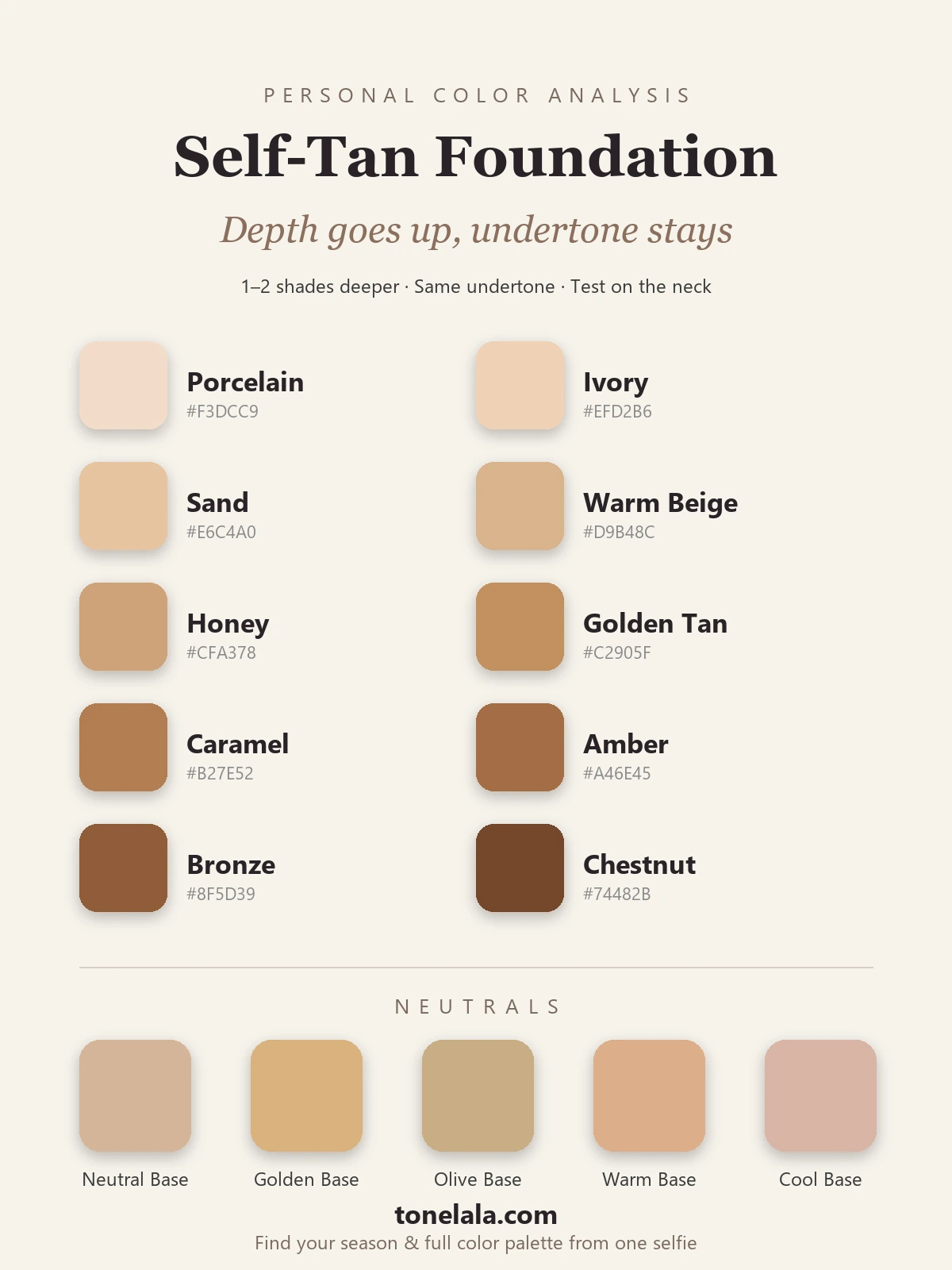
| Depth | Hex | Typical match |
|---|---|---|
| Porcelain | #F3DCC9 |
Very fair, no tan |
| Ivory | #EFD2B6 |
Fair, gradual tan |
| Sand | #E6C4A0 |
Fair skin with a medium tan |
| Warm Beige | #D9B48C |
Light skin with a medium tan |
| Honey | #CFA378 |
Light-medium skin, tanned |
| Golden Tan | #C2905F |
Medium skin with a medium tan |
| Caramel | #B27E52 |
Medium skin with a dark tan |
| Amber | #A46E45 |
Tan skin with a medium tan |
| Bronze | #8F5D39 |
Tan skin with a dark tan |
| Chestnut | #74482B |
Deep skin with a tan |
Undertone bases: Neutral #D5B598, Golden #D8B27E, Olive #C9AE85, Warm #DDAE8A and Cool #D9B4A4. Over self-tan, the golden and neutral bases match most people; the cool base is the one to avoid unless your tan is very light.
Not sure which undertone you actually are?
Find your color season →Where and when to test
- Wait 24 hours. Self-tan keeps developing for up to a day; matching too early leaves you a shade too light once it deepens.
- Test on the side of the neck and the jawline, not the back of the hand or the inner wrist, those tan differently.
- Match to the neck, not the face. Self-tan often develops deeper on the neck and body than on the face (face skin exfoliates faster). Matching the face to the neck keeps everything one color.
- Daylight, near a window. Bathroom bulbs make tanned skin look either orange or gray.
- Three stripes, ten minutes. Swatch your usual shade plus the next two deeper, let them oxidize, and pick the one that disappears.
The mistakes that cause the gray mask
- Keeping your winter shade. Even one shade too light turns gray over tan.
- Going deeper in pink. Cool-based foundation over golden tan reads ashy. Switch to neutral.
- Matching on day one. The tan darkens overnight; the match doesn't.
- Not tanning the face but using a bronzed foundation. Dark foundation on pale skin sits on the surface and looks like a mask. Either tan the face too (a gradual or face-specific tan) or go only one shade deeper and rely on bronzer and blending.
- Forgetting the fade. Self-tan fades over five to seven days. Keep your usual shade and mix the two as the tan fades, half-and-half in the middle of the week is the honest match.
- Using a full-coverage formula. Over a tan, sheer-to-medium coverage and a skin tint look most natural; heavy coverage masks the glow the tan gave you.
Blush, bronzer and lips on a self-tan
A tan is warmth, so the makeup on top should agree with it. Blush: warm apricot, coral or terracotta rather than cool pink. Bronzer: skip it or use a light hand, the tan is the bronzer, and adding more turns orange. Lips: warm nude, coral, brick or a rosy-brown. The best blush for your skin tone and best lipstick for your skin tone guides have shades by undertone; read the warm column while you're tanned.
Does a tan change your color season?
Not your season, a tan is temporary depth, and your season is built on undertone. But it does shift which colors in your palette look best while you're tanned: deeper, warmer versions of your colors flatter tanned skin, and the very palest shades in a light season can look washed out against a tan. If you've never had your season read, doing it on a photo without self-tan gives the truest result, because the tan's golden cast can make cool undertones read warmer than they are. A photo-based analysis reads undertone, depth and contrast together, do it on your natural skin, then apply the "one shade deeper, slightly more golden" rule every time you tan. The foundation undertone chart explains the undertone bases in full.
Putting it together
Wait a day, test on the neck in daylight, go one to two shades deeper in the same undertone family, neutral instead of pink if you're cool, and mix with your usual shade as the tan fades. That's the whole method. The gray mask was never a foundation problem; it was a depth problem, and depth is the easy one to fix.