In a sentence: a golden skin tone is simply warm-undertoned skin, and it glows in sun-warmed colors, amber, terracotta, golden honey, warm coral, mustard, olive, moss, warm teal, tomato red and pumpkin, anchored by cream, camel and chocolate-brown neutrals. Skip to the full palette or find your season.
Golden (Warm) Skin Tone: Best Colors
By ToneLalaUpdated July 11, 2026
Contents
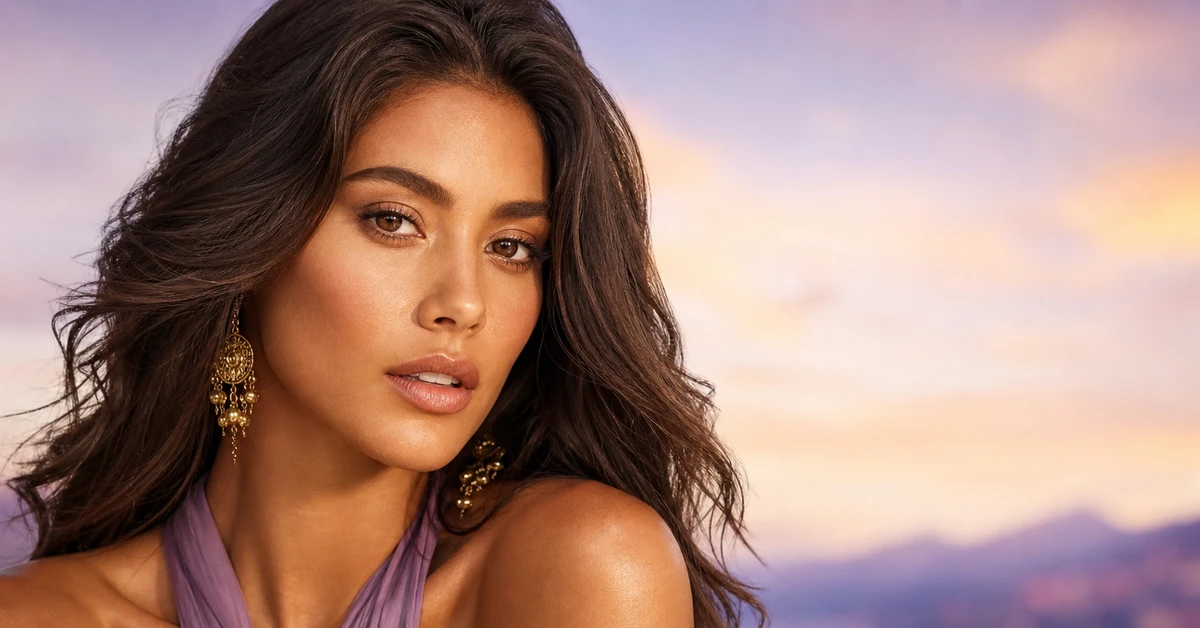
The first thing I check on a new client is the inside of the wrist in proper daylight, and golden skin tells on itself almost straight away, there's a honeyed, faintly peachy cast to it, and the veins read more olive-green than blue. Lay a length of warm gold chain along the jaw and the skin seems to switch on; the face looks rested and even before a scrap of makeup goes near it. That warm glow underneath the surface is the whole story of a golden skin tone, and it's the single most useful thing to know about dressing yourself.
Here's what trips people up, though. "Golden" gets talked about as a shade of skin, as if it only means a warm tan or a deep complexion, when it actually describes the undertone, the color sitting beneath the surface. You can be very fair and golden, or deep and golden. The depth changes; the warmth doesn't. So this guide is about confirming that warmth, then handing you the colors that echo it, because once a color shares your temperature your skin stops competing with your clothes and simply looks lit.
What a golden (warm) skin tone actually is
Undertone is the color underneath your skin, and unlike a tan or a flush it doesn't shift week to week. A golden, warm undertone has gold, peach or yellow folded into it. (Cool skin leans pink, red or blue; neutral sits in the middle and can borrow from both.) The reason this matters more than your actual depth is that color held next to your face either agrees with that warmth or argues with it, and your eye reads the result as either a healthy, even complexion or a tired, slightly gray one.
It's worth separating two things people muddle together. Depth is how light or deep your skin is, fair, medium, tan, deep. Undertone is its temperature, warm, cool or neutral. Golden is an undertone, so it cuts across every depth. A pale Scandinavian complexion can be golden; so can rich, deep skin. That's why "golden skin tone" and "fair skin" aren't rivals on a chart, one is about warmth, the other about lightness, and you have both at once. When you get the warmth right, the depth mostly takes care of itself.
How to confirm your golden undertone
You don't need special kit, daylight and three quick checks will get you most of the way:
- The jewelry test. Hold something gold and something silver up near your face, ideally with no makeup on, in natural light. On golden skin the gold side looks warm and lit and the silver side faintly drains you. (If they're genuinely neck-and-neck, you may be neutral.)
- The vein test. Look at the inside of your wrist in daylight. Veins that read greenish or olive point warm; blue-to-purple points cool. It's a clue, not a verdict, skin thickness affects it.
- The sun test. Think about how your skin behaves in the sun. Warm, golden skin tends to tan and deepen; cooler skin more often burns and stays pink.
- The white test. Hold a sheet of pure brilliant white next to a sheet of soft cream. If cream makes you look healthy and stark white makes you look slightly gray or sallow, that's a warm undertone showing itself.
No single test is gospel. The reason analysts cross-check several is that any one of them can mislead, but when the jewelry, veins and sun all agree, you can dress with real confidence. The bit a mirror genuinely can't settle on its own is which kind of warm you are, and that's where a proper analysis earns its keep. You can find your season when you're ready to pin it down.
The best colors for a golden skin tone
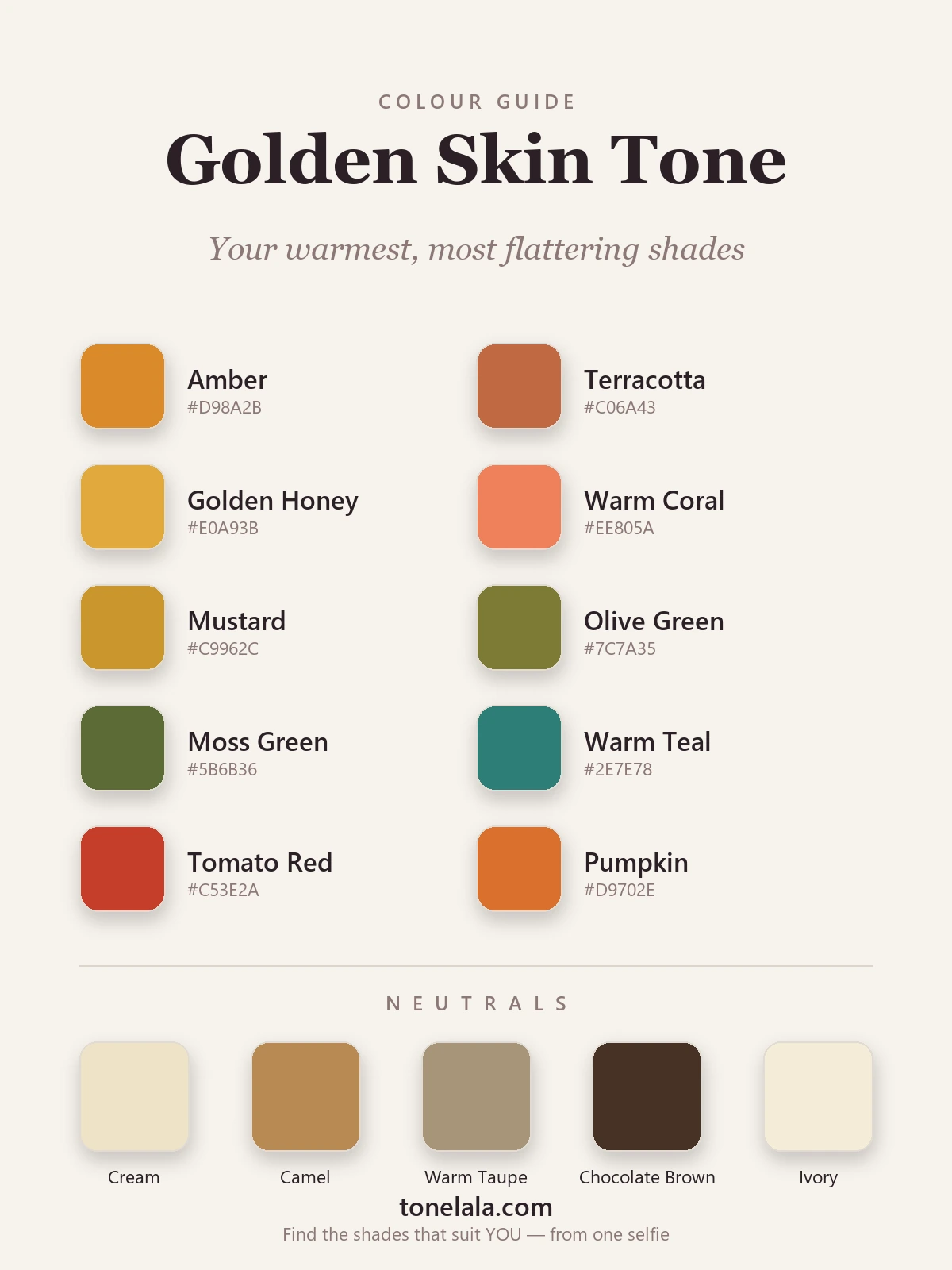
These are the ten I reach for again and again on golden-skinned clients, a spread of warm reds and oranges, golden yellows, earthy greens and the warm cousin of blue. Every one of them carries gold, so every one of them shares your skin's temperature.
| Color | Hex |
|---|---|
| Amber | #D98A2B |
| Terracotta | #C06A43 |
| Golden Honey | #E0A93B |
| Warm Coral | #EE805A |
| Mustard | #C9962C |
| Olive Green | #7C7A35 |
| Moss Green | #5B6B36 |
| Warm Teal | #2E7E78 |
| Tomato Red | #C53E2A |
| Pumpkin | #D9702E |
A quick word on why each earns its place. Amber #D98A2B and golden honey #E0A93B are liquid sunlight, they pick the gold straight out of your skin and hand it back, which is why golden complexions can wear yellows that defeat almost everyone else. Terracotta #C06A43 and pumpkin #D9702E are that roasted, earthy orange that reads expensive on warm skin rather than loud. Warm coral #EE805A is the friendly all-rounder, peachy and fresh, it flatters the way good light does. Mustard #C9962C is the slightly grown-up version of that golden glow, brilliant in knitwear. Olive #7C7A35 and moss #5B6B36 prove green isn't a cool color by default, golden, earthy greens are practically made for you. And warm teal #2E7E78 is how a golden skin tone wears blue: choose the version with green and gold folded in and it sings rather than sulks. Tomato red #C53E2A rounds it out, your red leans orange, never blue, so it stays rich instead of turning harsh.
Best neutrals: Cream #EFE3C6 (your soft off-white), Ivory #F4ECD8 (a touch cleaner, still never stark), Camel #B98A53 (keeps a look tonal and quietly expensive), Warm Taupe #A8957A (the easiest everyday base), and Chocolate Brown #463225 (your "dark", far kinder than black). These five do the quiet background work so your warmer colors can do the talking.
Curious which warm season is actually yours?
Find your color season →Colors to handle with care
- Icy, blue-based brights: fuchsia, icy pink, cool ruby, electric cobalt. They're the opposite temperature to golden skin, so they pull the gold out of your face and leave it looking gray. If you love pink, go warm coral; if you love red, go tomato.
- Pure black and stark white: both are cool and high in contrast, and they tend to overpower a golden complexion rather than flatter it. Black drops a hard shadow under the chin; brilliant white can push warm skin toward yellow. Reach for chocolate brown and cream instead, same idea, your temperature.
- Cool dove grays and slate: blue-grays sit flat and joyless against warmth and tend to gray you out. If you want a soft neutral, warm taupe or camel does the same quiet job without draining you.
None of these are forbidden, they're just the shades that most often disappoint on golden skin. Treat them as handle-with-care, and when in doubt, warm the color up a notch.
Golden skin and the color seasons
This is where "golden skin tone" stops being one tidy list and becomes genuinely yours. In seasonal color analysis, a warm undertone is the spine of two whole families, the Springs and the Autumns: but undertone is only one of three dials. Depth (how light or deep you are) and chroma (how clear or muted your coloring is) decide your exact palette.
Roughly: if you're golden and light and clear, you're Spring territory, your amber stays bright, your coral is fresh, your greens look new (Light Spring, True Spring). If you're golden and deeper or more muted, you're Autumn, your colors roast down into rust, golden olive and moss (True Autumn, Soft Autumn). Same warm undertone, but a Light Spring in deep terracotta can look weighed down, and a True Autumn in pale, sugary peach can look washed out. That isn't a contradiction, it's exactly why a generic "warm" chart only gets you most of the way home.
If you want the deeper mechanics behind all this, confirming temperature in the first place, my guide on how to find your undertone goes step by step, and the best colors for warm undertones widens the lens beyond skin to your whole wardrobe. My full set of color analysis guides then walks through each season in detail, so once you know roughly where you sit you can read your precise palette. The one thing none of them can judge for you is whether your golden skin is the light, deep, soft or bright kind of warm, and that's the question a personal analysis is built to settle.
Makeup & styling for golden skin
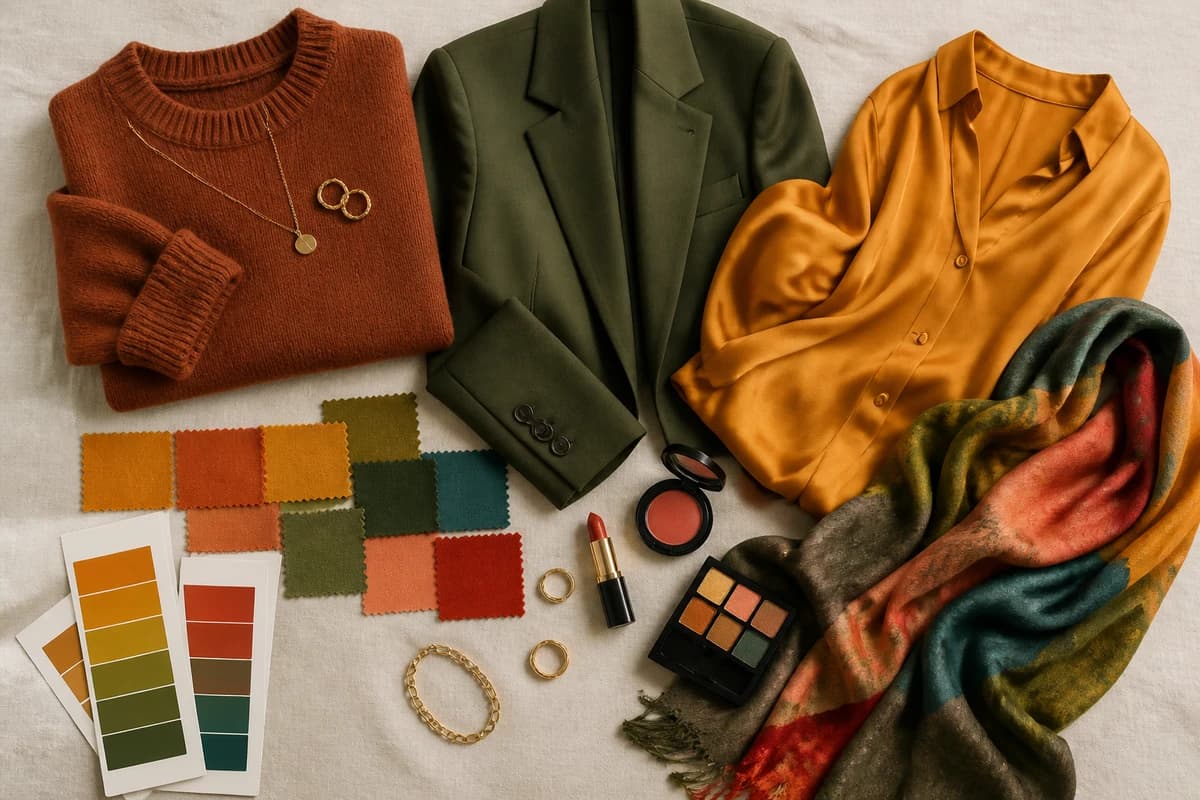
Makeup is the fastest place to feel the difference. Golden skin comes alive in peachy-bronze and warm apricot blush rather than cool pink, in terracotta, brick, warm coral and brown-red lips rather than blue-reds, and in copper, bronze, warm gold and olive eyeshadow rather than cool taupe and gray. A warm brown or bronze liner beats hard black, and a warm-toned foundation is non-negotiable, a cool, pink-based base is the quickest way to make golden skin look gray. For metals, gold is your hero; if you love silver, choose a warm-toned or champagne version and keep it slightly away from your face. The same logic runs through your clothes: a warm-washed, slightly faded denim sits with your palette far more happily than a crisp blue-black wash.
Putting it together
Build a small warm capsule and getting dressed stops being a daily negotiation. Pick two of the neutrals you're drawn to, say camel and chocolate brown, then add two or three of the colors above, like amber, warm coral and moss green. Everything mixes, because it all shares the same gold-based DNA, and your face stays lit in all of it. That's the real reward of dressing for a golden skin tone, not following rules, but putting on a color and watching your skin look like it did something right. Get the family right from this guide, then let a proper analysis hand you your exact amber and your exact olive, the two shades that turn "this suits me" into "what is that, you look incredible."
Frequently asked questions
What is a golden skin tone?
A golden skin tone is skin with a warm undertone, the color sitting underneath the surface leans gold, peach or yellow rather than pink, red or blue. It shows up at every depth, from fair to deep, so 'golden' describes the temperature of your skin, not how light or dark you are. The giveaways are that gold jewelry tends to flatter you more than silver, your skin reads as warm and lit beside cream and camel, and you usually tan rather than stay pink in the sun.
How do I know if I have a golden or warm undertone?
Three quick home tests point the same way for a golden undertone: hold gold and silver to your face and see which one makes your skin look lit rather than gray (gold wins for warm); check the veins on your inner wrist in daylight (greenish leans warm, blue-purple leans cool); and think about how you react to sun (warm skin usually tans). No single test is foolproof, but when all three agree you can be fairly confident. The most reliable confirmation is a photo-based color analysis that reads undertone, depth and contrast together.
What colors suit a golden skin tone?
Golden skin glows in colors that carry warmth, amber, terracotta, golden honey, warm coral, mustard, olive and moss green, warm teal, tomato red and pumpkin. For neutrals, reach for cream, camel, warm taupe, chocolate brown and ivory rather than stark black and white. The rule is simple: take any color you love and choose its golden, sun-warmed version over its icy, blue-based one.
What colors should a golden skin tone avoid?
The hardest colors for a golden skin tone are icy, blue-based shades, fuchsia, icy pink, cool ruby, electric blue, plus pure black and stark white and cool dove grays. They sit at the opposite temperature to your skin and tend to make it look gray, flat or sallow. None are truly off-limits; swap them for warmer cousins like tomato instead of cool red, cream instead of white, and chocolate or warm navy instead of black.
Which color season goes with a golden skin tone?
A golden undertone is the through-line of two whole season families, the Springs and the Autumns. If you're golden and light and clear you're likely a Spring (your colors stay bright and sunny); if you're golden and deeper or more muted you're likely an Autumn (your colors roast down into rust, olive and amber). Depth and clarity decide which one, which is why a personal analysis pins down your exact season and shades rather than just confirming 'warm'. You can start one at tonelala.com/onboarding.
Related guides

Warm-Toned Skin: How to Tell & Best Colors
How to tell if you have warm-toned skin, the vein, jewelry and white-paper tests, plus the colors, metals and neutrals that flatter warm skin

Warm vs Cool Undertones
A color analyst's guide to warm vs cool undertones: simple at-home tests, the neutral middle ground, and example colors with hex codes for each.

Warm vs Cool Skin Tone: How to Tell
Learn how to tell if you have a warm, cool or neutral skin tone with simple at-home tests, plus the colors that flatter each undertone.

Olive Skin Tone: The Complete Guide
What olive skin tone actually is, how to tell if you have the green-gray cast, your likely undertone, the seasons it maps to and the colors that flatter it.

Neutral Skin Tone: Undertones & Best Colors
A color analyst explains what a neutral skin tone is, how to tell if you have one, and the versatile colors and seasons that suit it (with hex codes).

Light Brown Skin Tone: Best Colors
A color analyst's guide to light brown skin tone, how to spot it, read your warm, cool or neutral undertone
Prefer in person? Find color analysis near you
Browse local color analysts by city, or get the same season, palette and best-colors breakdown online from one selfie.
See your colors on a photo of you
Upload one selfie and ToneLala reveals your season, your full palette, and your best hair, makeup, jewelry and outfits, styled on you.