In a sentence: Warm Autumn is the warm, golden, medium-deep season, and it's the same season many systems call True Autumn. Your palette is built from spiced, earthy colors, pumpkin, rust, golden olive, mustard, forest green, with warm cream, camel and chocolate neutrals. No black, no icy brights. Skip to the full palette with hex codes or find your own season.
Warm Autumn Color Palette (a.k.a. True Autumn)
By ToneLalaUpdated July 9, 2026

Contents
The first time I draped a Warm Autumn who'd been told she was "warm autumn" by one app and "true autumn" by another, she arrived genuinely confused about whether she was meant to be following two different palettes. She wasn't. We laid a rust scarf and a golden olive against her jaw, her skin lit up like a switch had flipped, and the labels stopped mattering, there was only one face in the mirror, and it wanted gold. The naming muddle is the single most common thing I have to untangle for warm-toned clients, so let me clear it up before we go anywhere near hex codes.
Warm Autumn and True Autumn are the same season wearing two different name tags. Once you know that, the palette is refreshingly simple: golden, rich, earthy color, the kind that looks like late-October light made wearable. Below is your palette in real hex codes, why the two names point to one place, and how to be sure this is genuinely your season rather than one of the warm-ish ones it borders.
Warm Autumn and True Autumn are the same season
Here's the bit that trips everyone up. Personal color analysis has more than one school, and they don't all use the same words.
- Tonal and 16-season systems sort everyone first by their strongest quality. People whose dominant trait is warmth land in a Warm family, which splits into Warm Spring and Warm Autumn. So "Warm Autumn" is the name for the autumn whose defining feature is its warmth.
- The classic Sci\ART 12-season system uses a different vocabulary, Light, True, Soft, Deep, and calls the most purely warm autumn the True Autumn.
Different routes, same destination. Both names describe an autumn with a decisively golden undertone, medium-deep value and rich (but slightly muted) chroma. If a quiz typed you as Warm Autumn and a friend's analysis came back True Autumn, you are not two different people, you wear the same colors. Throughout this guide I'll use "Warm Autumn," but everything here maps directly onto the True Autumn color palette; treat the two pages as one wardrobe described twice.
What "Warm Autumn" actually means
Strip away the labels and a season is just three dials:
- Undertone, warm. Not warm-ish, not neutral-warm. Warm Autumn is the most decisively warm season there is, all gold and no blue.
- Value, medium-deep. Richer and a touch darker than the lighter warm seasons, but not as dark as a Deep Autumn.
- Chroma, rich but slightly muted. Saturated and full-bodied, with just enough earth folded in that the colors read like spices rather than neon.
Add those up and you get medium contrast: warm, golden, fairly deep coloring that's flattered by warm, golden, fairly deep color. The trap is reading "muted" as "pale and washed-out." Warm Autumn is muted the way a good curry is muted, deep, warm and complex, never faded. Where a Spring is clear and bright, Warm Autumn is roasted and golden.
The palette
Golden, earthy, rich. Every color looks like it has sunlight and a little spice folded in.
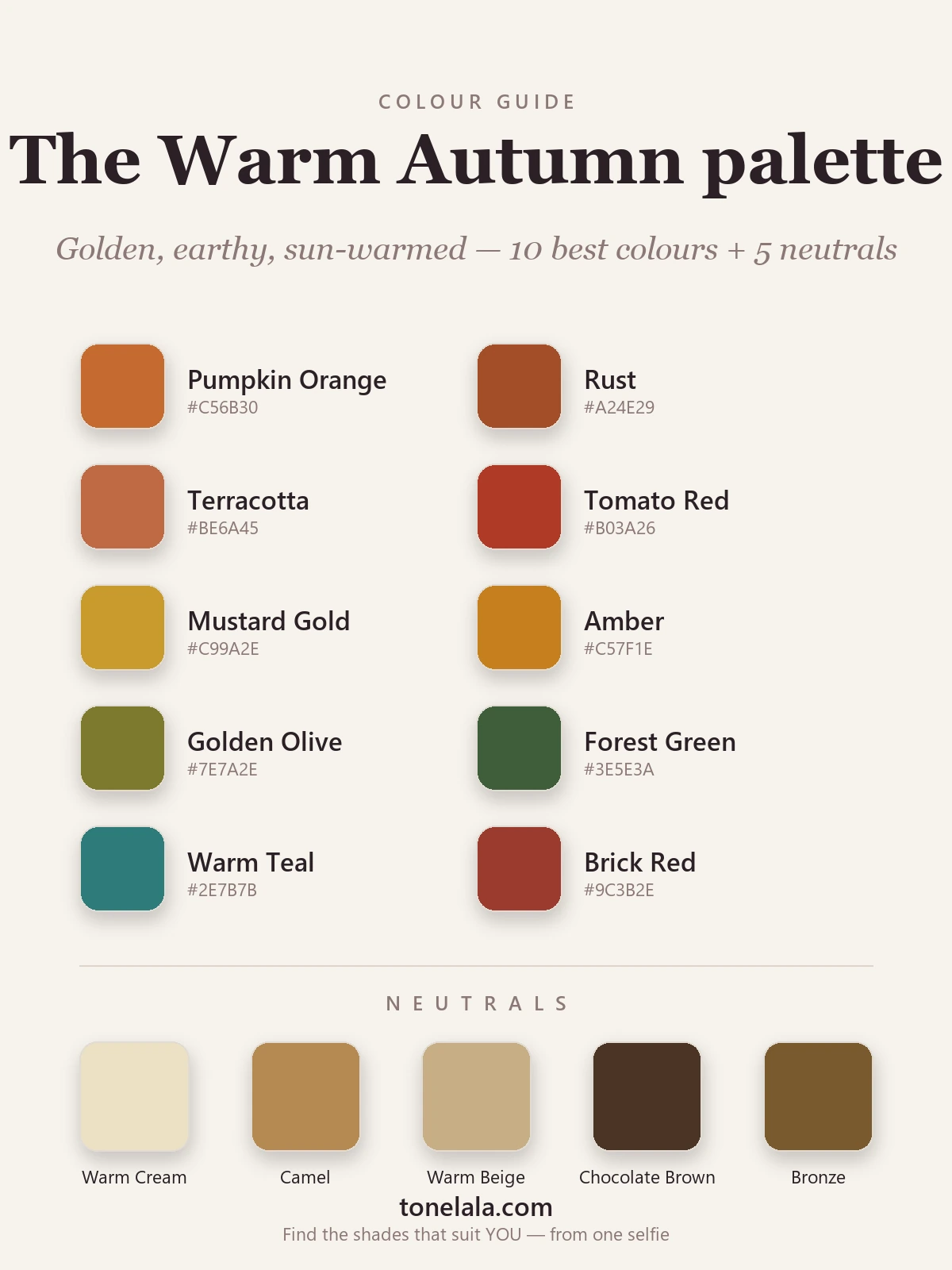
Your best colors
| Color | Hex |
|---|---|
| Pumpkin Orange | #C56B30 |
| Rust | #A24E29 |
| Terracotta | #BE6A45 |
| Tomato Red | #B03A26 |
| Mustard Gold | #C99A2E |
| Amber | #C57F1E |
| Golden Olive | #7E7A2E |
| Forest Green | #3E5E3A |
| Warm Teal | #2E7B7B |
| Brick Red | #9C3B2E |
Your neutrals: warm and golden, never stark: Warm Cream #EDE0C4, Camel #B68A52, Warm Beige #C7AE85, Chocolate Brown #4A3526 (your best "dark", far kinder than black), and Bronze #7A5A2E.
Your metals: gold all the way, warm yellow gold, copper and bronze echo the gold in your skin. Silver and platinum read cold and flat against you, so if you love a silver piece, keep it small and away from your face.
Not sure Warm Autumn is actually your season?
Find your color season →Colors to avoid (and why)
- Cool & icy tones: icy blue, fuchsia, cool gray, blue-based pink. They fight your golden undertone and turn your skin sallow.
- Black & stark white: too cool and too high-contrast for your medium-deep warmth; they overpower the face. Reach for chocolate brown and warm cream instead.
- Clear pastels: baby pink, mint, lavender. Too cool and too light; they make your rich coloring look heavy and tired.
The mirror test: if a color leaves your skin looking gray, or pulls your face down and dull, it's too cool or too light for you.
How to know you're actually a Warm Autumn
The warm seasons sit beside each other, so a few honest comparisons help:
- Warm Autumn vs Warm Spring: both are purely warm, so undertone won't separate them; depth and chroma will. Warm Spring is lighter and clearer, almost juicy; Warm Autumn is deeper and more muted. If clear, bright warm colors feel a little sharp on you, you sit on the autumn side.
- Warm Autumn vs Soft Autumn: both warm, but chroma decides it. Warm Autumn is richer and more saturated; Soft Autumn is softer and grayed-down. Hold a full pumpkin to your face, if it lights you up rather than wearing you, you're the warmer, richer one.
- Warm Autumn vs Deep Autumn: both warm and rich, but Deep Autumn is darker. Warm Autumn is a touch lighter and more golden; if the very deepest near-espresso tones start to overwhelm you, you're the Warm one.
If rich golden colors actually overwhelm you and softer, dustier versions feel more like you, you may be a Soft Autumn rather than a Warm Autumn, they're neighbours on the chroma dial. Undertone and depth are genuinely hard to judge in your own bathroom mirror, where lighting and a lifetime of habit get in the way, so the reliable way to settle it is a photo-based analysis that reads your warmth, value and contrast for you. If you want the wider map of where this season sits, the color analysis guides lay out all twelve.
Warm Autumn makeup
Warm Autumn makeup is warm and earthy, never cool. For lips, reach for brick, terracotta, warm brown-red and a rich tomato, anything with gold or rust in it. Blush wants a peachy-bronze or warm apricot, swept low on the cheek so it reads sun-warmed rather than pink. On the eyes, copper, bronze, moss, warm taupe and deep warm brown make brown and hazel eyes glow, and a warm brown or bronze liner beats black every time. The quickest way to make a Warm Autumn look gray is a cool-toned foundation, so match yours to your golden warmth and skip the cool pinks, blue-reds and frosted finishes.
Warm Autumn hair colors
Warm Autumn hair is warm and rich: golden brown, warm chestnut, copper, rich auburn and warm honey all sit beautifully because they share the skin's gold. Coolness and ash are what fight this season, jet-black and ashy or platinum tones pull the warmth out of the face and can read sallow, while very pale cool blonde erases your natural depth. If you want dimension, ask your colorist for warm, golden, copper-toned highlights rather than cool ones.
Putting it to work
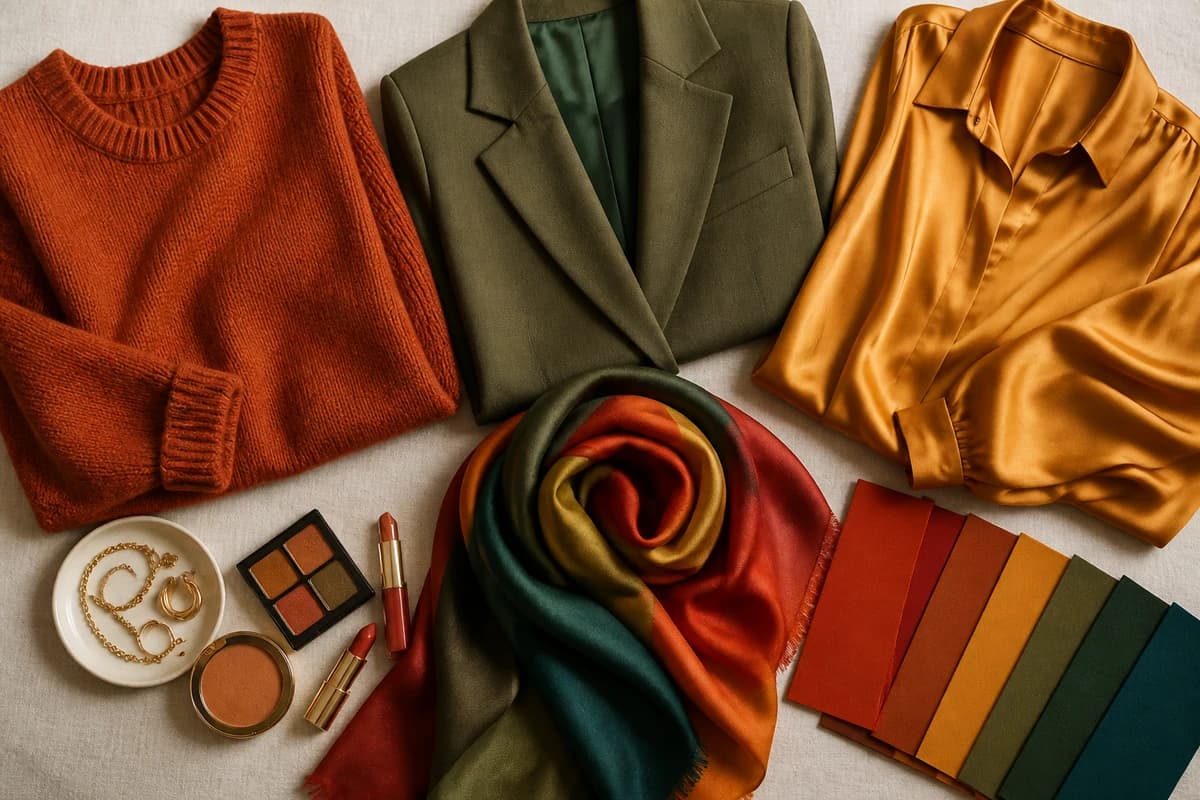
Start a small capsule from two warm neutrals you love, say camel and chocolate brown, then add two or three of your richer colors, like rust, golden olive and forest green. Everything mixes effortlessly because it all shares the same warm, golden, slightly-spiced DNA, so getting dressed stops being a guessing game. Denim counts too: a warm-washed, slightly faded blue sits with this palette far better than a crisp blue-black one. And when you want contrast, you don't reach for black, you let chocolate brown or forest green play the "dark" role, and the whole outfit stays in your warmth. Whether your analysis calls it Warm Autumn or True Autumn, the instruction is the same: turn the warmth up to where it belongs, and let deep and golden look like you.
Frequently asked questions
What is the warm autumn color palette?
Warm Autumn is a warm, golden, medium-deep palette built from earthy, spiced colors, pumpkin, rust, terracotta, mustard gold, golden olive, forest green and warm teal, alongside warm neutrals like cream, camel and chocolate brown. There's no black, no icy pastels and nothing cool or blue-based, because the whole season is anchored in a golden undertone.
Is warm autumn the same as true autumn?
Yes, they're the same season under two naming systems. 'Warm Autumn' is the warm-axis label used in tonal and 16-season systems, while 'True Autumn' is the name for the same set in the classic Sci\ART 12-season system. Both describe the most purely warm autumn: golden, rich and medium-deep. If you've been typed as one, the other palette applies to you too.
Is warm autumn warm or cool?
Warm, and emphatically so. Warm Autumn is the most decisively warm of all the seasons, with a golden undertone and no blue in it at all. That's why rich earth tones light the skin up while anything cool, icy or blue-based looks flat or sallow against it.
How do I know if I'm a warm autumn?
Hold a rich, golden color like pumpkin or rust to your face in daylight, then hold a cool icy blue or fuchsia beside it. If the warm color makes your skin glow and the cool one drains it, you're reading warm, and if full, golden autumn shades flatter you rather than overwhelm you, Warm Autumn (True Autumn) is the likely fit.
What colors should a warm autumn avoid?
Cool and icy tones (icy blue, fuchsia, cool gray, blue-based pink), pure black and stark white, and clear pastels like baby pink, mint or lavender. They fight the golden undertone and the medium-deep depth, either draining the face or looking harsh beside it. Reach for chocolate brown and warm cream instead of black and white.
Related guides

True Autumn Color Palette: The Complete Guide (with Hex Codes)
A color analyst's complete True Autumn guide, your palette with hex codes, best neutrals and metals, colors to avoid

True Autumn Celebrities
A color analyst's hedged take on likely True Autumn celebrities, the warm, rich, muted traits that signal this season, plus how to find your own.

Deep Winter vs True Autumn: How to Tell the Difference
A color analyst on Deep Winter vs True Autumn, how they differ on undertone, value and chroma, the colors that separate them, and how to tell which you are.

Soft Autumn vs True Summer: How to Tell the Difference
A color analyst on Soft Autumn vs True Summer, the two dials that separate them, the colors that tell them apart, and how to decide which you are.
True Spring vs True Autumn: How to Tell the Difference
True Spring vs True Autumn, explained by a color analyst, how they differ on value and chroma, the colors that separate them, and how to tell which you are.

True Autumn vs Deep Autumn: How to Tell the Difference
True Autumn vs Deep Autumn explained: undertone, value and chroma, the colors that separate them, and how to tell which season you really are.
Prefer in person? Find color analysis near you
Browse local color analysts by city, or get the same season, palette and best-colors breakdown online from one selfie.
See your colors on a photo of you
Upload one selfie and ToneLala reveals your season, your full palette, and your best hair, makeup, jewelry and outfits, styled on you.