In a sentence: the best colors for olive skin are warm, slightly muted jewel tones, teal, olive, rust, mustard, tomato red, coral, plum, aubergine, peacock blue and warm pink, anchored by cream, camel, chocolate, warm stone gray and navy. Skip to the full palette or find your exact shades.
Best Colors for Olive Skin: Your Most Flattering Shades (with Hex Codes)
By ToneLalaUpdated July 12, 2026
Contents
The fastest way to tell whether someone has olive skin is to hand them a baby-blue jumper. I do it in nearly every consultation, and with olive complexions the result is almost comically consistent: the face goes flat, slightly gray, a touch tired. Then I swap in a teal, and the same person looks like they've had eight hours' sleep and a holiday. That's olive skin in a nutshell, it punishes the wrong colors and rewards the right ones more dramatically than almost any other complexion.
Olive is also the most misunderstood skin tone I work with. People assume it just means "tans easily" or "Mediterranean", then reach for beige and black and wonder why they look washed out. The truth is more specific, and once you understand the one thing that makes olive skin tick, the colors that suit you stop being a guessing game.
Understanding olive skin and color
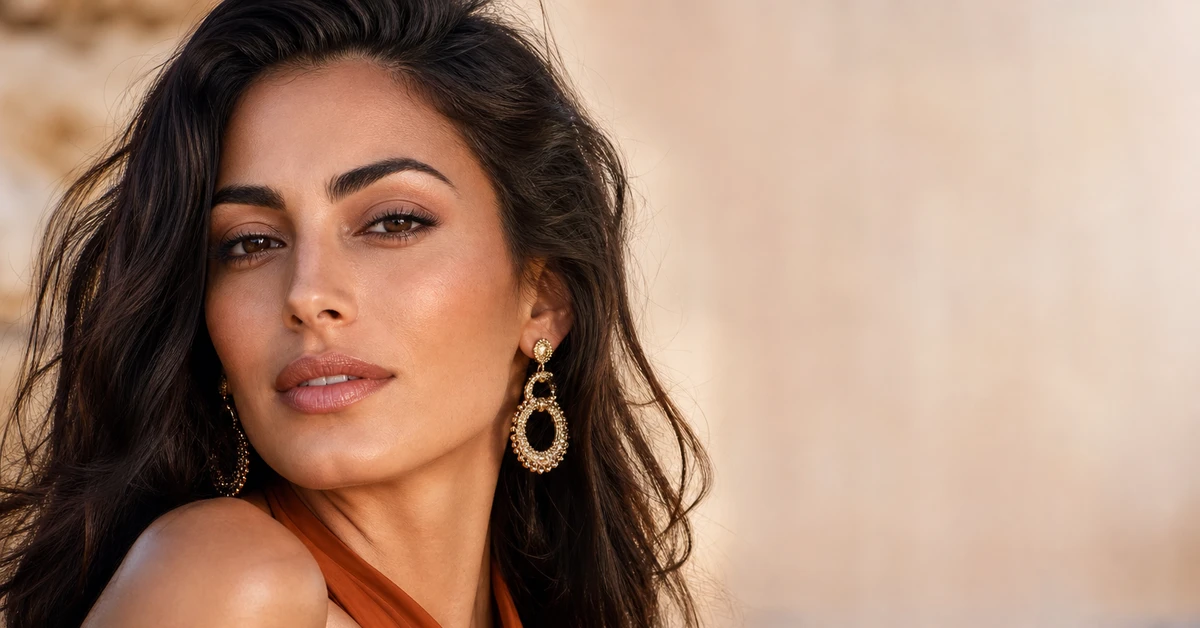
Olive skin has a distinctive green or gray-green cast sitting over its base tone. It's not about how dark or light you are, you can be fair-olive or deep-olive, it's that subtle ashy-green quality you see most clearly in the shadows of your face. That green cast is the whole story when it comes to color.
Here's why it matters. Because your skin already carries green, colors that contain a hint of green or sit on the warm-but-muted side of the wheel harmonize with it, teal, olive, rust, peacock, and your complexion reads as glowing and even. Colors that are the opposite of that, especially cold, pure, chalky pastels, fight the green and leave you looking sallow or gray. Olive skin doesn't want clean and icy. It wants warm, rich and a little bit muted, so the color and your skin are speaking the same language.
But, and this is the part most online charts skip, olive is a depth and a cast, not a full undertone on its own. Within olive, you can run warm (golden, yellow-leaning) or cool (rosy, blue-leaning). That undertone is what decides your single most flattering version of each color: a warm-olive looks unreal in golden rust and tomato red, while a cool-olive glows more in teal, plum and a raspberry-leaning pink. The families below suit virtually every olive complexion. Which exact shade tops the list is the bit that's personal to you.
The best colors for olive skin
These are the ten I come back to again and again for olive clients, warm, saturated and slightly softened, never icy or chalky.
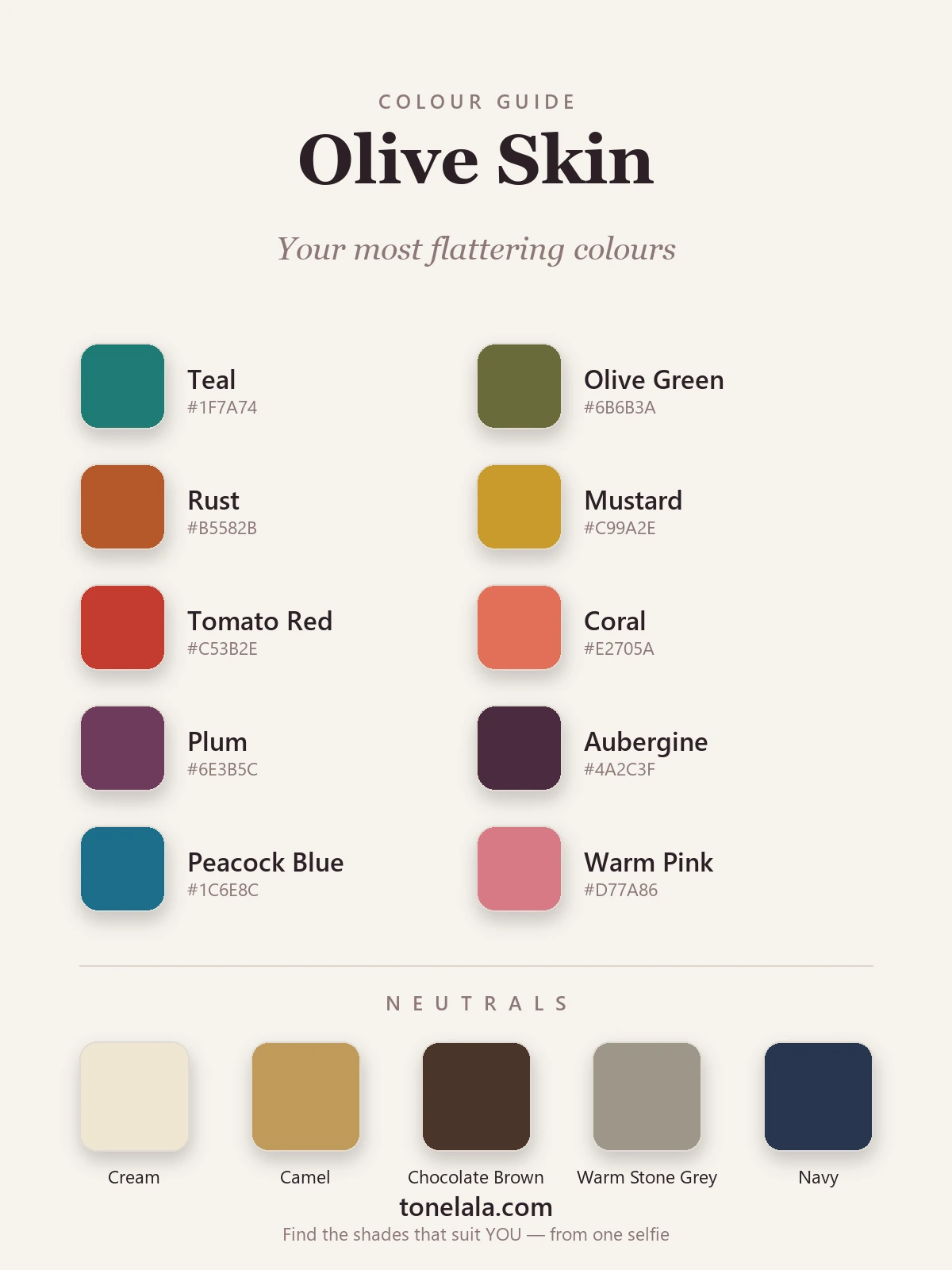
| Color | Hex | Why it works |
|---|---|---|
| Teal | #1F7A74 |
My desert-island color for olive skin. The blue-green echoes your own green cast and instantly clears the complexion. |
| Olive Green | #6B6B3A |
The literal tonal match. Wearing your own undertone as a color looks intentional and quietly chic, pick a rich olive, not a flat khaki. |
| Rust | #B5582B |
Warm, earthy and golden. It brings heat up into the skin and makes olive look sun-warmed rather than tired. |
| Mustard | #C99A2E |
A golden yellow most people fear, but olive skin carries it beautifully, it flatters where lemon-yellow would jaundice. |
| Tomato Red | #C53B2E |
A warm, slightly orange red with real punch. It's the most alive-looking red for golden-olive complexions. |
| Coral | #E2705A |
The friendlier warm note, soft enough for daywear, warm enough to lift the face. Lovely near the collar. |
| Plum | #6E3B5C |
A muted berry-purple that gives cool-leaning olive skin depth and a little drama without going harsh. |
| Aubergine | #4A2C3F |
A deep, brooding purple-brown that works as a sophisticated alternative to black up at the face. |
| Peacock Blue | #1C6E8C |
Teal's bolder cousin. That touch of green in the blue keeps it firmly in olive-friendly territory. |
| Warm Pink | #D77A86 |
A dusty rose with warmth in it, far kinder to olive than a cold bubblegum pink, which tends to gray you out. |
Best neutrals: Cream #EFE6D2 (a warm off-white that's far kinder than stark white), Camel #C19A5B (the tonal, expensive-looking base olive skin loves), Chocolate Brown #4A352A (your "dark", richer and warmer against the face than black), Warm Stone Gray #9E978A (a soft greige that won't drain you the way cool gray can), and Navy #27364F (the crisp, modern stand-in for black).
Want YOUR exact most-flattering shades?
Find your color season →Colors to avoid with olive skin
- Muddy yellow-greens and khaki-tan: chartreuse, baby-poo green, flat khaki. They sit too close to your own skin tone and turn olive sallow rather than rich. A clean teal or a deep olive does the job without the muddiness.
- Icy cool pastels: baby blue, lilac, mint, cold powder pink. These chalky, blue-based tints fight olive's warmth and gray you out fast. Reach for coral, peacock or warm pink instead.
- Stark pure white and pure black at the face: both can look harsh against warm depth, draining or hardening the complexion. Swap white for cream or ivory, and black for chocolate, aubergine or navy when it's near your skin.
None of these are forbidden, they're just the shades that most reliably disappoint, so treat them as handle-with-care.
Olive skin and the color seasons
Olive skin can land in several seasons, because, as above, olive is depth and cast, and your undertone and contrast decide the rest. This is exactly why two people both described as "olive" can suit quite different palettes.
If your olive runs warm, you're usually somewhere in the autumn family, a True Autumn or Deep Autumn: and golden rust, mustard, tomato red and rich olive are your home turf. If your olive runs cooler and rosier, you may sit in winter, often a Deep Winter: where teal, plum, aubergine and a clear raspberry-pink come alive, and your best neutrals turn crisper. Softer, lower-contrast olive complexions can lean towards a muted Soft Autumn, where everything dials down a notch in clarity. The color families I've listed flatter across all of these. What shifts is the exact temperature and clarity of each shade.
That's the part a one-size chart can't do for you. Our color analysis guides walk through every season in detail, and a personal analysis reads your photograph to tell you precisely which teal, which rust and which pink light your face up instead of washing it out.
Makeup and styling for olive skin
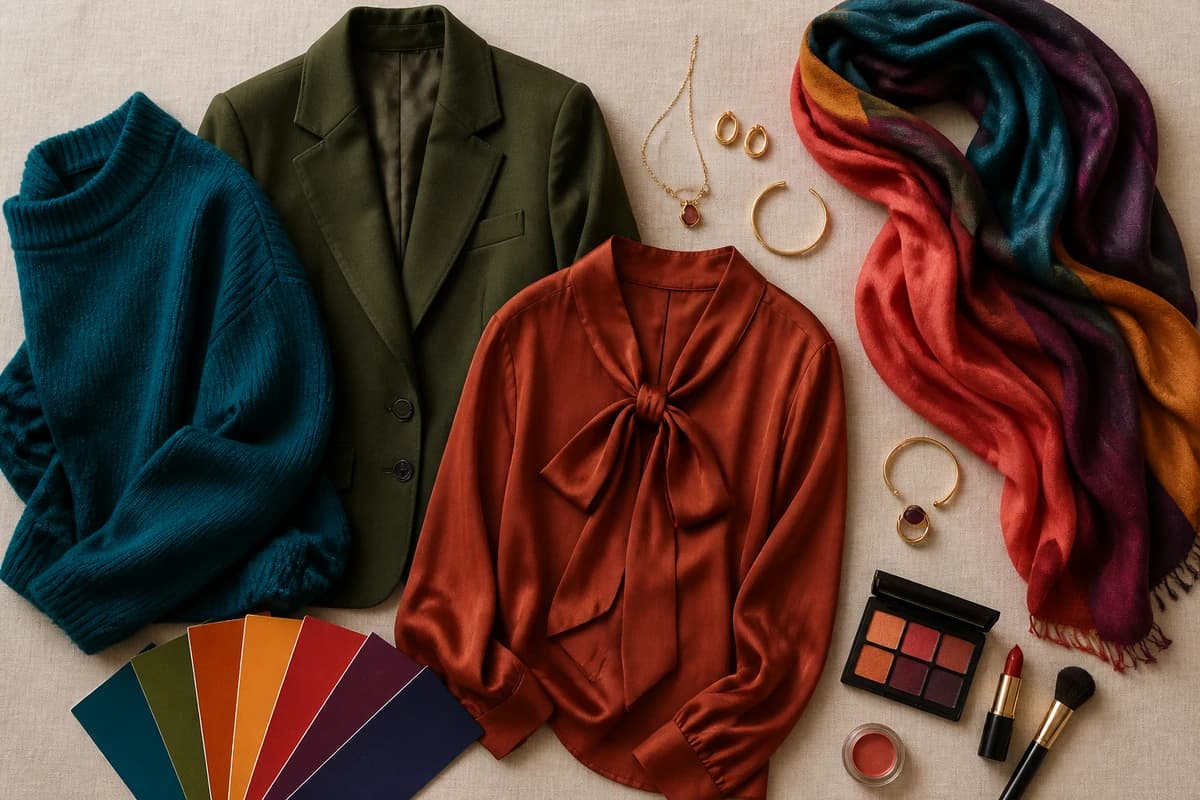
The same logic carries straight into makeup. Warm, earthy tones do the heavy lifting: terracotta, bronze, copper and warm browns on the eyes; a brick, coral or warm rose on the lips and cheeks rather than anything cold and blue-toned, which can look bruised against olive. Gold jewelry is the obvious win and flatters almost every olive complexion, but cooler-olive skin can absolutely carry silver and white gold, mix them if you like the contrast. For clothes, keep your richest, most flattering colors up near your face (a teal scarf, a rust knit, a plum collar) and let the quieter neutrals do the work below the waist, and you'll look pulled-together with very little effort.
Putting it together
Build a small olive-friendly capsule and the rest falls into place: choose one hero color you love, teal is my safe bet, plus a warm neutral like camel or cream, then add two or three of the shades above, say rust, plum and coral. Because they were all chosen to harmonize with that green cast in your skin, everything mixes and everything flatters. Stop dressing your olive skin in beige and black and apologizing for looking tired, and start treating that green undertone as the gift it is, the thing that lets you wear the rich, warm, glowing colors most people can only dream of.
Frequently asked questions
What colors suit olive skin?
Olive skin glows in warm, slightly muted, jewel-leaning colors: teal, olive green, rust, mustard, tomato red, coral, plum, aubergine, peacock blue and warm pink. The green undertone in olive skin means it shares a wavelength with these shades, so they make it look lit rather than sallow. For most olive complexions the single most flattering color is teal, though the exact best version depends on whether your undertone runs warm or cool.
What colors should olive skin avoid?
Be wary of muddy yellow-greens and khaki-tans that sit too close to your own skin tone (they make olive look ill rather than radiant), icy cool pastels like baby blue and lilac (they can gray you out), and stark pure white worn right at the face (it tends to look harsh against warm depth). None are banned, swap chartreuse for a clean teal or rust, swap pastels for a warmer coral or peacock, and swap pure white for cream or ivory.
What are the best neutrals for olive skin?
Cream (#EFE6D2) and camel (#C19A5B) are the warm, expensive-looking workhorses; chocolate brown (#4A352A) is a far kinder 'dark' than black; warm stone gray (#9E978A) gives you a soft gray that won't drain you; and navy (#27364F) is the crisp, modern alternative to black. These five do most of the quiet lifting in an olive-skin wardrobe.
Does undertone change which colors suit olive skin?
Yes, undertone is what decides your exact palette. Olive is a depth and a green cast, not an undertone in itself, and it can lean warm (golden, yellow-based) or cool (rosy, blue-based). Warm-olive complexions glow in golden rust, mustard and tomato red; cool-olive complexions are kinder to teal, plum, peacock and raspberry-leaning pinks. Same families, slightly different versions of each shade.
How do I find my exact most-flattering shades for olive skin?
Test colors against your bare face in daylight and watch what happens under your eyes and along your jaw, flattering shades smooth and lift, wrong ones cast shadows or gray. To pin down your precise palette, a personal color analysis reads your photo and tells you your color season, which fixes the exact teal, rust and pink that suit you. You can start one at tonelala.com/onboarding.
Related guides
Best Colors for Olive Skin And Brown Eyes: Your Most Flattering Shades (with Hex Codes)
A color analyst's guide to the best colors for olive skin and brown eyes, teal, terracotta, olive, gold and more, with hex codes and shades to avoid.
Best Colors for Dark Skin And Brown Eyes: Your Most Flattering Shades (with Hex Codes)
A color analyst's guide to the best colors for dark skin and brown eyes, jewel tones, bright clears and the neutrals that glow, with hex codes.
Best Colors for Tan Skin And Green Eyes: Your Most Flattering Shades (with Hex Codes)
A stylist's edit of the best colors for tan skin and green eyes, olive, teal, rust, gold and more, with hex codes, neutrals and shades to avoid.
Best Colors for Medium Skin: Your Most Flattering Shades (with Hex Codes)
A color analyst's guide to the best colors for medium skin, teal, coral, marigold, emerald and more, with hex codes, the right neutrals and what to avoid.
Best Colors for Pale Skin: Your Most Flattering Shades (with Hex Codes)
A color analyst's guide to the best colors for pale skin, 10 flattering shades with hex codes, the best neutrals, what to avoid
Best Colors for Fair Skin: Your Most Flattering Shades (with Hex Codes)
A color analyst's guide to the best colors for fair skin, 10 flattering shades plus 5 neutrals, with hex codes, what to avoid, and how undertone changes it.
Prefer in person? Find color analysis near you
Browse local color analysts by city, or get the same season, palette and best-colors breakdown online from one selfie.
See your colors on a photo of you
Upload one selfie and ToneLala reveals your season, your full palette, and your best hair, makeup, jewelry and outfits, styled on you.