In a sentence: the colors that go with green are blush pink, coral, mustard, terracotta, navy, teal, burgundy, powder blue, soft lavender and rust, grounded with cream, camel, warm gray, chocolate brown or charcoal. Skip to the full pairing palette or find your most flattering colors.
Colors That Go With Green: 12 Stylish Combinations (with Hex Codes)
By ToneLalaUpdated July 5, 2026

Contents
Green is the color people are most afraid of and least need to be afraid of. I've lost count of the clients who own one green jumper they love and never wear, because they can't work out what to put with it. The honest answer is: almost anything. Green is the color of every landscape on earth, which means it already lives happily beside soil, sky, flowers and stone, and your wardrobe is just a smaller version of that.
The trick isn't whether a color goes with green. It's matching the temperature. A warm, yellow-leaning green (olive, moss, sage) wants warm companions; a cool, blue-leaning green (emerald, jade, mint) wants cool ones. Get the temperature right and green becomes one of the easiest colors in your wardrobe to style.
What kind of color green is
Green sits between yellow and blue on the color wheel, and that in-between position is the whole story. Pull it towards yellow and you get olive, moss, chartreuse and sage, earthy, warm, organic greens that read like landscape. Pull it towards blue and you get emerald, jade, teal and mint, cooler, crisper, jewel-like greens.
That dual nature is why green pairs so widely. Its yellow side lets it cozy up to mustard, terracotta and camel; its blue side lets it sit with navy, teal and powder blue. It also means green is a natural color in the literal sense, our eyes are used to seeing it next to brown earth, blue sky and the pinks and corals of flowers, so those combinations feel instinctively right. The only real rule is to keep the undertones in the same family: a warm olive beside a cool, blue-based pink will quietly fight, while the same olive beside a warm coral sings.
Saturation matters as much as temperature. A muted, dusty sage behaves like a soft neutral and welcomes almost anything beside it, whereas a vivid emerald or kelly green is a statement that wants either a calm neutral or one confident partner to bounce off, not three competing brights. So before you pick a pairing, ask two quick questions: is my green warm or cool, and is it muted or vivid? The answers point you straight at the right companion.
The best colors to go with green
These ten are my reliable go-tos, a mix of soft complementaries, easy analogous neighbours and a couple of earthy partners that make green look expensive.
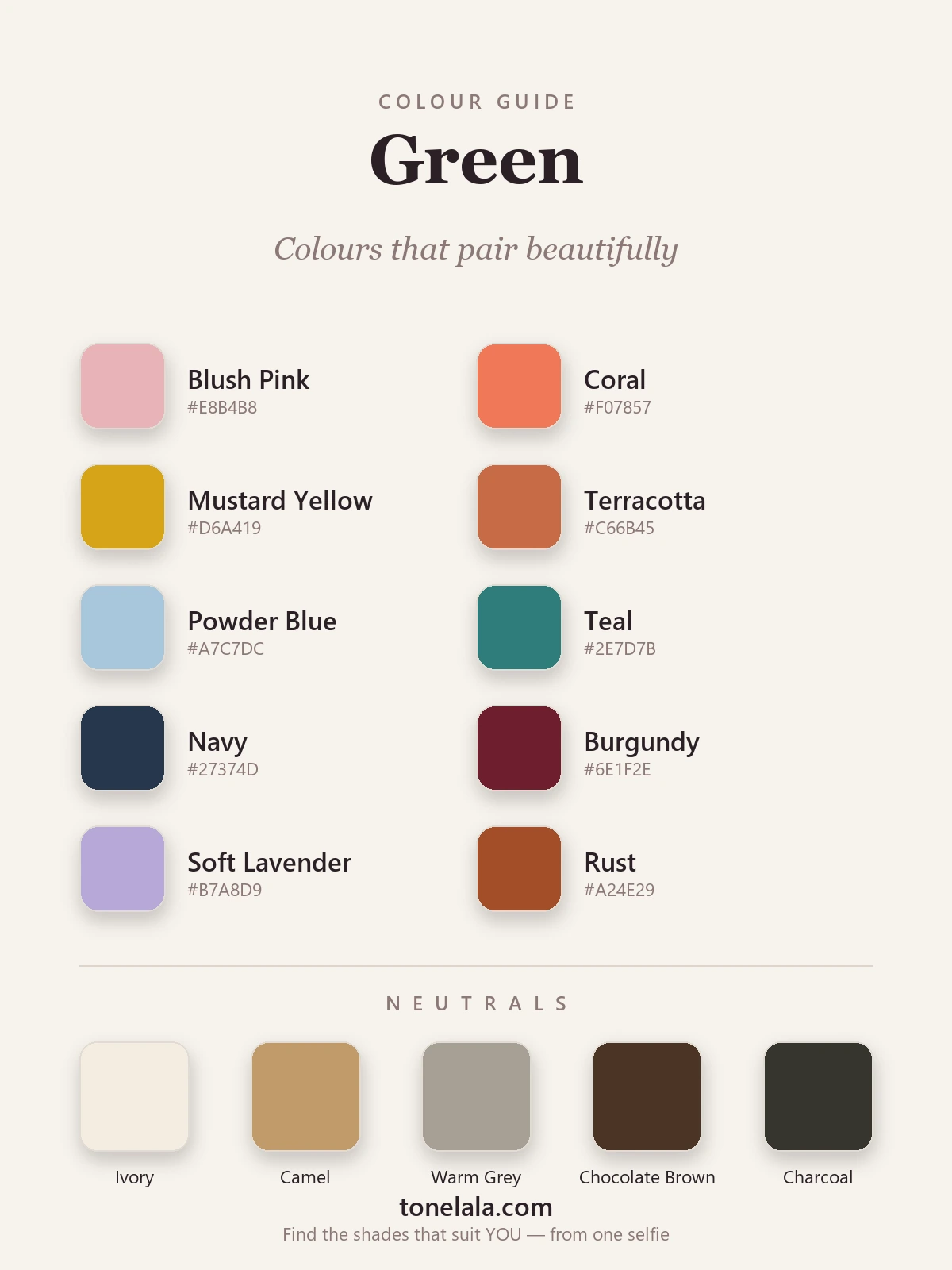
| Color | Hex | Why it works |
|---|---|---|
| Blush Pink | #E8B4B8 |
The gentle version of green's complementary. Soft, fresh and flattering, especially with sage and olive. |
| Coral | #F07857 |
Warm and lively; the pink-orange pop that makes a muted green feel sunlit. |
| Mustard Yellow | #D6A419 |
Shares green's yellow undertone, so it reads as a natural, autumnal companion to olive and moss. |
| Terracotta | #C66B45 |
Earth beside leaf. A warm clay tone that grounds green and looks effortlessly considered. |
| Powder Blue | #A7C7DC |
Green's calm analogous neighbour, airy and soft, lovely with sage and seafoam. |
| Teal | #2E7D7B |
Green's blue-leaning cousin. Tonal and rich; layers beautifully with emerald and forest. |
| Navy | #27374D |
A deep, grown-up anchor for emerald and bottle green when you want polish over playfulness. |
| Burgundy | #6E1F2E |
The luxe red-wine version of green's opposite, moody, festive and gorgeous with deep green. |
| Soft Lavender | #B7A8D9 |
The unexpected one. A muted purple that flatters mint and sage and looks quietly modern. |
| Rust | #A24E29 |
Pure autumn, warm, spiced earth that makes olive and forest look like a deliberate palette. |
Neutrals that go with green: Ivory #F4EDE0, Camel #C19A6B, Warm Gray #A7A095, Chocolate Brown #4A3526 and Charcoal #36352F. Cream keeps things fresh, camel pulls out green's warmth, warm gray is the chic minimalist's choice, and chocolate or charcoal give you a softer "dark" than black.
Which shade of green actually suits YOU?
Find your color season →Colors to avoid with green
- A second, mismatched green. Two greens in different undertones, a warm olive next to a cool emerald, look like an accident, not a choice. If you're layering greens, keep them in the same temperature.
- Muddy mid-browns. A flat, grayish brown sinks into olive and drags it down. Reach for a warm camel or a proper chocolate instead, which add contrast rather than swallowing the green.
- Neon and high-saturation clashes. Hot pink or electric orange against a bright kelly green is two colors wrestling for the spotlight. Let green be either the bold note or the calm one, not both at full volume.
Green outfit combinations
- Olive trousers + cream knit + camel coat. The quiet, expensive-looking everyday combination, three warm tones that never argue. Add gold jewelry and warm tan boots.
- Emerald dress + navy tailoring + gold. Cool, polished and slightly festive. Emerald carries the color, navy keeps it grown-up, gold warms the whole thing up.
- Sage shirt + blush + warm gray. Soft, modern and easy. Blush gives the gentlest pop of green's complementary, warm gray keeps it understated for work.
- Forest green + rust + ivory. Pure autumn. Deep green and spiced rust over a cream base, the kind of pairing that looks styled with almost no effort.
How to wear green for your color season
Here's where green gets personal. "Green" isn't one color, it's a family stretching from pale seafoam to near-black pine, and the version that lights up your face depends on your coloring.
If you're warm (a Spring or Autumn), your greens are the golden, yellow-based ones: olive, moss, warm forest, chartreuse. If you're cool (a Summer or Winter), you glow in blue-based greens, emerald, jade, cool mint. Depth matters too: deep, contrasted coloring carries bottle and pine green easily, while lighter, softer coloring is flattered by sage and soft seafoam rather than anything inky.
The pairings shift to match. A warm Autumn's olive wants rust, mustard and camel beside it; a cool Winter's emerald wants navy, burgundy and crisp white. Same logic, different temperature. If you're not sure which camp you're in, that's exactly what the color analysis guides are for, and a personal analysis tells you the exact shade of green (and its best partners) that suits your skin, eyes and hair, so you stop guessing in the changing-room mirror.
Putting it together
Green is generous: keep your pairings in the same temperature, lean on a couple of well-chosen neutrals, and let one earthy or soft-complementary color do the talking. Start with the green you already own and love, pick one warm partner and one neutral from the palette above, and you've got an outfit that looks deliberate rather than thrown together. Once you know which green is yours, the rest of the wardrobe falls into place around it.
Frequently asked questions
What colors go with green?
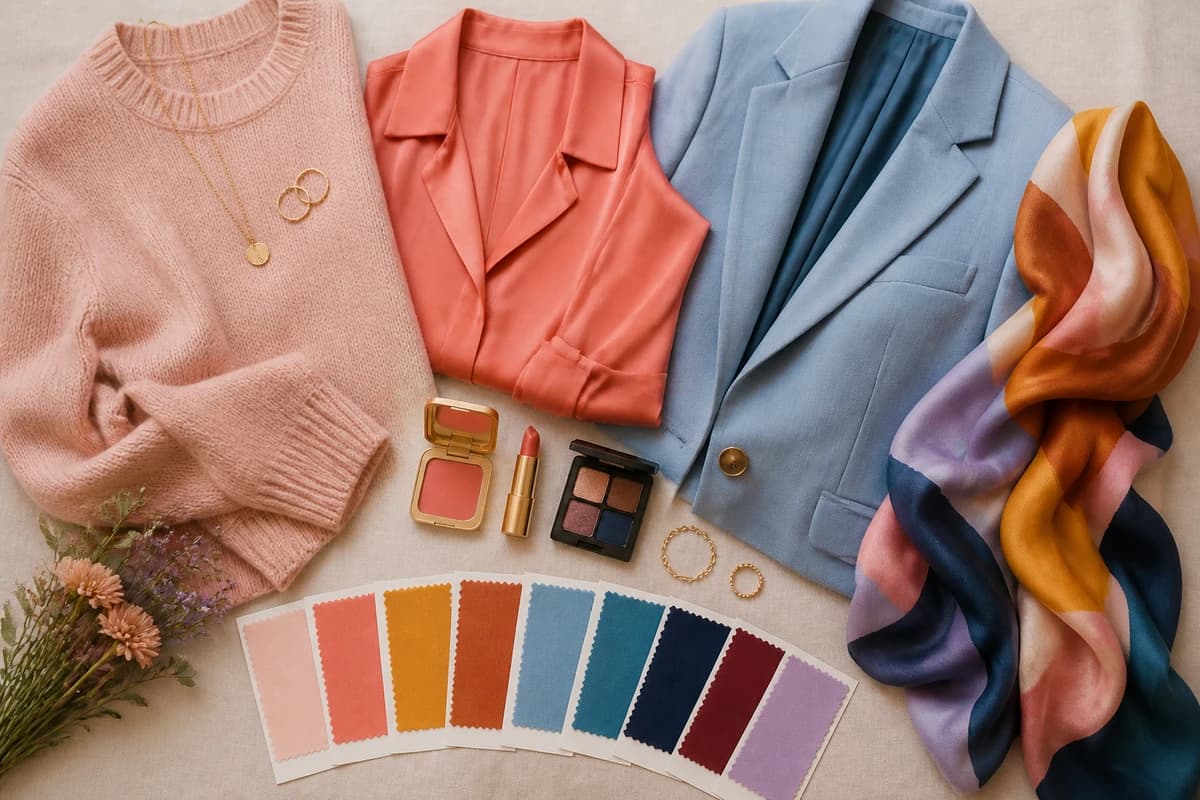
Green is one of the most sociable colors there is. The pairings I reach for most are blush pink, coral, mustard, terracotta and rust on the warm side; navy, teal and powder blue on the cool side; and burgundy or soft lavender when you want something richer. For neutrals, cream, camel, warm gray, chocolate brown and charcoal all sit beautifully with it.
What color best complements green?
On the color wheel, red sits directly opposite green, so it's the true complementary, but pure pillar-box red against grass green is a lot for everyday wear. The wearable version of that contrast is a softer red: blush pink, coral or a deep burgundy. They give you the same pop of opposition without shouting.
What colors should you NOT wear with green?
I'd steer clear of a clashing second green in a slightly different undertone (a warm olive next to a cool emerald reads like a mistake), of muddy mid-browns that sink into olive and flatten it, and of neon brights that fight green for attention. Two highly saturated colors rarely flatter each other, let green be the loud one or the quiet one, not both at once.
What neutrals go with green?
Cream and ivory keep an olive or sage outfit looking fresh; camel and tan bring out green's earthy warmth; warm gray is a quietly chic partner for sage; and chocolate brown or charcoal give you a grounded 'dark' that's softer than black. Crisp white works too, especially with brighter emerald and kelly greens.
How do I wear green for my skin tone?
It comes down to undertone and depth. Warm, golden complexions glow in olive, moss and warm forest greens; cool complexions are lifted by emerald, jade and cool mint; deep coloring carries bottle and pine green easily, while lighter coloring suits sage and soft seafoam. The exact green that flatters you is what a personal color analysis pins down.
Related guides
Colors That Go With Sage Green: 12 Stylish Combinations (with Hex Codes)
A stylist's pick of the colors that go with sage green, terracotta, blush, cream, navy and more, with hex codes, outfit ideas and shades to avoid.
Colors That Go With Emerald Green: 10 Stylish Combinations (with Hex Codes)
A stylist's guide to the colors that go with emerald green, gold, navy, blush, burgundy, ivory and more, with hex codes, neutrals, outfit ideas and the shades to avoid.

Colors That Go With Mint Green
A stylist's guide to the colors that go with mint green, coral, navy, blush, gold and more, with hex codes, outfit combinations and shades to avoid.

Colors That Go With Teal: 12 Stylish Combinations (with Hex Codes)
The colors that go with teal: 12 combinations with an outfit for each, 10 pairing colors and 5 neutrals with hex codes, shoes and jewelry, and what to avoid.

Colors That Go With Burgundy: 12 Stylish Combinations (with Hex Codes)
12 colors that go with burgundy, each with a hex code and an outfit to copy: cream, camel, navy, green, blush, gold, teal, gray, denim, olive and more, plus what to avoid and which burgundy suits you.

Colors That Go With Black: 12 Stylish Combinations (with Hex Codes)
A stylist's guide to the best colors that go with black, 10 pairings plus 5 neutrals, with hex codes, outfit ideas and how to match black to your skin tone.
Prefer in person? Find color analysis near you
Browse local color analysts by city, or get the same season, palette and best-colors breakdown online from one selfie.
See your colors on a photo of you
Upload one selfie and ToneLala reveals your season, your full palette, and your best hair, makeup, jewelry and outfits, styled on you.